Fascinating Lists!

Showing posts with label Erma Bombeck. Show all posts

Tuesday, April 2, 2019

Writing Prompts for Generating Humor

Copyright 2019 by Gary L. Pullman

Often, performing an exercise can be a way of generating humorous material. Envisioning humorous situations or occasions for humorous writing tends to get the creative juices flowing. To this end, I offer these writing prompts for humor.


Imagine an audience or an occasion. Perhaps you are giving a speech to a particular organization or to commemorate a certain historical event. Now, imagine that you are a well-known humorist—not a comedian (who performs, often in skits or in a stand-up routine delivering one-liners), but a humorist (who writes stories). With your audience or occasion in mind, write your humorous speech.


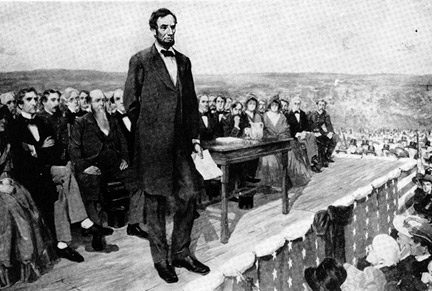
Rewrite a serious speech about a serious topic; make your rewrite humorous. Imagine “The Gettysburg Address” written not by Abraham Lincoln (who had a keen sense of humor himself), but by Mark Twain or Erma Bombeck.


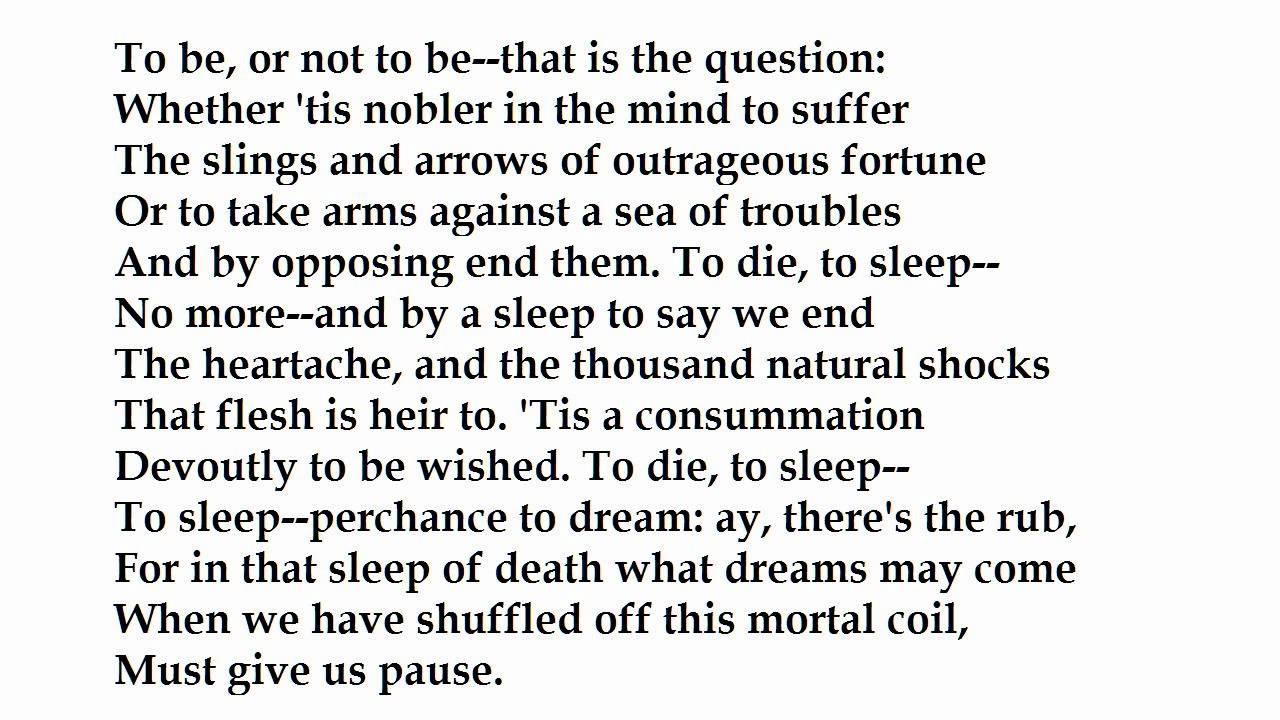
Parody a great poem or one of William Shakespeare's soliloquies. Twain does just this, in The Adventures of Huckleberry Finn, in which The Duke and The Dauphin butcher Hamlet's soliloquy to humorous effect.


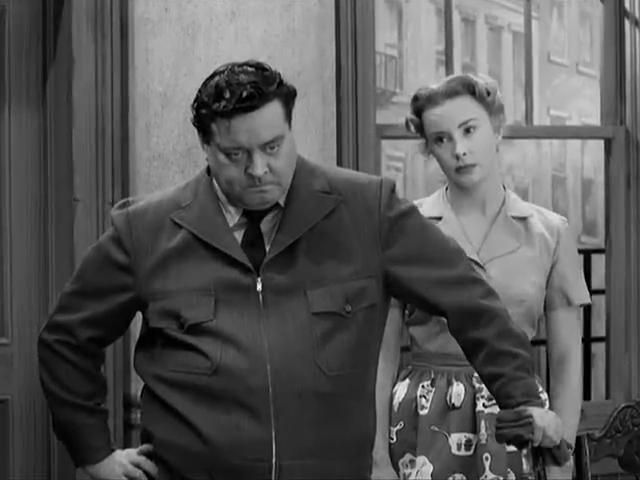
Explain why a supporting character should be the star of a short story, novel, or screenplay. Imagine I Love Lucy with Ethel Mertz, rather than Lucy Ricardo, as the main character or The Beverly Hillbillies with Milburn Drysdale and his wife as the major characters.

Create an imaginary argument between two characters with opposing views on the same topic.


Offer absurd applications of cutting-edge technology. For example, list reasons as to why men or women (or both) should be replaced by robots.


We claim to argue facts, using reason, but, often, desire comes first , arguments in support of our desires second, if at all. Write an argument based on a desire for something insignificant or “forbidden,” using irrelevant and ludicrous “reasons” to support your claims.


 Explain why an honored person, real or imaginary, should be reviled or why a reviled person, real or imagined, should be praised. If the person is real, use two real persons; if imaginary, use two imaginary persons. If the persons are real, write about men and women from the fairly distant past to avoid lawsuits!) Twain was forever trying to secure donations to build a statue to Adam, humanity's common ancestor.


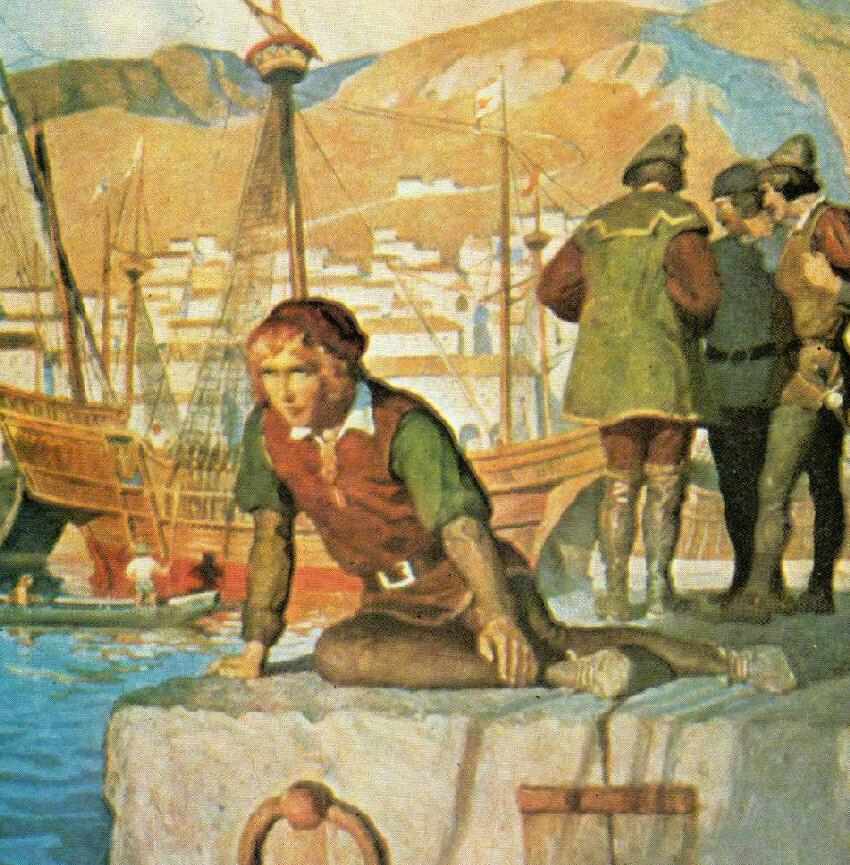
Add a humorous character to a “serious” novel or short story in the public domain. Twain was once interested in creating a fictitious cabin boy to accompany Christopher Columbus on Columbus' explorations.

Tell a story from a different, humorous perspective.


Update a classic, such as The Rape of the Lock, for example.

Imagine a comedian substituting for an actor in an established role: W. C. Fields as Sheriff Andy Taylor, for instance.

Role reversal is often a good source of humor. What if Lucy Ricardo were a band leader and husband Ricky was a stay-at-home husband who aspired to fame and fortune?

Create seemingly absurd, but pointed (and pithy) maxims. Twain does this in Pudd'n'head Wilson. Here's one: “Man is the Only Animal that Blushes. Or needs to.”


Be a team of one! Examine a topic from a variety of perspectives, writing as if you have multiple personalities, each one of which was humorous in his or her own way.


Wednesday, September 28, 2011

How To Write Hilarious Humor: An Analysis of Professional Comedians' (and Comediennes') Techniques to Tickle the Funny Bone

Chapter 1: Choosing Your Theme

Copyright 2011 by Gary Pullman 


Most humor books are based upon a theme, or central topic, as the following sample of titles indicates:

  • Dave Barry’s Complete Guide to Guys
  • Dave Barry’s Only Travel Guide You’ll Ever Need
  • Dave Barry’s History of the Millennium (So Far)
  • Dennis Miller’s Rants
  • Dennis Miller’s Still Ranting After All These Years
  • Dennis Miller’s The Rant Zone: An All-Out Blitz Against Soul-Sucking Jobs, Twisted Child Stars, Holistic Loons, and People Who Eat Their Dogs!
  • Dennis Miller’s I Rant, Therefore I Am
  • Dennis Miller’s Rants Redux
  • Art Buchwald’s You Can Fool All of the People All of the Time
  • . . . And Then I Told the President: The Secret Papers of Art Buchwald
  • Erma Bombeck’s At Wit’s End
  • Erma Bombeck’s Just Wait Till You Have Children of Your Own
  • Erma Bombeck’s If Life Is a Bowl of Cherries, What Am I Doing in the Pits
  • Eat Less Cottage Cheese and More Ice Cream: Thoughts on Life By Erma Bombeck
  • Erma Bombeck’s I Lost Everything in the Post-Natal Depression
  • Erma Bombeck’s Family: The Ties That Bind. . . And Gag!
  • Gilda Radner’s It’s Always Something
  • Bunny, Bunny: Gilda Radner, A Sort of Romantic Comedy
  • Gilda Radner’s I Still Have It . . . I Just Can’t Remember Where I Put It
  • Gilda Radner’s Turning the Tables
  • Gilda Radner’s Naked Beneath My Clothes
  • Gilda Radner’s Tickled Pink
  • Gilda Radner’s Guide to Men

That’s just a short list, of course, but it suggests several points that are useful to the aspiring humorist. Some of these points might not seem all that significant. However, notice that all the author’s names on this list have something in common. They’re professional comedians (or, in some cases, comediennes). They also have something else in common: they’re all hilarious! Therefore, if you can learn anything from any of them, whatever it is, it’s not insignificant.

 
Having made that point clear, let me list some of the significant points you can learn from considering the list:
  • Many of the titles use alliteration. Although alliteration is not necessarily humorous in itself, it is pleasing both to the ear and the eye. In other words it’s attractive. No, make that aesthetically attractive. That’s alliterative.
  • Several of the titles are long. More specifically, the subtitles are long (the titles themselves tend to be rather short, the better to fir the limited space available to book reviewers). Theirs is something funny about long subtitles. Why? You might as well ask why the sky is high or the snail is slow. They’re just funny: that’s why. (Keep that ion mind when you write your book’s title.)
  • Puns and other plays on words (such as Post-Natal Depression, If Life Is a Bowl of Cherries, What Am I Doing in the Pits, and Ties That Bind. . . And Gag!) are funny, even when they’re painful. Bombeck uses them, and, if they’re funny enough for Erma, they’re funny enough for you.
  • By making a list and talking about it twice (or more), it’s possible to get off the track and stay off the track for some time without your reader realizing it, wasting a lot of his or her time without him or her realizing it, and filling a page or more with irrelevant digressions without your editor or publisher realizing it, as I have done here.

Sooner or later (later is usually better), even as a humorist, you have to come back to the point, which is, if the title of this chapter is any guide (which, of course, it isn’t), is “Choosing Your Theme.” As I mentioned at the outset of this chapter, a theme is the central topic that a humorist writes about throughout his or her whole book and the tie that binds (and gags!--Thanks, Erma) the book together, giving it unity. (It never hurts to repeat yourself in writing a humorous book, either, to stretch things out, as long as the reader, the editor, or the publisher doesn’t catch on.)

 
So, anyway, let’s talk theme.

 
A theme should be universal, appealing to as many people as possible, because you want to sell as many books as possible and make as much money for yourself (and your publisher, too, of course, who will be reading your manuscript if he or she isn’t too lazy to do so, in which case he or she will assign someone else to read the damned thing and report back to him or her).

 
The titles of the humorous books by Barry, Miller, Buchwald, Bombeck, and Radner suggest (at times, at least) their respective themes: Barry is into guys, travel, and history; Miller rants, rants again, and rants some more; Buchwald is obsessed with politics; Bombeck is up to her neck in family issues; and Radner is concerned with romance and aging.

 
Other good topics: animals (especially pets), babies and babysitters, camping, children, college, dating, friends, marriage, neighbors, sex, shopping, teenagers, vacation, weddings, women, and work.. Experiences that make people uncomfortable or anxious are, paradoxically, also good fodder for humorous treatments. That’s why there are chapters in some books concerning visiting doctors, dentists, and lawyers. That’s also the treason that there are whole books on marriage.

 
After you’ve chosen your theme (or, in some cases, it has chosen you), break it into topics. These will become the subject matter for your book’s chapters (except for the first chapter, which will introduce the theme for the whole book, rather than for its own chapter.) For example, let’s say you choose the theme of aging, as Radner does for her book, I Still Have It . . . I Just Don’t Know Where I Put It. Her first chapter, “I Can’t Believe I’m Filthy,” introduces it as the theme of the entire book. Other chapters consider various (usually only slightly, or loosely) related aspects of this topic, such as old-fashioned shopping by shopoholic (“Catalogue Addiction”); contrasts between children’s youthful behavior and Radner’s older perspective (“Do It Again”); a mother’s lasting influence on even her adult children (“Oh, Mother!”); the difficulty of opening packages that older people sometimes experience (“Go Ahead, Open This Bag”); and so forth. Notice, the chapter topics tend to be lighthearted; address relatively trivial, everyday situations; and pertain to familiar experiences. These characteristics endear these topics to millions of readers (one hopes) by offering humorous, knowing depictions of common annoyances and frustrations that make experiencing them (or remembering experiences concerning them) seem more tolerable and less exasperating than they actually are or were.

 
One other point. The titles of the chapters should be worded so as to disguise the fact that the chapters are really about just another of the aspects of the book’s overall theme. Each title should suggest that its chapter is about a brand-new, never-before-seen (or read) topic. Alternatively, at the very least, the chapter titles should be so vague, yet, somehow familiar-sounding, that they mean absolutely nothing (but still, somehow, seem to relate to the chapter’s contents). Check out some of the chapter titles from Radner’s book: “Catalogue Addiction,” “Do It Again,” “Oh, Mother!,” “Go Ahead, Open This Bag.” Although one chapter title does indicate its topic (“Catalogue Addiction” is obviously about obsessive catalogue shopping), another chapter title (“Do It Again”) seems to be about something other than what it is, in fact, about--sex, maybe--whereas the other chapter titles (“Oh, Mother!“ and “Go Ahead, Open This Bag”) are so vague that they could be about anything, from motherhood to collecting corpses in body bags.

 
So, what have you learned--or what have I taught, at any rate--in this chapter? It’s time to highlight the key points (because conclusions eat up even more space, enabling you, as a writer, to achieve your contracted word count).

 
Conclusion

 
Like the book’s title, which may contain either alliteration or a pun (or both) and will probably include a long subtitle, the first chapter introduces the theme, or central topic, that unifies the book’s contents, laying the groundwork for the topics that subsequent chapters will explore. The titles of the chapters should disguise the fact that the chapters are merely addressing yet another aspect of the central topic, or theme, by seeming to be about something--anything--else than what they really introduce. The book’s theme and the chapter’s topics are often about an annoying, frustrating, familiar, and universal experience with which readers can identify and appreciate. In writing the book, occasional digressions are welcome, as are needless repetitions (but not too many), lists, and end-of-chapter conclusions to round out (and, more importantly, lengthen) the book’s page count. That about sums it up 


Next:  Chapter 2: Introductions, Set-Ups and Punch lines, Transitions as Loose Associations, Metaphors, Similes, Allusions, Malapropisms, and Other Techniques

Friday, December 4, 2009

Humorous Techniques: Erma Bombeck

Copyright 2009 by Gary L. Pullman

Before we consider specific examples of humorists’ writings, let’s summarize the principles and techniques that we’ve gleaned from our review of the history of comedy and humor and those who have perfected these forms of entertainment.

The Old Comedy of ancient Greece involved bawdy humor, humorous references to body parts and bodily processes, social criticism, puns and wordplay, and the satirical parody of famous men, such as the philosopher Socrates. Middle Comedy and New Comedy replaced the coarse humor of Old Comedy with a comedy of manners and with romantic intrigue that ended in marriage, and established many stock characters. In the fabliaux of the Middle Ages, earthy, even obscene and pornographic, humor returned, in poetic, rather than dramatic, form, as did the biting satire against authority and aristocratic figures, especially hypocritical and sanctimonious clergymen. Modern history’s contribution to comedy and humor takes the form, primarily, of the situation comedy, in which recurring stock characters are involved in amusing situations. Whether two, three, or four acts in length, such comedies tend to follow a circular pattern, offering a twist, at their ends, on the situations and themes with which they began.

In general, as Harman and Holman observe in A Handbook to Literature, 10th edition, humor results from a display of “incongruity of speech, action, or character. The incongruity may be verbal, as with a play on words; or bodily, as when stilts are used; or satirical, as when the effect depends upon the beholder’s ability to perceive the discrepancy between fact and pretense exhibited by a braggart. . . . Viewed in another sense, comedy may be considered to deal with people in their human state, restrained and often made ridiculous by their limitations, faults, bodily functions, and animal nature.”

Twain’s humor often offers social criticism as well as burlesque, satire, irony, and parody, which unifies his work and elevates it above mere humor for humor’s sake. His works are also unified through travel, cases of mistaken identity, the commission and solving of a crime, specific historical periods as settings, the use of recurring characters, and the fictionalization of personal experience. Erma Bombeck’s humorous essays are often made coherent by offering comments upon various aspects of an analogy, explicit or implicit, that she draws between one realm of human experience and another or between a realm of human experience and a natural order or phenomenon, as when she compares psychology to ethnology, motherhood to prostitution, or family activities to sadomasochistic bondage and discipline pursuits. Humorous essays must also adhere to a central point of view and to a dominant tone; indeed, the point of view may comprise a refutation of a theological or a philosophical proposition, as Voltaire’s Candide and the Marquis de Sade’s Justine do.

In addition to the topics and themes of comedy and humor that ancient Greek playwrights identified, modern humorists have added process analysis, or “how-to” humor; verbal duels between friendly or romantically involved, but diametrically opposed, characters who are confined to close quarters with one another; ironic fables; teen angst; and grotesque or absurd situations. The more avant-garde humorists reveal the surreal undercurrents that are often active just below the conscious level of the modern mind and its mindset.

Now that we have considered the principles and techniques that apply in general to comedy and humor, let’s look at those which such famous humorists as Erma Bombeck and Mark Twain employ in their work.

How does a writer go about starting a humorous essay? How does he or she introduce the essay’s topic, capture the reader’s interest, and establish his or her tone? Once begun, how does a humorist unify his or her thoughts and humor, and how does he or she structure the essay?

Many humorous essays begin with a confession or a claim, a statement that piques the reader’s interest and lays the foundation for the rest of the piece. These opening sentences are short. Sometimes, they are pithy as well. Ideally, they are themselves funny, although not all of them are. Here is an example, the opening sentences of Erma Bombeck’s “Dieting Is a Losing Battle,” published March 21, 1978:


It’s no use for me to diet. I know that now.

With these sentences, Bombeck:

  • Announces her topic (dieting)
  • Suggests her attitude toward her topic (dieting is useless)
  • Implies that she has learned a lesson from personal experience (“I know that now.”)
  • Suggests a plaintive, perhaps humble, and defeated tone.

As we track through Bombeck’s essay, we note that she uses short sentences to form short paragraphs. In addition, she writes in a colloquial, or informal, style that tends to employ short words. Many of her sentences are actually fragments that begin with “And” or “But,” a technique that prevents compound sentences from becoming longer than they would be were they written as correct grammar dictates. She uses contractions, such as “I’m” instead of “I am.” Except for a few necessary functional sentences, such as those which introduce topics, provide transitions, or set up a situation as a way of introducing a punch line, each and every sentence--or, at the very least, each and every paragraph--of her essay contains a humorous phrase, creates a funny situation, or makes a joke.

Having piqued her readers’ interest and established her topic, tone, and point of view, Bombeck next introduces a pair of personifications, as she lets her body do the talking; her knees whisper, and her mouth speaks:

All those years when my knees rubbing together whispered “no, no”but there is a
“yes, yes” in my mouth, I fought the battle.

These personifications indicate body parts (knees and mouth) that are in conflict with one another, and the end of the sentence introduces the analogy upon which Bombeck will develop her essay: dieting = battle, which ties in with the essay’s title, “Dieting Is a Losing Battle.”

She next offers an example of her persistence in fighting her “losing battle”; in doing so, she introduces an element of the absurd, exaggerating her weekly weight problem by locating her loss of weight in her “neck” and her “bust”:

All those years when I lost 10 pounds every Monday (five in my neck and five in my bust), I hung in there.

By repeating the phrase “All those years” and a variant of “I hung in there” (“I gave it my all”), Bombeck continues to suggest her persistence, the humor in the sentence that follows stemming from an absurd metaphor that equates her embracing of “cottage cheese” to a “religion”:
All those years when I embraced cottage cheese as a formal religion, I gave it my all.

Having provided her reader with two examples of her persistent battle, she reiterates her essay’s theme: she is losing the battle.

But after yesterday, I have to admit, I’m beaten. I’m fighting the battle alone.

She says “It started in the morning.” By “it,” she means her loss of her battle to lose weight. Her placing of her hand over her heart and her substitution of the phrase “allegiance to hunger” for “to the flag of the United States” is humorous because the cause to which she allies herself, hunger, is a natural and instinctive drive that needs no allegiance and because such an “allegiance” pales in significance to confessing loyalty to one’s country. Humor often works in this manner, by substituting the trivial for the important. Her “allegiance to hunger,” rather than to dieting, represents a turning point; now that she has decided to give in to “hunger,” she can feel “virtuous” in defying her diet:

It started in the morning when I faced the refrigerator with my hand over my heart and once again pledged allegiance to hunger. I poured myself half a glass of tomato juice mixed with half a glass of buttermilk and tossed it down. I felt virtuous.

Although this is a short paragraph, it is longer than most of the others in Bombeck’s essay. Therefore, it highlights itself. It is important to her theme, because it sets up Bombeck’s rebellion against dieting, something that she equates, implicitly (by placing her hand on her heart and swearing “allegiance to hunger”) with patriotism; it is an act not unlike the founding fathers’ revolt against the tyranny of England. This analogy makes her essay’s title more significant, for the “battle” of which it speaks seems now to be associated with the Revolutionary War.

It seems that Bombeck will suggest that her “allegiance to hunger” rather than to dieting is a courageous and honorable one, akin to the colonists’ revolt against the British crown, but, instead of extending this analogy, she abandons it, the remainder of her essay exemplifying how she continues to add to and enhance the simple meal that she’s prepared for dinner and blames her husband for her having done so (to punish him for being late, she adds “whipped potatoes to the meal,” and to distract him from “the small main course,” she prepares “a robust appetizer,” and then accuses him of not caring “about other people at all” or “how they look”).

Although Bombeck, in abandoning the implicit metaphor she creates by likening her “allegiance to hunger” to the colonists’ revolt against British tyranny as a stand-in for the tyranny, as it were, of dieting, her essay, having pulled readers in, continues to amuse, which shows that, once a humorous essay gets started, it can proceed, even if it unexpectedly and irrationally changes direction in midstream. After all, readers are looking for humor, not logic. However, an essay that does both--amuses and stays true to its implicit rationale--would give readers the best of both possibilities and, arguably, would, therefore, be of superior quality. Bombeck is a master at setting up the humorous essay. We can learn a lot from her techniques for doing so. As we saw, many humorous essays begin with a confession or a claim, a statement that piques the reader’s interest and lays the foundation for the rest of the piece, and Bombeck is adroit at such beginnings.

However, she also uses plenty of other ways to open her essays.

One is the surprising statement. She opens “Hello, Young Mothers” with the declaration that “Once. . . just once. . . I’d like to be dressed for an emergency.” Since one does not dress for “an emergency” and because, even, if one were wont to do so, an emergency, by its very nature, would not allow one the time (or clarity of mind) to pick out an outfit to wear for the occasion. Therefore, her expressed desire to dress for crises is as unexpected to readers as it is ludicrous. By surprising her readers with such an odd and irrational statement, Bombeck makes them want to read further. Therefore, the sentence is an effective opener.

“Birds, Bees, and Guppies” opens with a declaration to which all parents would be likely to assent, although it addresses a topic that they’d probably be just as happy to avoid altogether, were it possible to do so: “The sex education of a child is pretty important. None of us wants to blow it.” Since her comment addresses a sensitive, potentially embarrassing topic, readers may read on to see whether the famous humorist can transform her subject matter into something more lighthearted than somber. Perhaps humor will put the matter of “the sex education of a child” into perspective. By suggesting that she can use her humor to cut such a serious subject down to size, so to speak, Bombeck reassures parents who may soon have to instruct their own children in this difficult subject.

In “Outgrowing Naps,” Bombeck resorts to an effective strategy for broaching her essay’s topic while hooking her readers: without humor or fanfare, she simply states the situation that her essay will proceed to develop: “A group of young mothers huddled around the kiddie pool the other day discussing children’s naps.” She tries the same gambit for “How to Communicate with Toddlers,” writing, “A father in Champagne, Illinois, is enquiring how to communicate with toddlers.” Her reputation as a humorist alone promises that something funny will come of this situation. For those who have not yet garnered such a reputation, a different, more obviously humorous approach might be a better way to start an essay; Bombeck uses this approach to initiate “I’m-Not-Going Syndrome”: “I’m at the age of my life where every time I buy something of any value, I have visions of my kids marking it down to $2 at a garage sale.”

Bombeck also uses a rhetorical question, on occasion, to start an essay. Often, in doing so, she puts the question into an invented character’s mouth, as though someone other than she were posing the query. “Disposable Diapers” opens this way: “The question being asked by baby boomers isn’t, ‘Is there life after throwaway diapers are abolished?’ but, ‘Is that life worth living?’” “Alaska Cruise and Smoked Salmon” opens in a similar manner: “Last spring, my husband looked up from the travel section of the newspaper and said, ‘Have you ever thought of what it would be like to catch and smoke your own salmon’?” More rarely, Bombeck herself, or her stand-in persona, will ask the question directly, as she does in “The Instead-of Cookbook”: “Why doesn’t someone write a cookbook for the suburban woman with one car that is used by her husband?”

She also starts essays with dialogue which is often intriguing in itself or becomes so within a few lines. “I don’t want to go to grandma’s” (“I Don’t Want to Go to Grandma’s”), “You don’t love me!” (“I Loved You Enough to. . . “), and “‘Hey, if you write a column for a newspaper,’ said the voice on the telephone, ‘how come you don’t tell women how to get stains out of their stainless steel sinks?’” (“Household Hint”).

Some of her essays begin with a complaint: “I don’t know what my husband thinks I’m made of!” (“Soap Operas”); “There is no delicate way to say it. My social life is somewhere to the right of a sedated parrot” (“My Social Life”), Occasionally, a sentence will serve as a sort of straight man so that the one that follows it can deliver a humorous punch line. Bombeck opens chapter three of All I Know About Animal Behavior I Learned in Loehman’s Dressing Room with this technique, with her use of exaggeration effecting the humor: “I have come up with a wonderful solution to end all wars. Let men give directions on how to get there.” She uses the same approach to open chapter fifteen of the same book, again using exaggeration to deliver the humor: “I was never caught up in the jogging/running movement that swept the country in the seventies and eighties. Face it, I call a cab to go to the mailbox.” More rarely, a sentence that itself contains the setup for the joke it contains is used to open a chapter or an essay.

The first half of such a sentence sets up the joke, which follows in the second half of the sentence. Chapter eight of All I Know About Animal Behavior I Learned in Loehman’s Dressing Room begins with such a sentence: “Compared to the IRS when they cash your check, the cheetah is standing still.”

Like her books, Bombeck’s essays are often built upon an analogy, and she uses familiar figures of speech--metaphors, personifications--in unexpected, and, therefore, humorous ways to make her points as she presents the central “argument” that her essay’s title suggests. All I Know About Animal Behavior I Learned in Loehmann’s Dressing Room equates “animal behavior” with human conduct, suggesting that by using the principles and techniques of ethnology, she can better understand the behavior of her fellow human beings. In other words, her book is based upon the analogy that “people are animals.” To maintain this analogy, she starts each chapter with a tongue-in-cheek epigraph from a spurious ethnological treatise. Frequently, this epigraph creates a point of departure for Bombeck’s comments concerning a specific human habit, practice, or behavior.

For example, chapter seven of her book deals with human packrats. She opens the
chapter with this epigraph:

Many animals tend to store things. The bowerbirds of Australia and New Guinea
decorate their courting grounds with everything from beetle wings to pilfered
car keys. They will hoard anything. After mating, the male splits and the female
raises the brood by herself.

This counterfeit quotation provides the jumping-off point for her wry observations on concerning her need to collect everything and to part with nothing:

Lest you confuse me with some amateur collector, I must tell you there are levels of savers. There’s the common garden variety who hoard rubber bands like they’re never going to see another one. And the bread tie disciples who don’t have a clue what they can use them for, and of course the proverbial plastic margarine container freaks who use them to store leftovers that they are going to throw away in three day. They’re novices.

No, I’m talking about a woman who still has her report cards from the third grade. . . food coupons that have expired. . . Single earrings. . . boots with a hole in one of them. . . and a wildlife calendar from 1987 because February shows a bear in a party hat.

This same pattern is repeated throughout the book, as Bombeck offers her take on courtship, reproduction, potty training, eating, and other activities, showing how human conduct parallels animal behavior and suggesting that it is not necessary to go, as Jane Goodall went, into the African veldt, to study the human species; it’s enough to be a wife and mother.

Like many other humorists, Bombeck’s books, if not her essays, have extremely long titles. Such titles are themselves ludicrous, since they fly in the face of the conventional requirement of publishers and the natural tendency of writers to keep their titles as short as possible. A list of some of her works makes this technique clear:

  • Just Wait Till you Have Children of Your Own!”
  • Lost Everything in the Post-Natal Depression
  • The Grass Is Always Greener Over the Septic Tank
  • If Life Is a Bowl of Cherries, What Am I Doing in the Pits
  • Motherhood: The Second Oldest Profession
  • Family: The Ties That Bind. . . and Gag!
  • I Want to Grow Hair, I Want to Grow Up, I Want to Go to Boise
  • When You Look Like Your Passport Photo, It’s Time to Go Home
  • A Marriage Made in Heaven. . . Or Too Tired for an Affair
  • All I Know About Animal Behavior I Learned in Loehmann’s Dressing Room

Next: Mark Twain

Friday, November 13, 2009

Literary Humorists

Copyright 2009 by Gary L. Pullman

In learning how to write hilarious humor, there is no substitute for knowing the work of famous literary humorists. They are textbooks in themselves, for they have mastered the techniques of humor over careers spanning lifetimes and, indeed, generations. Any list of such humorists must include the following men and women: Mark Twain (Samuel Langhorne Clemens), Voltaire, Miguel de Cervantes, Erma Bombeck, Dave Barry, Dorothy Parker, Art Buchwald, Shirley Jackson, Jean Kerr, William Shakespeare, and Neil Simon.

In addition, many situation comedy writers deserve serious study as literary humorists, even if they write scripts for television shows or movies rather than short stories and novels. It is helpful to consider the influences of such men and women, too--the predecessors and contemporaries from whom they themselves learned how to be funny--and the sources of their humor, when these are discoverable. Of course, in the process, it’s enormously helpful to examine their work and the techniques they use to evoke laughter from their audiences.

Samuel Langhorne Clemens (“Mark Twain”)

In learning to write hilarious humor, there is no substitute for studying the work of great humorists. Chief among them, by most people’s measure, is Samuel Langhorne Clemens, who is more familiar to many by his famous pen name, Mark Twain. The author of such timeless classics of humor as The Adventures of Tom Sawyer, The Adventures of Huckleberry Finn, The Prince and the Pauper, A Connecticut Yankee in King Arthur’s Court, Roughing It, Life on the Mississippi, A Tramp Abroad, Following the Equator, The Innocents Abroad, and a host of other comic masterpieces, Twain, more than any other writer, living or dead, established the genre.

From Twain, the student of horror learns that humor can have a purpose beyond mere entertainment. It can evoke laughter, but it can also lampoon social ills and satirize both the institutions of evil and the institutionalization of evil. Humor can poke fun at traditions, mores, hypocrisy, villainy, culture, and even civilization itself, as Twain’s humor does; at the same time, it can, and, indeed, must, make its readers laugh. Great humor is a double-edge sword, one edge of which provokes laughter while the other cuts through pretense, arrogance, and plain hogwash. Twain’s humor, like that of George Bernard Shaw’s, shows how it is done.

From Twain and other humorists, we also learn another requirement of written humor--that is, humor as it occurs in short stories, novels, plays, and movies, rather than in stand-up comedians’ one-liners and skits. Such humor must be comprised of more than simply a series of unconnected jokes. Written humor of the type with which we are concerned has to be about something; it must have a center and a purpose beyond itself. The jokes and anecdotes and other humorous sequences must be connected by a point of view and a theme.

The point of view, which will be closely allied with the tone of the humor, may be one of gentle censure, harsh satire, tolerant lampoon, insolent farce, or ribald burlesque. The theme, or the point, might be to acknowledge human folly, to identify social injustices, to highlight absurdities in human behavior, to condemn human cruelty, to right social wrongs, or any of a host of other purposes.

There must also be a means by which to unite the humor, the point of view, and the tone--a way, as it were, to give a backbone to the various parts of the organism. Often, this backbone is an analogy of some kind.

Erma Bombeck

In All I Know About Animal Behavior I learned in Loehman’s Dressing Room, Erma Bombeck, inspired, apparently, by Jane Goodall’s study of primate behavior, equates human conduct with animal behavior. This analogy is the spine of her book, allowing her to compare various human actions to those of their beastly counterparts over the length of a couple hundred pages rather than a few paragraphs. At the same time, it unifies her sketches, making them part of a bigger narrative and allows her to adopt a humorous, slightly critical point of view (which might be said to be people are such animals!“) and a matching gently chiding tone.

Analogies are commonly the devices by which humorists unify their jokes, anecdotes, and literary sketches, but they also employ ironic reversals upon common themes, almost as if to refute the wisdom, plausibility, or efficacy of the approach theirs is opposing. Twain takes uses this method, which we might call the antithetical approach, in The Innocents Abroad, explaining to his readers that his book is meant to be a sort of corrective to the travel accounts of others whose travelogues are more about what a traveler should see than what he or she would see:

This book is a record of a pleasure trip. If it were a record of a solemn scientific expedition it would have about it the gravity, that profundity, and that impressive incomprehensibility which are so proper to works of that kind, and withal so attractive. Yet not withstanding it is only a record of a picnic, it has a purpose, which is, to suggest to the reader how he would be likely to see Europe and the East if he looked at them with his own eyes instead of the eyes of those who traveled in those countries before him. I make small pretense of showing anyone how he ought to look at objects of interest beyond the sea–other books do that, and therefore, even if I were competent to do it, there is no need [italics added].
Likewise, Voltaire’s tongue-in-cheek masterpiece, Candide, is an argument, both implicitly and explicitly, against Dr. Pangloss’ (i. e., Gottfried Leibnitz’s) view that, in “the best of all possible worlds,” everything must happen for the best. When the protagonist, Candide, leaves the sheltered life he enjoys to embark (with the help of a boot to the rear) upon his travels in the wide world beyond, he encounters one calamity and catastrophe after another, realizing that the world is a dangerous, inhospitable place full of opportunities for sorrow and despair.

In a similar manner, but with respect to the idea that virtue is as precious as gold and should be sought and maintained at all costs, Donatien Alphonse Françiois de Sade, better known as the Marquis de Sade, puts the protagonist of his darkly humorous novel, Justine, or The Misfortunes of Virtue, through her paces until, at last, she is struck dead by bolt of lightning, as if nature itself were delivering his judgment against her.

Miguel de Cervantes

Also in a similar fashion, Miguel de Cervantes points out the absurdity of the values and traditions of medieval chivalry. In his immortal classic, the picaresque novel Don Quixote, Cervantes’ main character, an elderly rustic, becomes addlebrained as a result of reading chivalrous romances and, donning an old set of armor, mounts his dilapidated farm horse and rides to adventures, tilting at windmills, with his neighbor Sancho Panza, whom he convinces to serve as his squire. The theme seems clear: too much romance is antithetical not only to reason but to practical living as well.

Dave Barry

Humorists also connect their humorous content in various other ways as well. Dave Barry, who began his career as a columnist, sees the absurdity of human existence in the modern world as the source for much of his humor: He defines “sense of humor” as “a measurement of the extent to which we realize that we are trapped in a world almost totally devoid of reason,” and says, “Laughter is how we express the anxiety we feel at this knowledge.” Barry’s novels typically feature several subplots that seem to meander independently of one another in an episodic fashion until, ultimately, they merge toward the end of his narrative.

His more traditional humor tomes are tongue-in-cheek “how-to” books (Claw Your Way to the Top: How To Become the Head of a Major Corporation in Roughly a Week); fictionalized personal experience as the basis for advice to others (Dave Barry Turns 40, Dave Barry’s Guide to Life, Dave Barry’s Guide to Marriage and/or Sex, Dave Barry’s Gift Guide to End All Gift Guides, Dave Barry’s Guide to Guys); flippant travel guides (Dave Barry’s Only Travel Guide You’ll Ever Need, Dave Barry Does Japan); and fabricated histories (Dave Barry Slept Here: A Short History of the United States, Dave Barry’s Guide to the Millennium [So Far]). The tone is usually madcap to match his absurdist vision of contemporary America.

Dorothy Parker

Dorothy Parker is a departure of sorts in that much of her humorous material takes the form of poetry rather than of prose. One poem, “Resume,” appears to be a sort of humorous argument against the death penalty, locating the arguments not in any objection to the death of the executed, but in the faultiness of the means of execution. Furthermore, these means are objectionable not for any significant reason; they do not represent “cruel and unusual” means of execution, but are, if anything, nuisances or petty annoyances:

Razors pain you;
Rivers are damp;
Acids stain you;
And drugs cause cramp.
Guns aren't lawful;
Nooses give;
Gas smells awful;
You might as well live.
Her method is similar to that of Woody Allen’s humor, which often juxtaposes the significant or somber against the trivial and ludicrous, and it frequently addresses subjects with which sophisticated urban readers can identify.

Shirley Jackson

Shirley Jackson is better known, perhaps, for her horror novels (The Haunting of Hill House is a classic) than for her humorous work. However, like Jean Kerr, she wrote novels about domestic tranquility gone haywire, centering her humor on the trials and tribulations of family and suburban or rural life. Laura Shapiro calls Jackson’s Life Among the Savages, a novel in which a series of short stories represent fictionalized accounts of her four children, “the literature of domestic chaos.”

The treatment of one of the four, newborn Barry, only recently arrived home from the hospital, is typical of Jackson’s detached, ironic portrayal of her fictionalized children. He is the center of attention of his three siblings, Laurie, Jannie, and Sally (ages nine, six, and “the baby”--at least, until Barry’s birth) only briefly. Disappointed that he’s not “something a little bigger,” they soon lose interest in him except as a distraction for their mother to take their places now that they have “all grown up.”

Jackson also wrote another book about her “domestic chaos” as a wife and mother, Raising Demons. Deborah Kerr’s Please Don’t Eat the Daisies is similar to Jackson’s books, offering a collection of essays concerning the domestic bliss that results from rearing four boys in suburbia. The book became the basis of the film starring Doris Day and David Niven and, later, a television series starring Patricia Crowley and Mark Miller.

Art Buchwald

Art Buchwald is the grandfather, so to speak, of humorous political commentary. A columnist for The Washington Post, his wry commentaries on the political machinations and abuses inside the Capitol Beltway made this iconoclastic humorist an American icon, winning him the Pulitzer Prize for Outstanding Commentary in both 1982 and 1986. He maintained that sound in the missing 18-and-an-half-minute segment of the Watergate tape was President Richard Nixon humming.

The titles of his many books suggest their political themes; some of the more memorable ones include Son of the Great Society, The Establishment Is Alive and Well in Washington, Washington Is Leaking, While Reagan Slept, and Beating Around the Bush. Buchwald may be regarded as establishing the genre of the modern satirical political commentary that now includes works by such divergent humorists as Stephen Colbert’s I Am America (And So Can You!), Andy Borowitz’s The Republican Playbook, P. J. O’Rourke’s Parliament of Whores: A Lone Humorist Attempts to Explain the Entire Government, Ann Coulter’s How To Talk to a Liberal (If You Must), Michael SavagesThe Political Zoo, and Dave Barry’s Dave Barry Hits Below the Beltway.

Neil Simon

We mentioned one of Shakespeare’s great comic creations, Sir John Falstaff, but the bard has given many other gifts to the humor genre, not the least of which are plots that involve mistaken identities, cross dressing, a series of unlikely errors, star-crossed lovers, and the participation of supernatural beings in human affairs.

A more contemporary playwright whose comic plots are heavily laced with humor is Neil Simon, who wrote Barefoot in the Park, The Odd Couple, The Goodbye Girl, and many other contemporary plays. The means by which he unifies the action (and the humor) of his dramas is to juxtapose two strongly contrasting characters who live together.

In Barefoot in the Park, newlyweds Corie and Paul Bratter move into a postage-stamp size apartment in downtown Manhattan. Their tiny residence is miserable. There is no heat, the skylight has a large hole in it, they must ascend and descend several flights of stairs, they live next to screwball neighbor, Victor Velasco. Free-spirited Corie and priggish Paul are mismatched in personality traits and temperaments, and the humor of the play results from their contrary traits and disposition as much as from the petty annoyances they must endure.

Most people have seen The Odd Couple, either as a play, a movie, or a television series. Oscar Madison and Felix Unger, two divorced men, share an apartment. Easygoing Oscar is a total slob. Edgy Felix insists upon keeping an immaculate household. The only things that the “odd couple” have in common is that each is divorced and each is a writer. Their opposing personality traits and temperaments are the bases of the shows’ humor.

The Goodbye Girl pits a single mother, Paula McFadden, against Elliot Garfield, the man to whom her ex-boyfriend sublet the apartment that he’d shared with Paula. From the beginning, the pair get on one another’s nerves. Nevertheless, they manage to fall in love, right before Elliot is offered a once-in-a lifetime opportunity in another city and Paula fears that he will leave her, as all the other men in her life have done. As with The Odd Couple, the characters’ opposing personality traits and temperaments are the bases of the movie’s humor, and their only common interests (besides the happiness and welfare of Paula’s 10-year-old daughter, Lucy) are their being reluctant roommates and their career choices: Paula is a former dancer who is trying to make a comeback, and Elliot is an actor trying to get established in his profession.

These plays show Simon’s basic approach to unifying his stories and their humor. He confines two characters with strongly contrasting personality traits and temperaments to a relatively small place where their interaction is both inevitable and frequent, allowing their personality differences to ignite sparks; the humor results from the ensuing interactions between the characters and is tempered with romance, friendship, or affection. As a result of their relationships, whether as husband and wife, friends and roommates, or romantic couple, the characters teach one another something important about each other, helping one another to mature.

Next: Cartoonists and Other Humorists