Fascinating Lists!

Showing posts with label comedian. Show all posts

Tuesday, April 2, 2019

Writing Prompts for Generating Humor

Copyright 2019 by Gary L. Pullman

Often, performing an exercise can be a way of generating humorous material. Envisioning humorous situations or occasions for humorous writing tends to get the creative juices flowing. To this end, I offer these writing prompts for humor.


Imagine an audience or an occasion. Perhaps you are giving a speech to a particular organization or to commemorate a certain historical event. Now, imagine that you are a well-known humorist—not a comedian (who performs, often in skits or in a stand-up routine delivering one-liners), but a humorist (who writes stories). With your audience or occasion in mind, write your humorous speech.


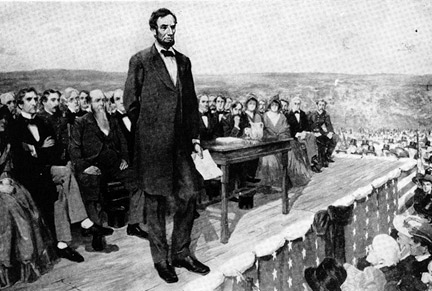
Rewrite a serious speech about a serious topic; make your rewrite humorous. Imagine “The Gettysburg Address” written not by Abraham Lincoln (who had a keen sense of humor himself), but by Mark Twain or Erma Bombeck.


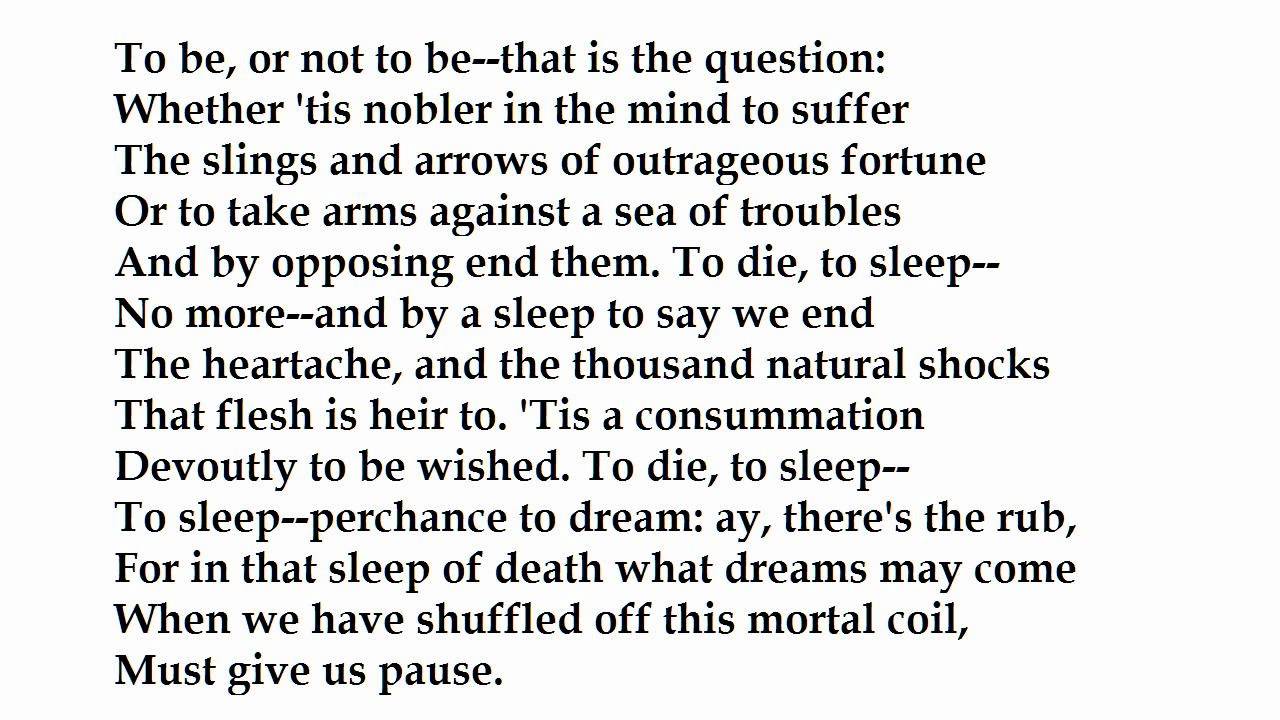
Parody a great poem or one of William Shakespeare's soliloquies. Twain does just this, in The Adventures of Huckleberry Finn, in which The Duke and The Dauphin butcher Hamlet's soliloquy to humorous effect.


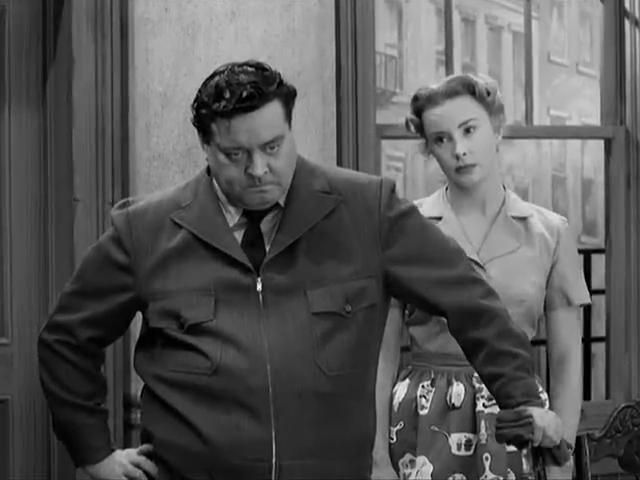
Explain why a supporting character should be the star of a short story, novel, or screenplay. Imagine I Love Lucy with Ethel Mertz, rather than Lucy Ricardo, as the main character or The Beverly Hillbillies with Milburn Drysdale and his wife as the major characters.

Create an imaginary argument between two characters with opposing views on the same topic.


Offer absurd applications of cutting-edge technology. For example, list reasons as to why men or women (or both) should be replaced by robots.


We claim to argue facts, using reason, but, often, desire comes first , arguments in support of our desires second, if at all. Write an argument based on a desire for something insignificant or “forbidden,” using irrelevant and ludicrous “reasons” to support your claims.


 Explain why an honored person, real or imaginary, should be reviled or why a reviled person, real or imagined, should be praised. If the person is real, use two real persons; if imaginary, use two imaginary persons. If the persons are real, write about men and women from the fairly distant past to avoid lawsuits!) Twain was forever trying to secure donations to build a statue to Adam, humanity's common ancestor.


Add a humorous character to a “serious” novel or short story in the public domain. Twain was once interested in creating a fictitious cabin boy to accompany Christopher Columbus on Columbus' explorations.

Tell a story from a different, humorous perspective.


Update a classic, such as The Rape of the Lock, for example.

Imagine a comedian substituting for an actor in an established role: W. C. Fields as Sheriff Andy Taylor, for instance.

Role reversal is often a good source of humor. What if Lucy Ricardo were a band leader and husband Ricky was a stay-at-home husband who aspired to fame and fortune?

Create seemingly absurd, but pointed (and pithy) maxims. Twain does this in Pudd'n'head Wilson. Here's one: “Man is the Only Animal that Blushes. Or needs to.”


Be a team of one! Examine a topic from a variety of perspectives, writing as if you have multiple personalities, each one of which was humorous in his or her own way.


Sunday, October 9, 2011

How To Write Hilarious Humor: An Analysis of Professional Comedians' (and Comediennes') Techniques to Tickle the Funny Bone


Chapter 4: “Kiss ‘Em, Kick ‘Em, and Kiss ‘Em,” Climactic Sequences, and Tone

Copyright 2011 by Gary L. Pullman


If, as a humorist, you’re going to trash someone--a friend (or future former friend) or a family member (before he or she has disowned you forever), perhaps--you don’t want to look, to your reader, like the shark that you are. You want to look like a nice guy or gal. How do you accomplish this miraculous feat?

In trashing her deceased mother, in the “Oh, Mother!” chapter of her book, Radner faced this very problem. Her solution? Prior to the trashing, say some nice things about her target. Use the “kiss ‘em, kick ‘em, kiss ‘em” strategy, wherein one lauds the soon-to-be butt of one’s jokes, then savages him or her, and then again praises the poor soul. Radner devotes two, albeit admittedly short, paragraphs to praising her mother:

It’s my contention that the things you remember about your childhood govern the way you raise your own children. Even though my other died when I was thirteen, I find myself constantly remembering the little things she did for me as I spend time with my daughter.

Kindness was my mother’s finest attribute; cooking was her downfall. Luckily, I was not a picky eater. Most of the things she cooked for me I found delicious.
Her chapter’s title, “Oh, Mother!,” by the way, is a play on words, recalling the exasperated cry, “Oh, brother!,” and sets the tone of the chapter--the narrator’s expression, mild and humorous, though it may be, of her exasperation with her mother’s lack of cooking “talent.”

Now that Radner has set up the chapter’s basic situation, she, through her narrator, presents the standard humorous examples to support and develop the chapter’s topic (her mother’s abominable cooking):

. . . Her most successful culinary creation (and my all-time favorite) was spaghetti mixed with ketchup and a semi-melted lump of butter. My second favorite was what I called Campbelled rice. This paired instant rice with Campbell’s Vegetarian Vegetable soup. Not only was it delicious, it was also educational (if not entirely sanitary), as I would spell out different words on the kitchen table with the gummy letters.
A technique for creating humor, seen in this paragraph, as previously in Radner’s book, is to mix categories, such as cuisine and education. The unlikely pairing is not only surprising, but amusing, for it brings together a ludicrous association that, despite its absurdity, nevertheless, in some way, seems to make sense. Radner’s use of this technique also taps into the familiar, because many adults are likely to remember playing with alphabet-shaped rice or pasta letters in their soup, just as Radner describes herself, as a girl, of having done. Absurdity mixes with familiarity to get a laugh. She then extends the humor by describing how her mother extended any leftovers from this meal to create another dish, employing, once again, a strange mixture of two disparate items, “soup,” a serving of food, and “Spackle,” a sealing compound used in construction:

If there was any Campbelled rice left the next day, the mixture would be poured into tomato soup, thus creating yet another unique variation: Campbelled tomato rice paste. It was midway between soup and Spackle.
Radner’s next paragraph begins with a list of items in a series which have no apparent relationship to one another. However, a link between these disparate items is formed by Radner’s identification of them as her “mother’s three most spectacular failures”: “My mother’s three most spectacular failures involved a can or corn, a duck, and matzo balls.” Having created a Lucy Ricardo-like caricature of her mother as an inept cook and having cited a couple of previous examples of her mother’s culinary incompetence, Radner has interested her readers in learning more about the poor woman’s “culinary failures.” Because of the nature of comedy, in which humorous anecdotes or jokes move steadily toward a crescendo, or climax, of mirth, readers also expect that the quips and gags will be funnier than the previous ones were, although these newer ones will be topped, in turn, by even funnier ones, until, at last, the climax of the series is reached.

Sure enough, Radner’s mother doesn’t disappoint, for she next turns a can of corn into a bomb; cooks inedible, rubbery matzo balls; and reduces the duck, which she seeks to cook as if it is chicken, to an unrecognizable, gelatinous mass that even the daughter, who is “not a picky eater,” refuses to sample, in any form (whether as a roast duck, a salad ingredient, or a sandwich filler). In detailing these “culinary failures,” Radner spices her descriptions with more than a dash of hyperbole:

I don’t know what prompted her to put a closed can of Niblets into the searing oven; I just remember the explosion. . . . I was in charge of picking bits of corn off the floor while she climbed the ladder and tackled the ceiling.
[Trying to consume the matzo balls] was like eating dried Silly Putty. We were fearful of breaking the garbage disposal, so the leaden bits of dough were finally tossed in the trash. . . .
I remember her taking the duck [that the narrator’s mother had prepared as she’d supposed a chicken should be cooked] out of the oven and encountering a sea of grease that in my brief life I had never seen emanate from a chicken. It was so slimy that as my mother served it, the poor bird almost slid off the plate.

Having “kicked” her mother--or a caricature of her mother--Radner now has her narrator “kiss” her again, as the chapter comes to a close, in a paragraph which, for humorous books, is unusually long, and which is followed by a shorter, final paragraph that rounds out the chapter. The longer paragraph begins, “Along with my mother’s lack of cooking talent, I also remember her remarkable personality. I remember the light in her eyes whenever she saw me. I remember her kind voice and her forgiving, patient nature. . . .”

Conclusion

Sometimes, a humorist may savage a friend or family member--or, actually, a caricature of such a person. To prevent alienating him- or herself from the reader, the humorist should adopt the “kick ‘em, kiss ‘em, kiss ‘em” strategy of first praising the victim-to-be, before verbally assaulting him or her with outlandish exaggerations of a defect, real or imagined, and then, once again, lauding the savaged party before concluding the chapter with a short, often single-sentence expression of appreciation for his or her overwhelmingly positive personality traits and behavior patterns, such as Radner does in the closure to her “Oh, Mother!” chapter: “Cooking aside, I only hope I’m half as good a mother to my daughter as my mother was to me.” This concluding comment will leave readers with an “awwwwwww” reaction, rather than a feeling of disdain for someone who would savage a friend or family member (even a caricaturized version) simply to get a laugh. In this chapter, Radner uses several devices she’s used before, including exaggeration, or hyperbole; ludicrous examples; conflated, absurd comparisons; and climactic sequences in which lesser jokes and gags are followed by greater jokes and gags. Her title, “Oh, Mother!,” is a play on words, recalling the exasperated cry, “Oh, brother!,” and sets the tone of the chapter--the narrator’s expression, mild and humorous, though it may be, of her exasperation with her mother’s lack of cooking “talent.”


Next: Chapter 5: Juvenalian Satire

Thursday, October 6, 2011

How To Write Hilarious Humor: An Analysis of Professional Comedians' (and Comediennes') Techniques to Tickle the Funny Bone


Chapter 3: Metaphor, Hyperbole, Situational Humor


Like many chapters (and, sometimes, entire books), the chapter called “Catalogue Addiction” is based upon a metaphor which, as the title suggests, equates catalogue shopping with an addiction of some kind, probably one related to drugs or alcohol. The metaphor is extended with references to “treatment centers,” “a group of women with similar problems,” interventions, stashing catalogues as an addict stashes caches of drugs or alcohol, and “recovery.” However, as the need arises, for the sake of humor, the metaphor is occasionally abandoned in favor of the use of humorous techniques that are not related to or dependent upon the trope. For example, a shopping catalogue is personified as a stalker: “the company’s first final clearance catalogue made its way into my clutches three houses ago. It doesn’t matter how often I move; the catalogue knows where I’m living.” Likewise, a Victoria’s Secret catalogue is compared not to drugs but to “pornography,” as the addiction to the former becomes, as it were, an addiction to the latter. Exaggeration is used as well: the models in the Victoria’s Secret catalogue are endowed with such large breasts that their “bosoms” prevent the narrator from closing the publication: “The bosoms on the otherwise skinny women appear to be inflated. The last issue was so chock-full of overly endowed ladies, I couldn’t even keep the magazine closed.” Likewise, Radner employs hyperbole when she describes the mailman as having developed a hernia from delivering the many weighty catalogues that the narrator, like the other women in her neighborhood, receives on a regular basis.

In “Do It Again,” Radner’s humor comes not so much from a series of setups and punch lines or extended metaphors as from a familiar situation carried to extremes. The situation is continuous, from the beginning to the end of the chapter and is, as such, also the chapter’s main source of unity. As always, the opening paragraph establishes the situation in a few short sentences:

Because I was a child such a very long time ago and my contact with children until I had my own was so limited, I was entirely unaware of a child’s capacity for repetition.
Examples of the child, Molly’s, “capacity for repetition” follow, each of which will be likely to strike a familiar chord in reader‘s own experiences. First, a couple of shorter examples are supplied: the game of hide-and-seek, in which Molly continues to hide in the same place each time the game is played--or replayed--and her begging her mother to be carried upside down to the bathroom for her bath, just “one more time,” Then, a third, extended example fills out the rest of the chapter, humanizing the narrator as a mother who loves her daughter. At play at the beach, Molly finds a new way to hide. When the narrator fetches a seashell for her daughter, Molly hides behind her, turning as the narrator turns, so that the mother cannot see her. As a result, the mother is distraught, imagining that Molly might have wandered into the sea or been spirited away by an abductor. When the narrator finally discovers her daughter, the girl asks her mother whether she was “really scared,” and, when her mother confesses that, having imagined her daughter to be lost, she “really” was frightened, Molly, delighted, begs, “Let’s do it again,” her request providing the words of the chapter’s title and thereby bringing the chapter to a full circle.

Conclusion

A chapter’s humor can largely derive from the use of an extended metaphor or a familiar situation. However, as the need arises, either structural device is apt to alternate with other, secondary techniques for producing humor, such as personification, exaggeration, or repetition, with a line or a phrase of dialogue at the end of the chapter repeating the chapter’s title so as to bring the chapter full circle as the section of the book comes to a fitting close.

Wednesday, September 28, 2011

How To Write Hilarious Humor: An Analysis of Professional Comedians' (and Comediennes') Techniques to Tickle the Funny Bone

Chapter 1: Choosing Your Theme

Copyright 2011 by Gary Pullman 


Most humor books are based upon a theme, or central topic, as the following sample of titles indicates:

  • Dave Barry’s Complete Guide to Guys
  • Dave Barry’s Only Travel Guide You’ll Ever Need
  • Dave Barry’s History of the Millennium (So Far)
  • Dennis Miller’s Rants
  • Dennis Miller’s Still Ranting After All These Years
  • Dennis Miller’s The Rant Zone: An All-Out Blitz Against Soul-Sucking Jobs, Twisted Child Stars, Holistic Loons, and People Who Eat Their Dogs!
  • Dennis Miller’s I Rant, Therefore I Am
  • Dennis Miller’s Rants Redux
  • Art Buchwald’s You Can Fool All of the People All of the Time
  • . . . And Then I Told the President: The Secret Papers of Art Buchwald
  • Erma Bombeck’s At Wit’s End
  • Erma Bombeck’s Just Wait Till You Have Children of Your Own
  • Erma Bombeck’s If Life Is a Bowl of Cherries, What Am I Doing in the Pits
  • Eat Less Cottage Cheese and More Ice Cream: Thoughts on Life By Erma Bombeck
  • Erma Bombeck’s I Lost Everything in the Post-Natal Depression
  • Erma Bombeck’s Family: The Ties That Bind. . . And Gag!
  • Gilda Radner’s It’s Always Something
  • Bunny, Bunny: Gilda Radner, A Sort of Romantic Comedy
  • Gilda Radner’s I Still Have It . . . I Just Can’t Remember Where I Put It
  • Gilda Radner’s Turning the Tables
  • Gilda Radner’s Naked Beneath My Clothes
  • Gilda Radner’s Tickled Pink
  • Gilda Radner’s Guide to Men

That’s just a short list, of course, but it suggests several points that are useful to the aspiring humorist. Some of these points might not seem all that significant. However, notice that all the author’s names on this list have something in common. They’re professional comedians (or, in some cases, comediennes). They also have something else in common: they’re all hilarious! Therefore, if you can learn anything from any of them, whatever it is, it’s not insignificant.

 
Having made that point clear, let me list some of the significant points you can learn from considering the list:
  • Many of the titles use alliteration. Although alliteration is not necessarily humorous in itself, it is pleasing both to the ear and the eye. In other words it’s attractive. No, make that aesthetically attractive. That’s alliterative.
  • Several of the titles are long. More specifically, the subtitles are long (the titles themselves tend to be rather short, the better to fir the limited space available to book reviewers). Theirs is something funny about long subtitles. Why? You might as well ask why the sky is high or the snail is slow. They’re just funny: that’s why. (Keep that ion mind when you write your book’s title.)
  • Puns and other plays on words (such as Post-Natal Depression, If Life Is a Bowl of Cherries, What Am I Doing in the Pits, and Ties That Bind. . . And Gag!) are funny, even when they’re painful. Bombeck uses them, and, if they’re funny enough for Erma, they’re funny enough for you.
  • By making a list and talking about it twice (or more), it’s possible to get off the track and stay off the track for some time without your reader realizing it, wasting a lot of his or her time without him or her realizing it, and filling a page or more with irrelevant digressions without your editor or publisher realizing it, as I have done here.

Sooner or later (later is usually better), even as a humorist, you have to come back to the point, which is, if the title of this chapter is any guide (which, of course, it isn’t), is “Choosing Your Theme.” As I mentioned at the outset of this chapter, a theme is the central topic that a humorist writes about throughout his or her whole book and the tie that binds (and gags!--Thanks, Erma) the book together, giving it unity. (It never hurts to repeat yourself in writing a humorous book, either, to stretch things out, as long as the reader, the editor, or the publisher doesn’t catch on.)

 
So, anyway, let’s talk theme.

 
A theme should be universal, appealing to as many people as possible, because you want to sell as many books as possible and make as much money for yourself (and your publisher, too, of course, who will be reading your manuscript if he or she isn’t too lazy to do so, in which case he or she will assign someone else to read the damned thing and report back to him or her).

 
The titles of the humorous books by Barry, Miller, Buchwald, Bombeck, and Radner suggest (at times, at least) their respective themes: Barry is into guys, travel, and history; Miller rants, rants again, and rants some more; Buchwald is obsessed with politics; Bombeck is up to her neck in family issues; and Radner is concerned with romance and aging.

 
Other good topics: animals (especially pets), babies and babysitters, camping, children, college, dating, friends, marriage, neighbors, sex, shopping, teenagers, vacation, weddings, women, and work.. Experiences that make people uncomfortable or anxious are, paradoxically, also good fodder for humorous treatments. That’s why there are chapters in some books concerning visiting doctors, dentists, and lawyers. That’s also the treason that there are whole books on marriage.

 
After you’ve chosen your theme (or, in some cases, it has chosen you), break it into topics. These will become the subject matter for your book’s chapters (except for the first chapter, which will introduce the theme for the whole book, rather than for its own chapter.) For example, let’s say you choose the theme of aging, as Radner does for her book, I Still Have It . . . I Just Don’t Know Where I Put It. Her first chapter, “I Can’t Believe I’m Filthy,” introduces it as the theme of the entire book. Other chapters consider various (usually only slightly, or loosely) related aspects of this topic, such as old-fashioned shopping by shopoholic (“Catalogue Addiction”); contrasts between children’s youthful behavior and Radner’s older perspective (“Do It Again”); a mother’s lasting influence on even her adult children (“Oh, Mother!”); the difficulty of opening packages that older people sometimes experience (“Go Ahead, Open This Bag”); and so forth. Notice, the chapter topics tend to be lighthearted; address relatively trivial, everyday situations; and pertain to familiar experiences. These characteristics endear these topics to millions of readers (one hopes) by offering humorous, knowing depictions of common annoyances and frustrations that make experiencing them (or remembering experiences concerning them) seem more tolerable and less exasperating than they actually are or were.

 
One other point. The titles of the chapters should be worded so as to disguise the fact that the chapters are really about just another of the aspects of the book’s overall theme. Each title should suggest that its chapter is about a brand-new, never-before-seen (or read) topic. Alternatively, at the very least, the chapter titles should be so vague, yet, somehow familiar-sounding, that they mean absolutely nothing (but still, somehow, seem to relate to the chapter’s contents). Check out some of the chapter titles from Radner’s book: “Catalogue Addiction,” “Do It Again,” “Oh, Mother!,” “Go Ahead, Open This Bag.” Although one chapter title does indicate its topic (“Catalogue Addiction” is obviously about obsessive catalogue shopping), another chapter title (“Do It Again”) seems to be about something other than what it is, in fact, about--sex, maybe--whereas the other chapter titles (“Oh, Mother!“ and “Go Ahead, Open This Bag”) are so vague that they could be about anything, from motherhood to collecting corpses in body bags.

 
So, what have you learned--or what have I taught, at any rate--in this chapter? It’s time to highlight the key points (because conclusions eat up even more space, enabling you, as a writer, to achieve your contracted word count).

 
Conclusion

 
Like the book’s title, which may contain either alliteration or a pun (or both) and will probably include a long subtitle, the first chapter introduces the theme, or central topic, that unifies the book’s contents, laying the groundwork for the topics that subsequent chapters will explore. The titles of the chapters should disguise the fact that the chapters are merely addressing yet another aspect of the central topic, or theme, by seeming to be about something--anything--else than what they really introduce. The book’s theme and the chapter’s topics are often about an annoying, frustrating, familiar, and universal experience with which readers can identify and appreciate. In writing the book, occasional digressions are welcome, as are needless repetitions (but not too many), lists, and end-of-chapter conclusions to round out (and, more importantly, lengthen) the book’s page count. That about sums it up 


Next:  Chapter 2: Introductions, Set-Ups and Punch lines, Transitions as Loose Associations, Metaphors, Similes, Allusions, Malapropisms, and Other Techniques

Monday, November 23, 2009

Stand-up Comedians, Part 2

Copyright 2009 by Gary L. Pullman

Woody Allen is better known as a movie producer, but the funnyman started his career as a stand-up comedian. As such, he created a stock character unique to modern sensibilities. Known for expressing the angst of the set-upon everyman, Allen portrayed the putz, a nerdy, needy egghead who is unvalued and misunderstood. Typically, his character is a neurotic, if philosophical, lost soul. Much of his comedy involves an existential take on things. Much of his comedy alludes to psychoanalysis, reflecting the three decades that he spent on the Freudian couch. In his early years, Allen was also a comedy writer for Herb Shriner, Sid Caesar, Candid Camera, and other comedians and comedy shows.

According to Willy Loman, “spite” is the word of Biff’s “undoing.” This may or may not be true--Willy was hardly a good judge of character, after all, but one can say with certainty that “disrespect” is the word upon which Rodney Dangerfield built his career as a stand-up comedian. After a succession of failures--as a singing waiter, an acrobatic diver, and an aluminum siding salesman, Dangerfield came to understand that he needed an “image,” or a persona that would both define him as a comedian and resonate with his audiences. He found himself as a comedian when he complained that he didn’t get any respect from anyone. He often began a joke with his trademark grievance, “I get no respect,” following his protest with a humorous example to prove his contention: “When I was a kid I got no respect. The time I was lost on the beach and the cop helped me look for my parents I said, "Do you think we'll find them?" He said, "I don't know, kid, there's so many places they could hide.” Dangerfield’s career demonstrates how a simple gimmick, properly employed, can establish a comedian’s career.

Flip Wilson, one of the first black stand-up comedians, also banked on a well-established character--in his case, a female alter ego named Geraldine, who was, as it were a regular guest star on the Flip Wilson Show. Outspoken and irascible, a daughter of the ghetto, Geraldine delivered hip, modern maxims and proverbs, including “When you’re hot, you’re hot” and “The devil made me do it.” However, Wilson’s comedy sometimes offended some African-Americans who viewed his routines as fostering stereotypes of black culture. Some also did not appreciate the dialect in which some of his onstage characters spoke.

Although he wasn’t a comedian, major league baseball player and manager Yogi Berra misused the English language unlike anyone since Mrs. Malaprop and is unequalled in his use of malapropisms except, perhaps, by former president George W. Bush, and his fractured phrasing should be a continued inspiration to humorists and comedians for years to come. A few quotations demonstrate the comic effect that is derived from the oddly appropriate, but misspoken, quips for which Berra is famous:

    • “Ninety percent of the game [of baseball],“ he contended, “is half mental.”
    • His reason for foregoing meals at Ruggeri's, a St. Louis restaurant: “Nobody goes there anymore. It's too crowded.”
    • His take on when to call it quits: “It ain’t over till it's over.”
    • Giving directions to Joe Garagiola as to how to get to his New Jersey home, which could be reached by two alternative routes: “When you come to a fork in the road, take it.”
    • On the benefits of observation: “You can observe a lot by watching.”
    • Concerning the need to attend friends’ funerals: “Always go to other people's funerals, otherwise they won't go to yours.”

George W. Bush is also known for his mangling of the English tongue, although not all of the former president’s misstatements take the form of the malapropism. Again, a sample of his tongue twisters shows the humorous effect of such speech:

    • “One of the very difficult parts of the decision I made on the financial crisis was to use hardworking people's money to help prevent there to be a crisis.”
    • “I'm telling you there's an enemy that would like to attack America, Americans, again. There just is. That's the reality of the world. And I wish him all the very best.”
    • “I've abandoned free market principles to save the free market system.”
    • “I've been in the Bible every day since I've been the president.”
    • “This thaw--took a while to thaw, it's going to take a while to unthaw.”
    • “Anyone engaging in illegal financial transactions will be caught and persecuted.”
    • “The people in Louisiana must know that all across our country there's a lot of prayer--prayer for those whose lives have been turned upside down. And I'm one of them.”
    • “Throughout our history, the words of the Declaration have inspired immigrants from around the world to set sail to our shores. These immigrants have helped transform 13 small colonies into a great and growing nation of more than 300 people.”
    • “I remember meeting a mother of a child who was abducted by the North Koreans right here in the Oval Office."


Next: Applying Humorous Writing Techniques

Saturday, November 21, 2009

Stand-up Comedians

Copyright 2009 by Gary L. Pullman

Stand-up comedians also provide many examples of how to get laughs that can assist the humorist who is more interested in writing than in enacting or delivering funny lines. In humor, as in comedy and all other forms of entertainment, all is grist for the mill, and the humorist should learn continuously from as many sources as possible, adapting others’ methods and techniques to his or her own purposes and needs. For this reason, it is helpful to consider such the method in the apparent madness of such brilliant stand-up comedians as Lenny Bruce, Jack Benny, Red Skelton, Jay Leno, David Letterman, Woody Allen, Rodney Dangerfield, Flip Wilson, Jonathan Winters, and such unintentional comics as Yogi Berra, George W. Bush, and Mrs. Malaprop.

Lenny Bruce was regarded as an iconoclast by his peers. Columnist Herb Caen characterized the stand-up comedian in this fashion:


They call Lenny Bruce a sick comic, and sick he is. Sick of all the pretentious phoniness of a generation that makes his vicious humor meaningful. He is a rebel, but not without a cause, for there are shirts that need un-stuffing, egos that need deflating. Sometimes you feel guilty laughing at some of Lenny’s mordant jabs, but that disappears a second later when your inner voice tells you with pleased surprise, ‘but that’s true.’
Critic Albert Goldman describes Bruce’s Carnegie Hall Concert as “the greatest performance” of a “rapidly rising young comedian” given to improvisation and the fine art of adlibbing:


Lenny worshipped the gods of Spontaneity, Candor and Free Association. He fancied himself an oral jazzman. His ideal was to walk out there like Charlie Parker, take that mike in his hand like a horn and blow, blow, blow everything that came into his head just as it came into his head with nothing censored, nothing translated, nothing mediated, until he was pure mind, pure head sending out brainwaves like radio waves into the heads of every man and woman seated in that vast hall. Sending, sending, sending, he would finally reach a point of clairvoyance where he was no longer a performer but rather a medium transmitting messages that just came to him from out there--from recall, fantasy, prophecy. A point at which, like the practitioners of automatic writing, his tongue would outrun his mind and he would be saying things he didn't plan to say, things that surprised, delighted him, cracked him up--as if he were a spectator at his own performance!
Bruce’s freewheeling style and his penchant to include a good deal of profanity and obscenity in his adlibbed monologues got the performer in trouble on more than one occasion. He was arrested and for indecency several times and was finally sentenced to four months’ incarceration in a workhouse, dying while his sentence was being appealed.

He is often held up as an example of the free speech that humorists claim that they deserve. In fact, many humorists contend that they should be exempted from the politically correct restrictions on free speech that ordinary men and women experience because they are, as it were, the “all-licensed fools” of whom King Lear speaks, referring to the tradition that allowed court jesters to speak frankly to the king or queen without fear of appraisal; thus the fool was not a “yes man,” and could serve as a trusted advisor.

Modern authorities, promoters, audiences, readers, publishers, and societies have been at times reluctant to extend comedic carte blanche to today’s equivalents of the court jester, or fool, as Bruce’s case and that of others, including David Letterman’s, indicate, and humorists should not simply assume that they have such license. Instead, they should determine which topics, language, and treatments are acceptable to their audiences or readers and which are taboo.

Red Skelton’s stand-up comedy routines reflected his gentle spirit. Having honed his comedic talents in vaudeville and on various radio programs after earlier performing as a circus clown, Skelton starred in many movies (comedies, of course) before starting his own television comedy-variety show, The Red Skelton Hour. His acts centered around characters he created, which became familiar to an audience of millions: Freddie the Freeloader, a tramp; singing cabbie Clem Kaddiddehopper; the Mean Liddle Boy; besotted Willy Lump-Lump; Sheriff Deadeye; and even a pair of seagulls, Gertrude and Heathcliffe. His characters endeared him to the public, as did his laughing at his own jokes and his sign off, “Goodnight, and may God bless.” Like Bill Cosby, Skelton eschewed profanity and obscenity, believing it not only inappropriate, but unnecessary, for a comedian to resort to vulgarity to get laughs. Some of his skits involved pantomime, and Groucho Marx regarded Skelton as comedy’s heir to Charlie Chaplin.

The successor to Johnny Carson as the host of National Broadcasting Company’s (NBC’s) The Tonight Show, Jay Leno delivered a nightly monologue, Monday through Friday, on topical events, often political in nature, lampooning presidents and senators as often as he did fads and follies. He also bantered with his band leader and engaged in repartee with the political and celebrity guests of his talk show. Unlike some stand-up comedians, Leno himself is an able writer, and, during a writer’s strike, he wrote the material for his own monologue. He also writes a monthly column for Octane, an online magazine that concerns itself with “the world’s greatest classic and performance cars.” In one article, afraid that he will be stopped by a police officer for speeding on his Morgan three-wheeler, while “screaming down Mulholland Drive,” he is surprised when the officer informs him that, rather than traveling at a speed of seventy miles per hour, as he’d thought, he was going only thirty-five miles per hour--ten miles per hour under the speed limit. Leno’s columns’ style reflect the boy-next-door charm, the slightly goody humor, and the easy identification with middle America that make him popular as a comedian and a humorist, both on the screen and the printed page.

Leno’s competitor, David Letterman, hosts Columbia Broadcasting System’s (CBS’) Late Show with David Letterman. Letterman is often caustic in interviewing his guests. Once, he said to Joaquin Phoenix, who was relatively unresponsive during his interview, “I’m sorry you couldn’t be here.” Letterman also sparred with Fox News’ Bill O’Reilly, host of The O’Reilly Factor, and with such other celebrities as Cher, Shirley MacLaine, Charles Grodin, and Madonna. Once, wearing a Velcro suit, he leaped onto a wall covered in the same material, becoming stuck several feet off the ground. Like Leno, he delivers a monologue. Letterman also performs brief skits, and his show features several regular spoofs and send-ups, including “Stupid Pet Tricks” and its spin-off, “Stupid Human Tricks.” His “Top Ten List” is also a regular feature, during which he recites a list of the top ten things pertaining to a specific topic, such as “Top Ten rejected James Bond Gadgets,” in reverse order.

In June 2009, Letterman caused a controversy when he made a joke about Alaska Governor Sarah Palin’s fourteen-year-old daughter, Willow, being impregnated, or “knocked up,” by New York Yankees’ player Alex (“A-Rod”) Rodriguez while she was attending a baseball game with her mother. Letterman’s attempt to clarify the issue by apologizing for any offense the governor and her family might have felt and insisting that it was Palin’s eighteen-year-old daughter, Bristol, whom he’d intended to lampoon, not Willow, Letterman only made the situation worse, and his show was picketed by angry former fans. Many of his sponsors heard from irate viewers as well, some of them canceling their sponsorship of the show. In addition, Rodriguez also called for an apology from Letterman, saying, “Not funny, funnyman. Time for you to man-up and say you're sorry to me, the Yankees, the fans, and to ball players all over the world. We may love women, but we're not all womanizers.” Michelle Malkin and others characterized Letterman’s joke as “pedophile” humor, and Palin herself described Letterman as “pathetic.” This incident, like the arrest and incarceration of comedian Lenny Bruce, demonstrates that the “all-licensed fool” of whom Shakespeare’s King Lear speaks is not “all-licensed” in politically correct times such as ours, if ever, in fact, he was so “licensed.” (A fool was a court jester, or joker, a clown to whom a king traditionally granted the privilege of speaking frankly, without fear of reprisal; thus the fool was not a “yes man,” and could serve as a trusted advisor.) Like comedians, humorists would do well to remember that the Constitution may guarantee free speech, but it does not guarantee that such speech can be exercised with impunity in the court of public opinion.


Next: Stand-up Comedians, Part 2