Fascinating Lists!

Showing posts with label comedy. Show all posts

Sunday, December 30, 2018

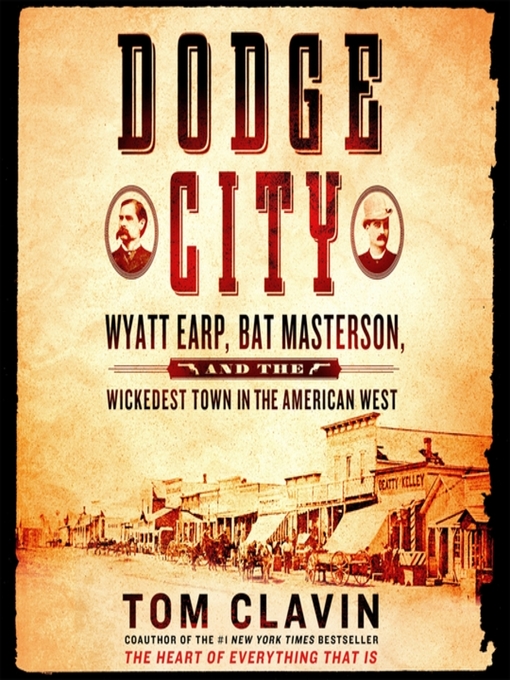
Humor in Tom Clavin's "Dodge City: Wyatt earp, Bat Masterson, and the Wickedest Town in the American West"

Copyright 2018 by Gary L. Pullman


In Dodge City: Wyatt Earp, Bat Masterson, and the Wickedest Town in the American West, Tom Clavin provides an informative, intriguing, and amusing account of law as it was practiced by two of its most famous representatives during their jurisdiction's most lawless times.

The humor, although unexpected, fits the occasions of its use and is effective in fetching a smile, a chuckle, and an occasional belly laugh.

Clavin's humor is typically drawn from the characters and situations he describes. Occasionally, a witticism is subject to a couple of interpretations. For example, in writing of the outlaw Sam Bass's family, Clavin observes, “When he was a young child, both his parents died, perhaps from exhaustion after having ten children” (167). Whether it was so much sex or the child rearing that followed the brood's births depends on one's interpretation.


In writing, earlier, of the dime novelist Edward Zane Carroll Judson, who wrote authored 300 or more of these books under his pen name, Ned Buntline, Clavin is at the top of his form, offering such wry remarks as these (bold added):

He always referred to himself as “Colonel” because he was photographed in Mathew Brady's studio wearing such a uniform, which was as close to being an officer as he got (137).

He was paid handsomely for giving lectures on temperance, often delivering them while drunk (138).

He had five children that he knew about (138).

He [Buffalo Bill Cody] met the author in Chicago and starred in a play Buntline had written in only four hours (some critics wondered what took so long) . . . (138).

Clavin's humor often results from his penchant for adding a descriptive phrase that isn't strictly necessary, usually to the ends of his sentences, as if they constitute an afterthought (see the bold phrases in the examples above). In effect, the first parts of the sentences act as the set-up, the second parts as the punchlines, or “snappers,” as Mark Twain would have called them.

A few other examples show that the device works well, despite repetition, since the variety comes by way of the changing tipocs of Clavin's wit (bold added):

Both [Colonel W. H. McCall and “a fellow named Wilson”] were drunk, and they were taking turns trying to shoot a dog, seemingly not concerned that they might also hit the yelping woman who owned the dog (149).

Clavin's account of the life and times of Wyatt and Bat exhibit other techniques of humor as well.


In one instance, the humor depends upon the reader's remembering some intelligence about a certain Dirty Dave Rudabaugh that Clavin delivers, as the set-up to his joke, several pages before the author follows up with his punchline (bold added):

He earned the nickname naturally, by bathing infrequently and wearing clothes that even by frontier standards were quite filthy (171).

. . . Billy the Kid, Rudabaugh, and three others who had joined the gang got away [from the gunfight that ensued a posse's arrival]. They holed up in a cabin near Stinking Springs, which had earned its name naturally, not thanks to Dirty Dave (179).

The gap between Clavin's set-up and punchline suggests that humor can be delayed, if the reader or listener has a good memory for detail and is attentive.


Occasionally, Clavin allows the implications of his subjects' statements to effect his humor. For example, in 1876, as deputy marshal of Dodge City, Wyatt instituted three rules for his officers to follow, one of which, despite its soundness, is made absurd by the self-serving basis (bold added):

. . . Don't shoot to kill, because wounding a man usually disabled him enough and he would be worth more money that way (134).


At least one of Clavin's humorous quips owes its effect to a play on words (bold added):

[When president Hayes visited Dodge Cityin its heyday, the stench of cowdung drove him back into his rfailroad car], leaving Gnereal [William Tecumseh] Sherman and the [Kansas] governor to soldier on as the speech continued (206).


Repeating selected quotations which are amusing in themselves adds to Clavin's humorous presentation of facts (bold added):

The only loaded gun was brandished by the [Dodge City Cowboy Band] director, a man known as Professor Eastman, who used it as a baton. When asked why a gun, eastman replied, “To kill the first man who strikes a false note” (207).

Tuesday, October 25, 2011

How To Write Hilarious Humor: An Analysis of Professional Comedians' (and Comediennes') Techniques to Tickle the Funny Bone


Copyright 2011 by Gary L. Pullman

Chapter 6: Fame, Fortune, Golf, and Television


In “Future Reality Shows,” Radner departs a bit from what had, before now, become her standard approach to developing her book’s humor. Instead of using an opening paragraph to establish a basic situation as an excuse to introduce absurd examples, gags, and jokes concerning an aspect of her book’s central concept, or theme, of aging, the author summarizes the premises of several non-existent television game shows. The descriptions of the shows’ premises poke fun at the absurdities of actual television shows of this genre. Each of the imaginary shows requires participants to do something ridiculous and, usually, dangerous to have a chance to win “a million” (or, in one case, “a schmillion”) dollars. One premise indicates the approach:

Who Wants to Marry a Serial Killer?

Serial killers fall in love, too. Six lucky women get to spend time with a hardened criminal on death row . . . but only one of them gets to marry him, have sex with him, and be present for his execution. You win a million dollars.
This chapter ends with a television show’s title, which takes the form of a rhetorical question, to which Radner provides her narrator’s answer:

Who Wants to Smash Their High-Definition Flat-Screen Television Set?

I do. Keep your million dollars.
The implication is that it is worth a million dollars to Radner to smash her own television set if doing so rids her of such fare as the premises to her imaginary game shows suggest fill the airwaves.

The use of oddball logic structures Radner’s chapter concerning golf (“A Hole in Eight”). In this chapter, after contributing a stunningly funny comparison (“the thought of me holding a golf club was as likely as Eleanor Roosevelt wiring a bikini”), the author shares her ideas as to how to enjoy a game of golf. Her logic is as impeccable, in its own way, as it is unconventional. Her strategy consists of four interrelated practices (or non-practices): don’t entertain high expectations; don’t purchase expensive, quality equipment; don’t practice the sport; and don’t take lessons. By adopting these approaches to playing golf, one eliminates stress and, in fact, enhances the enjoyment of the sport, she argues, for one is “thrilled” if play goes better than anticipated and, at the same time, one has is under no pressure to perform to a high standard--or, indeed, to any standard at all. As Radner’s narrator puts it, “If I hit a good shot, I’m thrilled, and if I don’t . . . well, what do I care? It’s not like I practiced.” She offers similar wrongheaded, but surprisingly sagacious, advice concerning the taking of golf lessons:

Never take a lesson. Just position yourself next to someone who is taking a lesson. This way, if you become worse, you can forget what you overheard, and if you become better, you have had free instruction.
In the “conclusion” to her chapter, Radner’s narrator suggests a theme, or a message, as it were, in the madness of her oddball logic. Her madcap procedures work for her, because, although she may be “out of touch with reality,” she is, nevertheless, “having a good time,” and having a “good time,” she implies, is more important than playing a golf game well.

Occasionally, a comedian or a comedienne can get away with an essentially serious monologue, spoken more from his or her own mouth, as it were, than from that of his or her book’s narrator. Radner accomplishes this--and well--in “At What Price?,” a chapter concerning the instant celebrity to which Andy Warhol referred when he predicted that, given the media’s incessant need for material, “In the future, everyone will be famous for fifteen minutes,” exemplifying the hidden personal costs, including invasions of privacy and actual physical danger, that being famous entails and the way in which almost anyone can become “famous”--for a while and for a time, at least--in contemporary America, as Paris Hilton did when her infamous sex tape was leaked over the Internet or as can those “who can stand on a post for hours while holding a dead fish in their mouths.” The theme of this chapter seems to be the lesson that Radner intends to teach her daughter, Molly: “Fame should be a by-product (and not necessarily a good one) of achieving something extraordinary.” She concludes the chapter with a twist on Franklin Delano Roosevelt’s famous saying, “The only thing we have to fear is fear itself”: “The only thing we have to fear is fame for fame’s sake.”

Radner gets away with being serious for a moment as a comedienne because she herself is famous (and, as such, may have a thing or two to teach others about the “cost” of celebrity) and because she writes well. However, in a humorous book, even a talented professional jokester can’t expect to get away with being serious very often, and Radner, of course, reverts to form--sort of-- in her next chapter, “CNNNMSNBCCNBCFOXNEWSNETWORKHEADLINENEWSLOCALANDNATIONALNEWS.” Its premise? “There are too many news outlets and not enough news to go around.” As a result, she contends, she hears the same news repeated at night that she has already heard the same morning, with the only real difference that it is now “stretched over twenty-two minutes plus commercials.” She offers an amusing, perhaps telling, observation concerning a parallel between the news itself and one of the products that sponsors it: “I’ve . . . noticed that the commercials on the evening newscasts are predominantly stomach-related. The news is so upsetting, drug companies have figured out a way to profit from it.” The claim that there is a cause-and-effect relationship between disparate incidents or situations is a favorite technique for prompting laughs, and one which tends to be funny whether the relationship is implied, as it is here, or directly stated, as it would have been if Radner had written, ““I’ve . . . noticed that the commercials on the evening newscasts are predominantly stomach-related because the news is so upsetting that it turns viewers’ stomachs, and drug companies have figured out a way to profit from it.”

Radner--or her narrator--offers a couple of brief examples of how news anchors are reduced to creating, rather than reporting, news stories and responds to Katie Couric’s plea to her audience to “send me a story you’d like to see on the news,” assuring viewers she’d “like to hear it,” with, “Well, I wouldn’t. Maybe that’s just me, but I like my news to be newsworthy.”

Having set up her chapter’s topic, television news, Radner follows up by offering an example of the mundane “news” that would result if she were to take Couric at her word and send in an item that her narrator felt was newsworthy; explains why she finds news crawlers (“the additional information located at the bottom of the screen”) helpful, because they add something new, if not actual news, to the newscasts; explains why she enjoys watching televised murder trials (they extend her treadmill exercise time); critiques the appearance of female newscasters (they all resemble fashion models); and criticizes the inundation of newscasts with flash, colorful graphics--all annoyances with which ordinary members of America’s television audience can relate.

In the process, Radner includes several techniques for producing laughter that are common to professional comedians and comediennes, some of which have been mentioned already, such as:

  • Run-on text: the title of this chapter runs together the acronyms and titles of several network news shows and the two categories of news programs, local and national, suggesting that these shows and categories have merged into one, more-or-less continuous and identical body of programmed material
  • Absurd, but amusing, anecdotes or examples that illustrate her sometimes-serious, sometimes-humorous claims and observations
  • A seemingly absurd, but nevertheless appropriate, comparison between disparate items: repeatedly reciting the same news while making it seem as if it is being read for the first time and Madonna’s attempt to affect virginity (“Reporting the exact same stories over and over and trying to keep them sounding as if it is the first time they’re being read has to be harder than Madonna trying to pretend she’s a virgin”) and the appearance of female newscasters as an effect of a cause which she associates with an historical event (“I love Judy Woodruff and Lesley Stahl, but I think the last time they ate something the Beatles were on Ed Sullivan”)
  • The use of something for an unintended, but practical, purpose: watching the news is an adjunct to her exercise routine
  • Humorous rhetorical questions: do judges’ refusals to televise certain criminal trials suggest that “they do not care about the state of my inner thighs? Have they no conception of the benefits to my buttocks?”
  • Absurd solutions to unusual problems: One such solution is suggested by a hypothetical action on her narrator’s part: “If I sent pictures of me before the O. J. trial and then after,” the judges who refuse to televise trials “might reconsider” their decisions, she suggests, and, thereby, allow the broadcast of these programs, which she uses as adjuncts to her exercise routines. She also has an idea as to how to remedy the broadcasts of made-up news: instead of overusing the “Breaking News” graphic, “how about a ‘Made-Up News’ graphic?”
  • Cause-and-effect relationships of a spurious, but amusing, nature: “The more attractive a woman reporter is on CNN, the more time she gets to spend indoors. If you’re forty and have a double chin, chances are you’re filming your report wearing a parka and freezing on the White House lawn or wearing a flak jacket down in a spider hole in Iraq”
  • Exaggeration: “‘Breaking News’ is a graphic that is currently being overused on television to command our attention. The last time I saw it flashed on my TV screen it turned out that someone in a kitchen in Iowa had broken something”
  • Absurd counterexamples (headlines, in this case, that would suggest actual, rather than made-up news--if they were, indeed, true--and would, therefore, command attention): “‘Hi, this is Katherine McKennedy and here are today’s headlines. . . . Tony Danza announces he is running for president of the United States . . . . Bill gates goes bankrupt . . . and Osama Bin laden marries Jennifer Lopez in a drive-through chapel in Vegas.”
Conclusion

Over a period of three chapters, Radner demonstrates how a topic can be given extended treatment when the material that supports it is broad enough. Television provides sufficient fodder, and Radner, employing a variety of humorous techniques, criticizes game show premises and television news, breaking up the topic with the inclusion, between the chapter concerning game shows and news programs, a chapter that deals with golf, a sport that enjoys widespread popularity, and fame which, whether it is deserved or undeserved, comes with a “cost.” In each case, her targets are, as usual, both familiar and popular, but are also sources of aggravation and annoyance for both those who participate in them or those who merely observe others who participate in them. In these chapters, Radner has employed many of the same techniques that she has already used to effect humor, but she also demonstrates the use of several as-yet-unseen methods for amusing readers, including run-on text; unintended (but practical) uses of products or services; absurd solutions to problems, real or imagined; dubious cause-and-effect relationships between disparate incidents or situations; and absurd counterexamples. The chapter concerning the cost of fame shows that a comedian or a comedienne can occasionally get away with being serious (for a moment), provided that, the rest of the time, he or she is funny and provided that, in being serious for a moment, he or she writes well.

Monday, October 24, 2011

How To Write Hilarious Humor: An Analysis of Professional Comedians' (and Comediennes') Techniques to Tickle the Funny Bone

Copyright 2011 by Gary L. Pullman

Chapter 5: Juvenalian Satire


Another arrow in the humorist’s quiver is Juvenalian satire. Such satire is mild, as opposed to harsh or bitter Horatian satire. Historically, Juvenalian satire’s intent was corrective, aiming at diagnosing an annoying or offensive defect in the personality or an annoying habit that, once brought to the offender’s attention, might be fairly easily remedied, as by repressing the annoying personality trait or suppressing the offensive conduct. On the other hand, Horatian satire’s purpose was to identify obnoxious characteristics or behavior that required more serious or prolonged attention, such as social ostracism.

In “Go Ahead, Open This Bag,” using the Juvenalian approach, Radner exposes her father’s--or a caricature of her father’s--vanity concerning his manliness. Despite--or, perhaps, because of--his age, the narrator’s father, a “seventy-eight-year-old man,” is loathe to ask for assistance from either younger individuals or members of the opposite sex, especially in the performing of so simple a task as opening a bag of peanuts that flight attendants have distributed to the passengers aboard an airplane trip from Miami to Las Vegas.

Until now, Radner has presented her chapters’ set-up situations in short expository paragraphs. In this chapter, she introduces the setup through a series of humorous exchanges of dialogue between father and daughter. The father has flown from his hometown to visit the narrator, and after exchanging “the two-minute father-daughter hug” they’ve “perfected through the years,” the narrator asks her father what he means by his cryptic greeting, “I thought I could do it. Turned out I was mistaken.” Her question sets up the exchange of dialogue in which the reader sees the father’s pride concerning his manliness, which has remained intact despite his advanced age. It is this pride, or vanity, that is subjected to the mild attack of Juvenalian satire throughout the remainder of the chapter.

Unable to open the bag of peanuts the flight attendant has provided, he first blames the bag, rather than himself, for his inability to open the package, suggesting that the bag might have been somehow defective:


“Didn’t the bag have a perforation on one side? Usually, if you look carefully, there’s a perforation."

“I checked. There was no perforation. Possibly, it was a defective bag. I don’t know, I didn’t check other people’s.”
When his daughter asks, “Why didn’t you ask for help?,” the father’s vanity surfaces through his responses:

“I’m a seventy-eight-year-old, two-hundred-pound man. What do you want me to say to the thirty-two-year-old, one-hundred-and-fifteen pound female flight attendant? ‘Will you open this bag of peanuts for me?’ Why don’t I just put on a dress and be done with it?”

“How about the person sitting next to you?”

“I wish you hadn’t asked. She was an eighty-year-old ninety-pounder.”

“And she opened the bag with no problems?”

“She struggled. She finally stabbed it with a fork over Denver.”
The reference to “Denver” is a non-sequitur; the context in which it appears--the stabbing of a bag, as if it were a murder victim who is wounded during a struggle--is both surprising and ridiculous, earning a laugh from the reader.

The next exchange of dialogue further reveals the father’s pride--and his wounded dignity:

“Why didn’t you stab it once you saw there was a way in?”

“Because I shouldn’t have to. I’ve raised a daughter, I’ve been a lawyer. Last year, when the last full-service island closed downtown, I even learned how to pump my own gas. I should be able to open a bag of nuts.”
It is absurd for a man of such accomplishments--a father, a lawyer, and a man who has managed to adapt to changes in technology--to feel that his manhood and his dignity are threatened by his difficulty in performing such a mundane task as opening a bag of peanuts, but, of course, many times, people’s sense of self-worth is threatened by just such ludicrous situations, so, once again, Radner taps a universal experience among her readers, the humorous way in which she depicts a fictionalized version of such an experience lessening the embarrassment and the humiliation that such situations may have caused them by deflecting it onto a surrogate, or stand-in, for them, by showing them how ridiculous both the situation itself and the father’s reactions to it are.

Conclusion

In this chapter, Radner has, once again, selected an everyday situation--an airplane flight--and familiar psychological and social states of affairs--a man’s anxiety about the effects of aging upon his masculinity and his sense of dignity as a man and his refusal to accept the help of others--to set up her comedy. In the process, using mild Juvenalian satire, she criticizes the foolishness of the behavior (the father’s refusal to seek or accept the assistance of others) that results from these anxieties. Her techniques also include humorous dialogue, through which she discloses the story’s conflict while characterizing both her narrator and her narrator’s father; comedic repetition through which a series of jokes are included, all concerning the same topic and situation; and personification that comprises a logical non-sequitur(the bag is characterized as if it is a person).

Thursday, October 6, 2011

How To Write Hilarious Humor: An Analysis of Professional Comedians' (and Comediennes') Techniques to Tickle the Funny Bone


Chapter 3: Metaphor, Hyperbole, Situational Humor


Like many chapters (and, sometimes, entire books), the chapter called “Catalogue Addiction” is based upon a metaphor which, as the title suggests, equates catalogue shopping with an addiction of some kind, probably one related to drugs or alcohol. The metaphor is extended with references to “treatment centers,” “a group of women with similar problems,” interventions, stashing catalogues as an addict stashes caches of drugs or alcohol, and “recovery.” However, as the need arises, for the sake of humor, the metaphor is occasionally abandoned in favor of the use of humorous techniques that are not related to or dependent upon the trope. For example, a shopping catalogue is personified as a stalker: “the company’s first final clearance catalogue made its way into my clutches three houses ago. It doesn’t matter how often I move; the catalogue knows where I’m living.” Likewise, a Victoria’s Secret catalogue is compared not to drugs but to “pornography,” as the addiction to the former becomes, as it were, an addiction to the latter. Exaggeration is used as well: the models in the Victoria’s Secret catalogue are endowed with such large breasts that their “bosoms” prevent the narrator from closing the publication: “The bosoms on the otherwise skinny women appear to be inflated. The last issue was so chock-full of overly endowed ladies, I couldn’t even keep the magazine closed.” Likewise, Radner employs hyperbole when she describes the mailman as having developed a hernia from delivering the many weighty catalogues that the narrator, like the other women in her neighborhood, receives on a regular basis.

In “Do It Again,” Radner’s humor comes not so much from a series of setups and punch lines or extended metaphors as from a familiar situation carried to extremes. The situation is continuous, from the beginning to the end of the chapter and is, as such, also the chapter’s main source of unity. As always, the opening paragraph establishes the situation in a few short sentences:

Because I was a child such a very long time ago and my contact with children until I had my own was so limited, I was entirely unaware of a child’s capacity for repetition.
Examples of the child, Molly’s, “capacity for repetition” follow, each of which will be likely to strike a familiar chord in reader‘s own experiences. First, a couple of shorter examples are supplied: the game of hide-and-seek, in which Molly continues to hide in the same place each time the game is played--or replayed--and her begging her mother to be carried upside down to the bathroom for her bath, just “one more time,” Then, a third, extended example fills out the rest of the chapter, humanizing the narrator as a mother who loves her daughter. At play at the beach, Molly finds a new way to hide. When the narrator fetches a seashell for her daughter, Molly hides behind her, turning as the narrator turns, so that the mother cannot see her. As a result, the mother is distraught, imagining that Molly might have wandered into the sea or been spirited away by an abductor. When the narrator finally discovers her daughter, the girl asks her mother whether she was “really scared,” and, when her mother confesses that, having imagined her daughter to be lost, she “really” was frightened, Molly, delighted, begs, “Let’s do it again,” her request providing the words of the chapter’s title and thereby bringing the chapter to a full circle.

Conclusion

A chapter’s humor can largely derive from the use of an extended metaphor or a familiar situation. However, as the need arises, either structural device is apt to alternate with other, secondary techniques for producing humor, such as personification, exaggeration, or repetition, with a line or a phrase of dialogue at the end of the chapter repeating the chapter’s title so as to bring the chapter full circle as the section of the book comes to a fitting close.

Thursday, September 22, 2011

How To Write Hilarious Humor: An Analysis of Professional Comedians' (and Comediennes') Techniques to Tickle the Funny Bone


Introduction

Copyright 2011 by Gary L. Pullman


Some of us have it, and some of us don’t. Even when one has it, one can lose it, as the title of Gilda Radner’s hilarious book, I Still Have It . . . I Just Can’t Remember Where I Put It. The “it” in question is, in this book, not Radner’s, one’s sense of humor--and Radner certainly still has hers, that’s for sure.

Moreover, in my book, she’s going to teach you how to use it if you have it. She’s so funny herself that she might teach you how to use it even if you don’t have it yet but are doing everything you can to acquire and develop it

Her secrets will become your knowledge, as you learn how to make people laugh the same way that Radner herself makes her audiences laugh, through such techniques as thematic and topical humor, alliteration, allusions, puns, plays on words, catalogues or lists, intentional digressions, setups and punch lines, metaphors, similes, apt comparisons, personification, exaggeration or hyperbole, repetition, rhetorical questions, run-on text, and many others. End-of-chapter conclusions keep you focused on the meat of the lessons, rather than on the potatoes, and a discussion of her book’s format and her writing style suggests the importance even of these considerations to the generation of laughter.

It will be enormously helpful, to both you and Radner, if you buy her book as an adjunct textbook, because it displays in detail the many techniques for generating humor that are identified and discussed in this handout. Otherwise, you already have it all, because, about all How to Write Hilarious Humor cannot provide you is talent of Radner‘s caliber..

But, then, you already have that.

Next: Chapter 1: Choosing Your Theme

Saturday, February 20, 2010

Anatomy of the Sitcom: “The Haunted House”

Copyright 2010 by Gary L. Pullman


“The Haunted House,“ episode 98 (Season Four)

Several of the scripts for The Andy Griffith Show featured supernatural or paranormal themes. (For an explanation of the difference between these two terms, visit my other blog, Chillers and Thrillers: A Blog on the Theory and Practice of Horror.) One of these is episode 98 (season four), “The Haunted House,” by Harvey Bullock. Like many of the other episodes of the show, this one is structured according to a series of problematic situations, the results of these problems, an attempted solution to each problem (which only gives rise to another problem), a turning point, and a recognition by the main character that leads to a resolution, which is then followed by the results of the resolution:

Initial Problem: Opie hits a baseball thrown by a friend and breaks a window at the abandoned Rimshaw house.

Results: Both boys are nervous about retrieving the ball because the house is rumored to be haunted. As they approach the door, they hear a spooky noise that scares them away. They go to the courthouse and tell their story to Andy and Barney. The men tell them it was probably just the whistling wind. Andy wants them to stay out of the house because it is likely that the floorboards are loose.

Solution-Problem: Then, sensing that Barney was putting up a false front when he said there was nothing to be afraid of, Andy asks his deputy to go get the ball for the boys.

Results: While it is clear that Barney doesn’t want to do it, he can’t back out now. When Gomer suddenly comes by, Barney quickly enlists him to come along. The nervous deputy enters the house first--”Age before beauty,” says Gomer. Unfortunately, they don’t get much farther than the boys did. Ghostly moans send them scrambling for the door. Back at the courthouse, Andy chides Barney for failing to get the ball and for believing the house is haunted. Barney says that he recalls that when old man Rimshaw died, his last wish was for his home to remain undisturbed. Otis Campbell chimes in with rumors he has heard: the walls move, the eyes on the portrait of Mr. Rimshaw seem to follow a person around the room, and axes float through the air.

Solution-Problem: Andy dismisses all this as nonsense, and he goes to the Rimshaw house with Barney and Gomer in tow. They quickly locate the baseball, and despite objections from his cohorts, Andy insists they look around the place.

Results: While he wanders off into another room, Barney and Gomer slowly move around the room, looking scared to death. Suddenly, Gomer disappears! Barney panics, and Andy returns. Gomer suddenly reappears. He had inadvertently stepped into a closet or something. The eerie thing is, Gomer says that someone or something pushed him out. Next, Andy notices that the wallpaper above the fireplace is peeling and the wall is warm. Barney suggests that maybe an old tramp has been using the fireplace. Andy ventures upstairs and asks Barney and Gomer to check out the cellar. Gomer correctly surmises that the cellar is downstairs. When Barney opens the cellar door, he sees an ax. Too scared to go down the stairs, he softly inquires, “Any old tramps down there?” then quickly shuts the door. Gomer tells Barney that legend has it that Rimshaw put chains on his hired hand and then killed him with an ax. Barney notices the eyes on the Rimshaw portrait following him. When he tells Andy, Andy responds that it’s probably a trick of the light.

Turning Point: Barney knocks on the wall--and his knock is answered. Andy gets the same result when he knocks.

Moment of Recognition (implied, rather than explicit, in this episode): Suddenly, Andy appears frightened. He orders loudly, “Let’s get out of here!” Barney and Gomer quickly bolt out of the house, but Andy remains. He has a plan in mind.Results: Suddenly, we see Otis and the notorious moonshiner Big Jack Anderson in the house. They are laughing, and Big Jack is quite proud of the fact that his scare tactics have worked. He has found the perfect spot for his still, and claims he could probably stay there for twenty years. As they come out of their hiding place, believing the house is empty, they get the shock of their lives. They witness an ax hanging in the air, a baseball rolling down the stairs, and the eyes moving on the portrait. They make tracks leaving the house. Meanwhile, Barney has bravely determined he must go rescue Andy, so he comes in the rear entrance. He sees the suspended ax and hears moaning. He nearly passes out from fright before Andy can explain things.

Resolution: The lawmen later use the infamous ax to smash Big Jack’s still. Andy captures Anderson and surrenders him to Federal Agent Bowden of the Alcohol Control Division.

Results: As usual, Andy generously shares the capture credit, in this case with Barney and Gomer.


Note: The plot synopsis is taken, nearly verbatim, from Dale Robinson and David Fernandes’ The Definitive Andy Griffith Show Reference: Episode-by-Episode, with Cast and Production Biographies and a Guide to Collectibles (McFarland and Company, Inc., Publishers, Jefferson, NC, and London, 1996).

Thursday, February 18, 2010

Anatomy of the Sitcom: “Gomer the House Guest"

Copyright 2010 by Gary L. Pullman


“Gomer the House Guest,” episode 97 (Season Four)


This episode is constructed of a series of problems (conflicts), followed by its results (often examples of a character’s behavior), and solutions which themselves give rise to additional problems (often examples of a character‘s behavior or the results of the attempted solution). The problems are and solutions are situations; the examples of instances of a character’s behavior (action).

Near the middle of the story, a turning point occurs, during which the protagonist plans to take, or actually takes, an action that moves the plot in the opposite direction from that in which it has been progressing. At some point, toward the end of the story, the protagonist makes a discovery (moment of recognition), which allows him or her to solve the problem once and for all time (resolution), and the story ends with the results of this final solution.

Since situation comedies are, by definition, comedies, they end with the main character in a better situation than the one in which he or she found him- or herself at the story’s beginning.

Initial Problem: Wally is upset with Gomer because he spends too much time telling stories to some of his customers, while others get impatient for service.

Result(s): Wally notices one impatient person driving away in disgust.

Solution-Problem: This incident causes Wally to fire Gomer, which puts Gomer out of both a job and a house because his living quarters were in a back room of the station.

Result(s): Gomer asks Andy if he can stay in one of the cells at the courthouse for a few days.

Solution-Problem: Sympathetic, Andy invites him to stay at the Taylors’ until he finds a new job; Gomer turns out to be a real nuisance..

Result(s): Gomer talks throughout an episode of “Shep and Ralph” (a story of a man and his dog), ruining it for Andy and his family. When Gomer decides to do some chores for the family to earn his keep (since Andy won’t accept any rent payment), he chooses to do them overnight. He does some sawing, and while trying to repair the toggle switch on Aunt Bee’s vacuum cleaner, he turns on the machine. These escapades wake up the entire family. Finally, Andy gets him to prepare for bed, but Gomer gargles loudly and sings “No Account Mule” over and over, annoying Andy.

Solution-Problem: The next morning, Andy, exhausted, bluntly tells Gomer that due to the racket last night, he did not get much sleep.

Result(s): Gomer apologizes and vows to be more quiet. Sure enough, in the evening, Gomer retires when the family does and quietly reads his comic book in bed.

Solution-Problem: Unfortunately, two of his former customers come by the house asking for Gomer’s appraisal of the condition of their automobiles. This situation creates such a din that Andy’s neighbors wake up and complain.

Result(s): The next morning, Andy, Opie, and Aunt Bee are unusually cranky with each other. They realize they are not getting enough sleep.

Turning Point: Andy becomes determined to tell Gomer he must find other arrangements.

Solution-Problem: Meanwhile, he goes off to work as usual, where he demonstrates that his grumpiness is even-handed.

Result(s): He begins handing out tickets to any driver whose automobile is in poor shape. He discovers a lot of offenders.

Moment of Recognition: Andy also discovers that Wally’s business has dwindled drastically since he fired Gomer.

Result(s): When he returns home, Andy finds Gomer chatting with his old customers, who have missed their stories as much as his mechanical skills.

Resolution: Andy orders them all to follow his car, and they parade straight to Wally’s, where Andy points out that Gomer is Wally’s business.

Result(s): Wally needs no coercion to rehire Gomer. Andy suggests to Wally that he could improve Gomer’s “kitchenette” by providing an extra burner and an icebox. Wally readily agrees and even adds some fresh paint and some groceries to make his prized employee more comfortable.


Note: The plot synopsis is taken, nearly verbatim, from -- Dale Robinson and David Fernandes’ The Definitive Andy Griffith Show Reference: Episode-by-Episode, with Cast and Production Biographies and a Guide to Collectibles (McFarland and Company, Inc., Publishers, Jefferson, NC, and London, 1996).

Monday, December 21, 2009

Glossary of Terms

Over the years--and, by “years,” we mean centuries and, in fact, millennia-- humorists and comedians have employed a variety of techniques to get their readers or audiences to giggle, snicker, sniggle, chuckle, chortle, titter, and laugh. Some of the more common, defined, once more, courtesy of Webster’s dictionary, are the following.

A

Absurd: Inconsistent with reason or logic or common sense.*

Analogy: Drawing a comparison in order to show a similarity in some respect.

B

Burlesque: A form of COMEDY characterized by ridiculous exaggerations and distortion: the sublime may be made absurd; honest emotions may be turned to SENTIMENTALITY; a serious subject may be treated frivolously or a frivolous subject seriously. The essential quality that makes for burlesque is the discrepancy between subject matter and style. That is, a style ordinarily dignified may be used for nonsensical matter, or a style very nonsensical may be used to ridicule a weighty subject. . . . A distinction between burlesque and PARODY is often made, in which burlesque is a TRAVESTY of a literary form and parody a travesty of a particular work. It has been suggested that parody works by keeping a targeted style constant while lowering the subject, burlesque or travesty by keeping a targeted subject constant while lowering the style (William Harmon and Hugh Holman, A Handbook to Literature, 10th edition, 74-75).

C

Comedy: A dramatic work in which the protagonist’s fortunes change for the better by the end of the story.

Comedy of Humours: The special type of REALISTIC COMEDY that was developed in the closing years of the sixteenth century by Ben Jonson and George Chapman and that derives its comic interest from the exhibition of CHARACTERS whose conduct is controlled by one characteristic or HUMOUR. Some single psychophysiological humour or exaggerated trait of character gave the important figures in the ACTION a bias or disposition and supplied the chief motive for their actions. Thus, in Jonson’s Every Man in His Humour (acted 1598), which made
this type of PLAY popular, all the words and acts of Kitely are controlled by an overpowering suspicion that his wife is unfaithful; George Downright, a country squire, must be “frank” above all things; the country gull in town determines his every decision by his desire to “catch on” to the manners of the city gallant. In his “Introduction” to Every Man in His Humour (1599), Jonson explains his character formula thus:

Some one peculiar quality
Doth so possess a man, that it doth draw
All his effects, his spirits, and his powers,
In their confluctions, all to run one way.

(William Harmon and Hugh Holman, A Handbook to Literature, 10th edition, 110).

Comedy of Manners: A term designating the realistic, often satirical, comedy of the Restoration, as practiced by Congreve and others. . . . The type concerns the manners and conventions of an artificial, highly sophisticated society. The stylized fashions and manners of this group dominate the surface and determine the pace and tone of this sort of comedy. Characters are more likely to be types than individuals. Plot, though often involving a clever handling of situation and intrigue, is less important than atmosphere, dialogue, and satire. The dialogue is witty and finished, sometimes brilliant. The appeal is more intellectual than imaginative. Satire is directed in the main against the follies and deficiencies of typical characters such as fops, would-be wits, jealous husbands, coxcombs, and others who fail somehow to conform to the conventional attitudes and manners of elegant society. A distinguishing characteristic of the comedy of manners is its emphasis on an illicit love duel, involving at least one pair of witty and often amoral lovers (William Harmon and Hugh Holman, A Handbook to Literature, 10th edition, 111).

Comedy of Morals: A term applied to comedy that uses ridicule to correct abuses, hence a form of dramatic satire, aimed at the moral state of a people or a special class of people (William Harmon and Hugh Holman, A Handbook to Literature, 10th edition, 111).

Comedy of Situation: A comedy concentrating chiefly on ingenuity of plot rather than on character interest; COMEDY OF INTRIGUE. Background is less important than ridiculous and incongruous situations, a heaping up of mistakes, plots within plots, disguises, mistaken identities, unexpected meetings, close calls (William Harmon and Hugh Holman, A Handbook to Literature, 10th edition, 111-112).

Court Comedy: Comedy written to be performed at a royal court. . . . Characteristics include: artificial plot; little action; much use of mythology; pageantry; elaborate costuming and scenery; prominence of music, especially songs; lightness of tome; numerous and often balanced characters (arranged in contrasting pairs); style marked by wit, grace, verbal cleverness, quaint imagery; puns; prose dialogue; witty and saucy pages; eccentric characters such as braggarts, witches, and alchemists; much farcical action; and allegorical meanings sometimes in characters and actions (William Harmon and Hugh Holman, A Handbook to Literature, 10th edition, 125).

D

Double-entendre: A word or expression admitting of a double interpretation, one of which is often obscure or indelicate. Mae West was a master of this device. “I used to be Snow White,” she once quipped, “but then I drifted.”

E

Euphemism: An inoffensive expression that is substituted for one that is considered offensive.

Exaggeration: The act of making something more noticeable than usual; making [something] to seem more important than it really is.

Extravaganza: A fantastic, extravagant, or irregular composition (William Harmon and Hugh Holman, A Handbook to Literature, 10th edition, 209).

Eye Dialect: The misspelling of a word to suggest dialect. . . . In the sentence, “Ah cain’t kum raht naow,” “kum” is an eye dialect spelling (William Harmon and Hugh Holman, A Handbook to Literature, 10th edition, 210).

F

Farce: A dramatic piece intended to excite laughter and depending less on plot and character than on improbable situations, the humor arising from gross incongruities, coarse wit, or horseplay. Farce merges into comedy, and the same play (e. g., Shakespeare’s The Taming of the Shrew) may be called by some a farce, by others a comedy (William Harmon and Hugh Holman, A Handbook to Literature, 10th edition, 213).

Fool: A court jester; in King Lear, Shakespeare labels this clown “the all licensed fool,” referring to the tradition that allowed jesters to speak frankly to the king or queen without fear of reprisal; thus the fool was not a “yes man,” and could serve as a trusted advisor (Pullman).

Framework Story: A type of narrative in which the main story is sandwiched between a prologue and an epilogue (Pullman).

H

High Comedy: Pure or serious comedy as contrasted with LOW COMEDY. High comedy appeals to the intellect and arouses thoughtful laughter by exhibiting the inconsistencies and incongruities of human nature and by displaying the follies of social manners. The purpose is not consciously didactic [educational] or ethical, though serious purpose is often implicit in the satire that is frequent in high comedy. Emotion, especially sentimentality, is avoided. If people make themselves ridiculous by their vanity or ineffective by their conduct or blind adherence to tradition, high comedy laughs at them. . . . Its higher enjoyment demands detachment (William Harmon and Hugh Holman, A Handbook to Literature, 10th edition, 256).

I

Intrigue Comedy: A comedy in which the major interest is in complications resulting from scheming by one or more characters (William Harmon and Hugh Holman, A Handbook to Literature, 10th edition, 279).

Irony: Incongruity between what might be expected and what actually occurs (Pullman).

Dramatic Irony: (Theater) irony that occurs when the meaning of the situation is understood by the audience but not by the characters in the play.

Situational Irony: The incongruity that results when a later situation upsets the expectations set up by an earlier situation.

Verbal Irony: The incongruity that results when what is said is the opposite of what is meant.

J

Juxtaposition: The act of positioning close together (or side by side) (Pullman).

L

Low Comedy: Low comedy has been called “elemental comedy,” in that it lacks seriousness of purpose or subtlety of manner and has little intellectual appeal. Some features are: quarreling, fighting, noisy singing, boisterous conduct in general, boasting, burlesque, trickery, buffoonery, clownishness, drunkenness, coarse jesting, wordplay, and scolding (William Harmon and Hugh Holman, A Handbook to Literature, 10th edition, 303).

M

Malapropism: The unintentional misuse of a word by confusion with one that sounds similar.

Metaphor: A figure of speech in which an expression is used to refer to something that it does not literally denote in order to suggest a similarity.

O

Oxymoron: Conjoining contradictory terms (as in `deafening silence').

Onomatopoeia: Using words that imitate the sound they denote.

P

Parody: A composition that imitates somebody's style in a humorous way. See “Travesty.”

Pun: A humorous play on words; "I do it for the pun of it"

Punch Line: The point of a joke or humorous story. (Mark Twain called the punch line the story’s “snapper.”) (Pullman)

R

Realistic Comedy: Any comedy employing the methods of REALISM but particularly that developed by Jonson, Chapman, Middelton, and other Elizabethan and Jacobean dramatists. It is opposed to the ROMANTIC COMEDY of the Elizabethans. It reflects the general reaction in the late 1590s against extravagance as well as an effort to produce an English comedy like the CLASSICAL. This realistic comedy deals with London life, is strongly satirical and sometimes
cynical, is interested in both individuals and types, and rests on observation of life. The appeal is intellectual and the texture coarse (William Harmon and Hugh Holman, A Handbook to Literature, 10th edition, 431).

Romantic Comedy: A comedy in which serious love is the chief concern and source of interest. . . . Characteristics commonly found include: love as chief motive; much out-of-door action; an idealized heroine (who usually masks as a man); love subjected to great difficulties; poetic justice often violated; balancing of characters; easy reconciliations; and happy ending (William Harmon and Hugh Holman, A Handbook to Literature, 10th edition, 455).

Running Gag: A humorous theme or situation that frequently snowballs as it is repeated and varied over time (Pullman).

S

Satire: Witty language used to convey insults or scorn.

Satire: A work or manner that blends a censorious attitude with humor and wit for improving human institutions or humanity. Satirists attempt through laughter not so much to tear down as to inspire a remodeling. If attackers simply abuse, they are writing invective; if they are personal and splenetic, they are writing SARCASM; if they are sad and morose over the state of society, they are writing IRONY or a JEREMIAD. As a rule, modern satire spares the individual and follows [Joseph] Addison’s self-imposed rule: to “pass over a single foe to charge whole armies.” Most often, satire deals less with sinners and criminals than with the general run of fools, knaves, ninnies, oafs, codgers, and frauds. . . .

. . Before the Revolution, American satire dealt chiefly with the political struggle. . . . Shortly after the Revolution, . . . [satire] attacked domestic political difficulties and the crudities of our frontier. . . . In the twentieth century. . . In America. . . [writers] commented satirically on human beings and their institutions. Satire is of two major types: formal (or direct) satire, in which the satiric voice speaks, usually in the first person, either directly to the reader or to a character in the satire, called the ADVERSARIES [a sort of straight man]; and indirect satire, in which the satire is expressed through a narrative and the characters who are the butt are ridiculed by what they themselves say and do. Much of great literary satire is indirect; one of the principal forms of indirect satire is the MENIPPEAN (William Harmon and Hugh Holman, A Handbook to Literature, 10th edition, 464-465).

Formal satire is fundamentally of two types, named for its distinguished classical practitioners: Horatian is gentle, urbane, smiling; it aims to correct by broadly sympathetic laughter; Juvenalian is biting, bitter, angry; it points with contempt and indignation to the corruption of human beings and institutions.

Addison is a Horatian satirist, [Jonathan] Swift a Juvenilian (William Harmon and Hugh Holman, A Handbook to Literature, 10th edition, 464-465).

Sentimental Comedy: . . . sentimental comedy became very weak dramatically, lacking humor, reality, spice, and lightness of touch. The characters were either so good or so bad that they became caricatures, and plots were violently handled so that virtue would triumph. . . . The sentimental comedy sacrificed dramatic reality in its effort to instruct through an appeal to the heart. The domestic trials of middle-class couples are usually portrayed: Their private woes are exhibited with much emotional stress intended to arouse the spectator’s pity and suspense in advance of the approaching melodramatic happy ending (William Harmon and Hugh Holman, A Handbook to Literature, 10th edition, 477-478).

Simile: A figure of speech that expresses a resemblance between things of different kinds (usually formed with `like' or `as').

Situation Comedy: A humorous drama based on situations that might arise in day-to-day life.
Slapstick: Boisterous comedy with chases and collisions and practical jokes.

Straight Man: The partner in a stand-up comedy act or a situation comedy whose innocent or rational statements set up the comedian’s humorous responses or comments; George Burns was a straight man to his wife, comedienne Gracie Allen, just as Dick Smothers was a straight man to his brother, fellow comedian Tommy (Pullman).

Synecdoche: A trope [figure of speech] in which a part signifies the whole or the whole signifies the part. To be clear, a good synecdoche should be based on an important part of the whole and, usually, the part standing fro the whole ought to be directly associated with the subject under discussion (William Harmon and Hugh Holman, A Handbook to Literature, 10th edition, 513).

T

Through Line: The series of aims that, united, propel a character forward in his or her effort to attain a more complex goal.

Tone: The quality of something (an act or a piece of writing) that reveals the attitudes and presuppositions of the author

Travesty: Writing that by its incongruity of treatment ridicules a subject inherently noble or dignified. . . . Travesty may be thought of as the opposite of the MOCK EPIC, because the latter treats a frivolous subject seriously and the travesty usually presents a serious subject frivolously. . . . In general, PARODY ridicules a style by lowering the subject; travesty, BURLESQUE, and CARICATURE ridicule a subject by lowering the style (William Harmon and Hugh Holman, A Handbook to Literature, 10th edition, 529).

U

Understatement: A statement that is restrained in ironic contrast to what might have been said.

* Unless otherwise indicated, definitions are from Webster’s dictionary, a work in the public domain.
Saturday, December 12, 2009

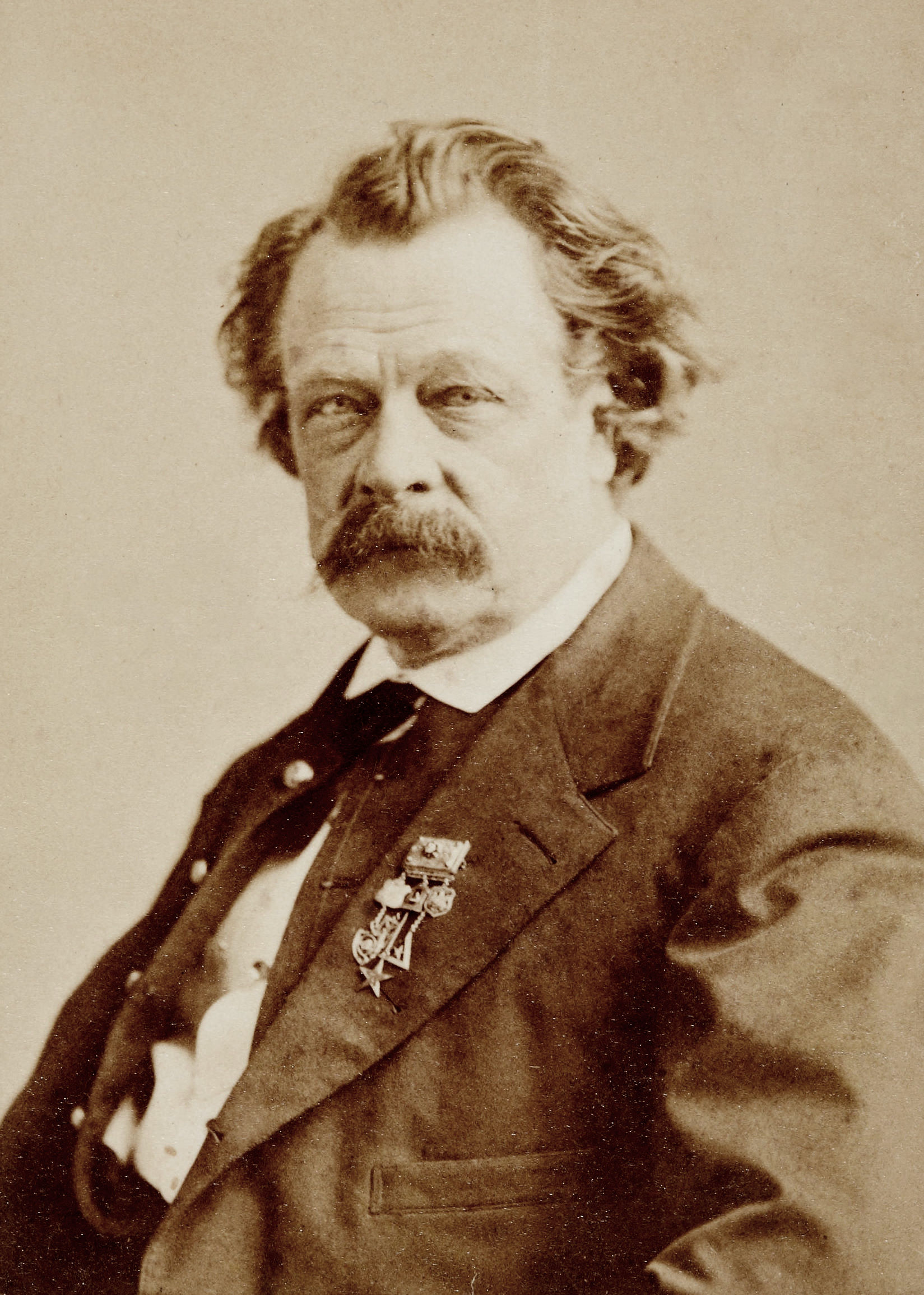
Humorous Techniques: Mark Twain

Copyright 2009 by Gary Pullman

Mark Twain’s humor involves every technique known to humorists: absurdity, analogy, burlesque, exaggeration, eye dialect, farce, high comedy, low comedy, irony, parody, puns and wordplay, satire, slapstick, travesty, understatement, and others. His work cannot be understood without a good knowledge of the vocabulary of humor.

He remains unmatched by other humorists. A study of his work is a must for anyone who aspires to writing humor. Many of Twain’s books are travelogues or contain generous passages that involve long journeys by one or more characters. A Tramp Abroad, Following the Equator, The Innocents Abroad, Roughing It, Life on the Mississippi, The Adventures of Tom Sawyer, and The Adventures of Huckleberry Finn are some of his major literary works that are either based upon or include domestic or foreign travel.

In his actual life as Samuel Langhorne Clemens, Twain traveled frequently, both in the United States and abroad; his characters frequently did the same. The humorists’ journeys allowed him to compare and contrast the habits and customs of the denizens of one region of the country with those of the residents of another region of the country or the habits and customs of foreigners with those of Americans.

His travels were occasions for him to expose the glaring differences between the claims of travel guidebook authors and his own actual experiences as in visiting them as an unbiased and objective observer.

His voyages also permitted Twain to lampoon local traditions, beliefs, institutions, people, languages, art, and religions as he traveled through Europe, the Middle East, and elsewhere. The expeditions themselves unified his sketches and essays, providing a needed backbone for his pieces and allowing his tone to range from whimsical to irate, from appreciative to annoyed, from delighted to outraged.

Sometimes, the travels that Twain’s characters undertook were fanciful, as in “Captain Stormfield’s Visit to Heaven,” “Three Thousand Years Among the Microbes,” and Satan’s visit to paradise in A Pen Warmed Up in Hell. These excursions were journeys of the mind through theological, philosophical, and social landscapes, constituting examples of high comedy with a more intellectual than sentimental or moral perspective and concern.

Another of Twain’s techniques was to evaluate the past through the eyes of the present. By having a character from nineteenth-century America travel into the past, visiting King Arthur’s Court, he could judge the persons, places, and things of the past, including the hypocrisies and abuses that resulted from and were maintained by the class distinctions between the nobility and the peasantry and the sanctimony and fraudulence of a greedy and politically entrenched clergy. At the same time, he could contrast modern Yankee ingenuity with medieval technology and hardheaded rationalism and realism against superstitious beliefs and the Middle Ages’ aristocracy’s and clergy’s fondness for fantasy.

Much of Twain’s humor also resulted in mistaken identities or masquerades. When a prince and a pauper trade places, each learns how the other lives and, at the same time, Twain provides himself with the opportunity of criticizing both the abuses of power and the conditions that sustain poverty and misery among the peasantry (a stand-in, perhaps, for the lower classes of his own day and ours). 

Likewise, when Huckleberry Finn poses as a girl whose true gender is surmised by the old lady whom he tries to deceive, Twain suggests that much of one’s identity, including his or her gender, is affected, consisting of mere convention, tradition, and habit which are learned rather than innate. The true self is the will, Twain suggests, as it is exercised in moral deliberation, for it is at the climax of The Adventures of Huckleberry Finn that the protagonist is faced with the decision to do the right thing, as both church and state dictate, and report Jim’s whereabouts to a mercenary posse or to remain loyal to his friend. This revelation of the true self would not be possible in the novel had Twain’s humor not first established both the goodness of Huck (and Jim) and the wickedness of the society in which he lives and the corruption of the callous institutions that are supported by this society. Next: A Glossary of Terms

Monday, November 23, 2009

Stand-up Comedians, Part 2

Copyright 2009 by Gary L. Pullman

Woody Allen is better known as a movie producer, but the funnyman started his career as a stand-up comedian. As such, he created a stock character unique to modern sensibilities. Known for expressing the angst of the set-upon everyman, Allen portrayed the putz, a nerdy, needy egghead who is unvalued and misunderstood. Typically, his character is a neurotic, if philosophical, lost soul. Much of his comedy involves an existential take on things. Much of his comedy alludes to psychoanalysis, reflecting the three decades that he spent on the Freudian couch. In his early years, Allen was also a comedy writer for Herb Shriner, Sid Caesar, Candid Camera, and other comedians and comedy shows.

According to Willy Loman, “spite” is the word of Biff’s “undoing.” This may or may not be true--Willy was hardly a good judge of character, after all, but one can say with certainty that “disrespect” is the word upon which Rodney Dangerfield built his career as a stand-up comedian. After a succession of failures--as a singing waiter, an acrobatic diver, and an aluminum siding salesman, Dangerfield came to understand that he needed an “image,” or a persona that would both define him as a comedian and resonate with his audiences. He found himself as a comedian when he complained that he didn’t get any respect from anyone. He often began a joke with his trademark grievance, “I get no respect,” following his protest with a humorous example to prove his contention: “When I was a kid I got no respect. The time I was lost on the beach and the cop helped me look for my parents I said, "Do you think we'll find them?" He said, "I don't know, kid, there's so many places they could hide.” Dangerfield’s career demonstrates how a simple gimmick, properly employed, can establish a comedian’s career.

Flip Wilson, one of the first black stand-up comedians, also banked on a well-established character--in his case, a female alter ego named Geraldine, who was, as it were a regular guest star on the Flip Wilson Show. Outspoken and irascible, a daughter of the ghetto, Geraldine delivered hip, modern maxims and proverbs, including “When you’re hot, you’re hot” and “The devil made me do it.” However, Wilson’s comedy sometimes offended some African-Americans who viewed his routines as fostering stereotypes of black culture. Some also did not appreciate the dialect in which some of his onstage characters spoke.

Although he wasn’t a comedian, major league baseball player and manager Yogi Berra misused the English language unlike anyone since Mrs. Malaprop and is unequalled in his use of malapropisms except, perhaps, by former president George W. Bush, and his fractured phrasing should be a continued inspiration to humorists and comedians for years to come. A few quotations demonstrate the comic effect that is derived from the oddly appropriate, but misspoken, quips for which Berra is famous:

    • “Ninety percent of the game [of baseball],“ he contended, “is half mental.”
    • His reason for foregoing meals at Ruggeri's, a St. Louis restaurant: “Nobody goes there anymore. It's too crowded.”
    • His take on when to call it quits: “It ain’t over till it's over.”
    • Giving directions to Joe Garagiola as to how to get to his New Jersey home, which could be reached by two alternative routes: “When you come to a fork in the road, take it.”
    • On the benefits of observation: “You can observe a lot by watching.”
    • Concerning the need to attend friends’ funerals: “Always go to other people's funerals, otherwise they won't go to yours.”

George W. Bush is also known for his mangling of the English tongue, although not all of the former president’s misstatements take the form of the malapropism. Again, a sample of his tongue twisters shows the humorous effect of such speech:

    • “One of the very difficult parts of the decision I made on the financial crisis was to use hardworking people's money to help prevent there to be a crisis.”
    • “I'm telling you there's an enemy that would like to attack America, Americans, again. There just is. That's the reality of the world. And I wish him all the very best.”
    • “I've abandoned free market principles to save the free market system.”
    • “I've been in the Bible every day since I've been the president.”
    • “This thaw--took a while to thaw, it's going to take a while to unthaw.”
    • “Anyone engaging in illegal financial transactions will be caught and persecuted.”
    • “The people in Louisiana must know that all across our country there's a lot of prayer--prayer for those whose lives have been turned upside down. And I'm one of them.”
    • “Throughout our history, the words of the Declaration have inspired immigrants from around the world to set sail to our shores. These immigrants have helped transform 13 small colonies into a great and growing nation of more than 300 people.”
    • “I remember meeting a mother of a child who was abducted by the North Koreans right here in the Oval Office."


Next: Applying Humorous Writing Techniques

Saturday, November 21, 2009

Stand-up Comedians

Copyright 2009 by Gary L. Pullman

Stand-up comedians also provide many examples of how to get laughs that can assist the humorist who is more interested in writing than in enacting or delivering funny lines. In humor, as in comedy and all other forms of entertainment, all is grist for the mill, and the humorist should learn continuously from as many sources as possible, adapting others’ methods and techniques to his or her own purposes and needs. For this reason, it is helpful to consider such the method in the apparent madness of such brilliant stand-up comedians as Lenny Bruce, Jack Benny, Red Skelton, Jay Leno, David Letterman, Woody Allen, Rodney Dangerfield, Flip Wilson, Jonathan Winters, and such unintentional comics as Yogi Berra, George W. Bush, and Mrs. Malaprop.

Lenny Bruce was regarded as an iconoclast by his peers. Columnist Herb Caen characterized the stand-up comedian in this fashion:


They call Lenny Bruce a sick comic, and sick he is. Sick of all the pretentious phoniness of a generation that makes his vicious humor meaningful. He is a rebel, but not without a cause, for there are shirts that need un-stuffing, egos that need deflating. Sometimes you feel guilty laughing at some of Lenny’s mordant jabs, but that disappears a second later when your inner voice tells you with pleased surprise, ‘but that’s true.’
Critic Albert Goldman describes Bruce’s Carnegie Hall Concert as “the greatest performance” of a “rapidly rising young comedian” given to improvisation and the fine art of adlibbing:


Lenny worshipped the gods of Spontaneity, Candor and Free Association. He fancied himself an oral jazzman. His ideal was to walk out there like Charlie Parker, take that mike in his hand like a horn and blow, blow, blow everything that came into his head just as it came into his head with nothing censored, nothing translated, nothing mediated, until he was pure mind, pure head sending out brainwaves like radio waves into the heads of every man and woman seated in that vast hall. Sending, sending, sending, he would finally reach a point of clairvoyance where he was no longer a performer but rather a medium transmitting messages that just came to him from out there--from recall, fantasy, prophecy. A point at which, like the practitioners of automatic writing, his tongue would outrun his mind and he would be saying things he didn't plan to say, things that surprised, delighted him, cracked him up--as if he were a spectator at his own performance!
Bruce’s freewheeling style and his penchant to include a good deal of profanity and obscenity in his adlibbed monologues got the performer in trouble on more than one occasion. He was arrested and for indecency several times and was finally sentenced to four months’ incarceration in a workhouse, dying while his sentence was being appealed.

He is often held up as an example of the free speech that humorists claim that they deserve. In fact, many humorists contend that they should be exempted from the politically correct restrictions on free speech that ordinary men and women experience because they are, as it were, the “all-licensed fools” of whom King Lear speaks, referring to the tradition that allowed court jesters to speak frankly to the king or queen without fear of appraisal; thus the fool was not a “yes man,” and could serve as a trusted advisor.

Modern authorities, promoters, audiences, readers, publishers, and societies have been at times reluctant to extend comedic carte blanche to today’s equivalents of the court jester, or fool, as Bruce’s case and that of others, including David Letterman’s, indicate, and humorists should not simply assume that they have such license. Instead, they should determine which topics, language, and treatments are acceptable to their audiences or readers and which are taboo.

Red Skelton’s stand-up comedy routines reflected his gentle spirit. Having honed his comedic talents in vaudeville and on various radio programs after earlier performing as a circus clown, Skelton starred in many movies (comedies, of course) before starting his own television comedy-variety show, The Red Skelton Hour. His acts centered around characters he created, which became familiar to an audience of millions: Freddie the Freeloader, a tramp; singing cabbie Clem Kaddiddehopper; the Mean Liddle Boy; besotted Willy Lump-Lump; Sheriff Deadeye; and even a pair of seagulls, Gertrude and Heathcliffe. His characters endeared him to the public, as did his laughing at his own jokes and his sign off, “Goodnight, and may God bless.” Like Bill Cosby, Skelton eschewed profanity and obscenity, believing it not only inappropriate, but unnecessary, for a comedian to resort to vulgarity to get laughs. Some of his skits involved pantomime, and Groucho Marx regarded Skelton as comedy’s heir to Charlie Chaplin.

The successor to Johnny Carson as the host of National Broadcasting Company’s (NBC’s) The Tonight Show, Jay Leno delivered a nightly monologue, Monday through Friday, on topical events, often political in nature, lampooning presidents and senators as often as he did fads and follies. He also bantered with his band leader and engaged in repartee with the political and celebrity guests of his talk show. Unlike some stand-up comedians, Leno himself is an able writer, and, during a writer’s strike, he wrote the material for his own monologue. He also writes a monthly column for Octane, an online magazine that concerns itself with “the world’s greatest classic and performance cars.” In one article, afraid that he will be stopped by a police officer for speeding on his Morgan three-wheeler, while “screaming down Mulholland Drive,” he is surprised when the officer informs him that, rather than traveling at a speed of seventy miles per hour, as he’d thought, he was going only thirty-five miles per hour--ten miles per hour under the speed limit. Leno’s columns’ style reflect the boy-next-door charm, the slightly goody humor, and the easy identification with middle America that make him popular as a comedian and a humorist, both on the screen and the printed page.

Leno’s competitor, David Letterman, hosts Columbia Broadcasting System’s (CBS’) Late Show with David Letterman. Letterman is often caustic in interviewing his guests. Once, he said to Joaquin Phoenix, who was relatively unresponsive during his interview, “I’m sorry you couldn’t be here.” Letterman also sparred with Fox News’ Bill O’Reilly, host of The O’Reilly Factor, and with such other celebrities as Cher, Shirley MacLaine, Charles Grodin, and Madonna. Once, wearing a Velcro suit, he leaped onto a wall covered in the same material, becoming stuck several feet off the ground. Like Leno, he delivers a monologue. Letterman also performs brief skits, and his show features several regular spoofs and send-ups, including “Stupid Pet Tricks” and its spin-off, “Stupid Human Tricks.” His “Top Ten List” is also a regular feature, during which he recites a list of the top ten things pertaining to a specific topic, such as “Top Ten rejected James Bond Gadgets,” in reverse order.

In June 2009, Letterman caused a controversy when he made a joke about Alaska Governor Sarah Palin’s fourteen-year-old daughter, Willow, being impregnated, or “knocked up,” by New York Yankees’ player Alex (“A-Rod”) Rodriguez while she was attending a baseball game with her mother. Letterman’s attempt to clarify the issue by apologizing for any offense the governor and her family might have felt and insisting that it was Palin’s eighteen-year-old daughter, Bristol, whom he’d intended to lampoon, not Willow, Letterman only made the situation worse, and his show was picketed by angry former fans. Many of his sponsors heard from irate viewers as well, some of them canceling their sponsorship of the show. In addition, Rodriguez also called for an apology from Letterman, saying, “Not funny, funnyman. Time for you to man-up and say you're sorry to me, the Yankees, the fans, and to ball players all over the world. We may love women, but we're not all womanizers.” Michelle Malkin and others characterized Letterman’s joke as “pedophile” humor, and Palin herself described Letterman as “pathetic.” This incident, like the arrest and incarceration of comedian Lenny Bruce, demonstrates that the “all-licensed fool” of whom Shakespeare’s King Lear speaks is not “all-licensed” in politically correct times such as ours, if ever, in fact, he was so “licensed.” (A fool was a court jester, or joker, a clown to whom a king traditionally granted the privilege of speaking frankly, without fear of reprisal; thus the fool was not a “yes man,” and could serve as a trusted advisor.) Like comedians, humorists would do well to remember that the Constitution may guarantee free speech, but it does not guarantee that such speech can be exercised with impunity in the court of public opinion.


Next: Stand-up Comedians, Part 2

Friday, November 6, 2009

The History of Comedy, Part 2

Copyright 2009 by Gary L. Pullman

Note: This post contains material that, dealing with adult situations, nudity, and sex, may be offensive to some readers but is, nevertheless, an important part of the history and development of comedy.

One of the Middle Age’s contributions to the literature of humor is the fabliau (plural, fabliaux), a narrative poem, the lines of which consist, most often, of rhymed couplets of eight-syllables each. Characteristically, fabliaux are satirical in tone, and often criticize arrogance, pomposity, and greed, especially among members of the clergy and the nobility. Women are frequently lampooned as well.

Fabliaux

Fabliaux are of a ribald character, emphasizing sexual situations and bawdy behavior. Frequently, an older, jealous, and possessive husband is cuckolded, his much younger, pretty wife committing adultery because she is sexually frustrated by her spouse’s impotence or intermittent virility. The protagonist is cunning, and he or she often outwits those with better educations and higher social standings. A famous example of the fabliau is Geoffrey Chaucer’s “The Miller’s Tale,” one of the stories that make up the anthology known as The Canterbury Tales. Other, lesser known examples are “The Butcher of Abbeville,” “The Three Hunchbacks,” “The Wild Dream,” and “The Ring That Controlled Erections,” all of which appear in The Norton Anthology of Western Literature.

“The Butcher of Abbeville”

“The Butcher of Abbeville,” a 588-line poem translated by Ned Dublin, recounts the story of David, a butcher from Abbeville, France, who visits a fair in Oisemont, to buy livestock. Finding nothing he likes, he starts for home, but, as night falls, afraid of highway robbers, he asks a local deacon, Father Gautier, to rent him a room for the night. Instead, the deacon turns him away.

Intent upon avenging himself for the deacon’s rudeness, David steals one of Father Gautier’s sheep, returns to the deacon’s house, saying he has bought the sheep at the fair, and offers to share its meat with the deacon if Father Gautier will, in return, allow him to spend the night. When the priest agrees, David kills and skins the animal, sharing the mutton with Father Gautier, the deacon’s wife, and their maid, who is also the deacon’s secret mistress.

Later, at different times, David persuades both the maid and the deacon’s wife to have sex with him in exchange for the sheepskin and his promise of discretion. The next morning, David visits the deacon at church, selling the sheepskin to him. The butcher has now avenged himself three times upon Father Gautier, committing adultery with the deacon’s wife, seducing his mistress, and selling the clergyman his own stolen animal’s sheepskin.

At the priest’s house, the wife and maid argue with one another concerning which of them is the rightful owner of the sheepskin, both claiming it as her own. When he returns home, the deacon hears both parties’ stories before insisting that he himself is the rightful owner of the sheepskin, which he’s purchased from the butcher. When the maid tells him what she did to earn the hide, the deacon accuses his wife of also having had sex with the butcher.

The narrator, Eustace d’Amiens, leaves it to his audience to determine for themselves which of the three claimants has rightful title to the fleece.

“The Three Hunchbacks”

The three hunchbacks of the poem’s title are traveling minstrels; the protagonist’s husband is also a hunchback, so, all told, there are four, not three, such characters in the story.

The husband is wed to a beautiful young woman who does not like being married to him. Jealous, he maintains a wary watch upon her. They seldom have visitors except for the purposes of business, but the husband allows the traveling hunchbacks to spend one night under his roof. The next day, the minstrels leave, and the husband keeps watch on his house from a bridge over the canal beside his residence, lest they return in secret.

The wife bids the minstrels to come back to her house so that they can sing to her. When her husband returns home unexpectedly, she hides the hunchbacks inside her spare bed’s three drawers. Her husband doesn’t stay long, but, when his wife opens the drawers to release the hunchbacks, all three are dead.

Revealing only one of the hunchback’s corpses, she hires a passing porter to assist her, and he dumps the body into the canal. While he is about this task, the wife removes another hunchback’s body, and, when the porter returns to collect the fee she’s agreed to pay him, she says he’s only pretended to dispose of the hunchback’s body. As proof of her claim, she shows the porter the second hunchback‘s corpse.

Supposing the dead hunchback to be “the Antichrist,” the porter lugs it to the canal. Upon his return, the wife plays the same trick on the porter, passing off the third hunchback’s body as that of the first. Believing himself bewitched by the dead hunchback, the porter also dumps the third body into the canal, declaring that he will strike the body on its neck, should he meet with it yet again.

Returning for his fee, the porter sees the wife’s husband approaching the lady’s house. The porter strikes the husband upon the head as the hunchback with a club as the husband approaches the top of the stairs, thereby killing him. The porter dumps the body in the canal, and, afterward, receives payment from the wife.

“The Wild Dream”

In the 213-line fabliau known as “The Wild Dream,” a wife is anxious to have sex with her husband, who is returning home after having been away on business for three months.

During dinner, she gets him drunk, but, instead of becoming amorous, he falls to sleep (or passes out) soon after they retire. She sleeps, too, dreaming of a fair at which a merchant sells a variety of penises and testicles. She buys the biggest penis she can find, but when, pleased at her purchase, she slaps hands with the merchant, she accidentally awakens her husband.

She apologizes, telling him of her dream, and, as the couple hugs and kisses, he becomes erect and inquires of her what price she might have paid the merchant for an organ like his. She replies that it is too small to have interested her or any other women at the fair. However, she agrees with her husband that a real, flesh-and-blood penis, of any size, is superior even to the most gargantuan of imaginary phalli, and the couple test her theory.

The last lines of the poem identify its author, Jean Bodel, who heard the story he reports in the story as a result of the husband’s unwisely having mentioned it to a poet who was compiling an anthology of fabliaux.

“The Ring That Controlled Erections”

A poem of 50 lines, “The Ring That Controlled Erections” recounts the embarrassing dilemma of a bishop who finds a cure that’s worse than the condition (erectile dysfunction) from which he suffers.

A horseman, dismounting at a stream to bathe, removes his ring, setting it aside. When he leaves, he forgets the ring, leaving it behind.

A bishop rides by, sees light flash on the ring, and, retrieving the lost jewelry, puts the ring onto his finger. At once, he has an erection of such huge dimensions that it drags upon the ground, even when he is on horseback. His erectile dysfunction is gone, replaced by satyriasis, and, to his horror, he finds that his erection will not subside.

The bishop dispatches messengers to locate someone who can help him, and the original owner, learning of the bishop’s plight, offers to help, provided that the clergyman gives him his rings and a fee of 100 pounds.

The bishop agrees, and when he gives the man the ring that controls erections, the clergyman’s erection subsides. In a sarcastic aside, the narrator suggests that that the bishop is as glad to be rid of his temporary, and bothersome, manhood as the ring’s original owner is happy to regain his own sexual virility.

Other Fabliaux

The Middle Ages offered many other fabliaux, including “The Four Wishes of St. Martin,” in which a wife wishes that her husband were all over penises; he wishes she had as many vaginas; the wife wishes away all their sex organs; and the husband wishes them restored to their original conditions.

In “The Partridges,” a wife eats both of the partridges that her husband has killed for their supper and covers up her misdeed by claiming that she’s keeping the birds warm until their guest, the local priest, arrives. Her husband sharpens his knives so he will be prepared to carve the partridges. When the clergyman arrives, the wife again lies to cover her transgression, frightening off their guest by telling him that her husband is sharpening his knives because he intends to castrate the priest. Then, she tells her husband that their dinner guest ran away with the stolen partridges.

The titles of some fabliaux indicate the nature of their plots. Often, the titles are themselves obscene, for the incidents that they narrate are usually bawdy and, often, irreverent, sacrilegious, or even blasphemous.

Situation Comedy

Perhaps the greatest contribution to humor of contemporary times is that of the situation comedy, which is discussed in a later post.

A Handbook to Literature,10th edition, by William Harmon and C. Hugh Holman draws clear and helpful distinctions among a variety of specific types of comedy, including high comedy, low comedy, farce, burlesque, realistic comedy, sentimental comedy, romantic comedy, court comedy, the comedy of manners, the comedy of morals, the comedy of humors, the comedy of intrigue, and the comedy of situation. However, in general, the authors define comedy as “a dramatic or literary form that, . . . striving to provoke smiles and laughter, uses both wit and humor,” and contend that,

In general, comic effect arises from a recognition of incongruity of speech, action, or character. The incongruity may be verbal, as with a play on words; or bodily, as when stilts are used; or satirical, as when the effect depends upon the beholder’s ability to perceive the discrepancy between fact and pretense exhibited by a braggart. . . . Viewed in another sense, comedy may be considered to deal with people in their human state, restrained and often made ridiculous by their limitations, faults, bodily functions, and animal nature. . . . Comedy. . . has always regarded humans more realistically than tragedy and drawn its laughter or satire from the spectacle of individual or collective human weakness or failure; hence, its tendency to contrast appearance and reality, to deflate pretense, and to mock excess. . . (109-110).
To simplify things, we might say that humor is whatever makes us laugh and that, in general, humorists try to effect laughter through means other than dramatic enactments of skits, whereas comedians, like comedies, usually (but not always) rely more upon such skits or other dramatic situations as the basis of their routines. In short, humorists tell jokes, whereas comedians enact them. Of course, in reality, the situation is much more complex and humor and comedy, like humorists and comedians, practice many of the tricks of their counterparts.

Next: Types of Humorous Stock Characters