Fascinating Lists!

Showing posts with label wit. Show all posts

Thursday, July 2, 2020

Establishing and Structuring Humorous Novels

Copyright 2020 by Gary L. Pullman


For me, Mark Twain is the most humorous humorist that ever wrote humor.


I think part of the reason that he's humorous is that he constructs a plot that provides a sense of progress and a series of burlesques unified through character, setting, and situation. Often, the titles of his books themselves identify or suggest the conceit: A Connecticut Yankee in King Arthur's Court, Life on the Mississippi, A Tramp Abroad.


For example, the idea for A Connecticut Yankee in King Arthur's Court (traveling back in time to set up a continuous contrast between the medieval and the modern) establishes the basis for sustained, continuous humor, satire, parody, and burlesque.


In addition (Twain usually progresses from general to specific), the chapters themselves of his novels suggest the same structure and the same elements: “Camelot,” “King Arthur's Court,” “Knights of the Round Table” . . . “The Eclipse,” “Merlin's Tower,” . . . “The Tournament” . . . .

Internally, each chapter is also structured:

Chapter I (Camelot): the countryside is described; a girl appears; the protagonist approaches the town; a detailed description of the town and several of its residents is presented; Chapter II (King Arthur's Court): The protagonist exchanges dialogue with an old man; the protagonist exchanges dialogue with a page; the protagonist and the page arrive at Sir Kay's castle; the narrator presents a philosophical conclusion (i. e., one of the novel's themes).


This threefold structure indicates, with increasing specificity, the sense of progress, which unifies the story while introducing topics for humor. By the time readers finish the story, the foibles of the novel's characters and the folly of their times (and their view of the world) will have been thoroughly examined, criticized, and lampooned.


In the actual paragraphs of the story, Twain uses many devices to spoof the targets of his humor, including mistaking Camelot for an “asylum”; similes (“as lonesome as Sundays,” “made him look like a forked carrot”); incongruous diction (“”her own merits in . . . respect” to being “a spectacle”); derisive adjectives (“windowless,” “wilderness of thatched cabins,” “crooked alleys,” “unpaved,” “troops of dogs and nude children,” “reeking wallow”); contrast (“a noble cavalcade . . . glorious” vs. “the muck and swine and naked brats”); evaluation (the old man's use of Middle English confirms his status, in the protagonist's eyes, as an inmate of the 'asylum”); personification (“comfort his very liver,” “let that shudder its way home”); metaphor (“he was pretty enough to frame”); incongruous description (“shrimp-colored tights”); and a play on words (“”he informed me he was a page,” but, the narrator says, “you ain't more than a paragraph”).


Twain's technique could be used to set up a variety of other opportunities for humor through such contrasts and conflicts between opposing types of characters:
  • A genius among fools
  • Hercules among the Amazons
  • The experiences that occasion various proverbs
  • A sane man on a ship of fools


Friday, August 16, 2019

Scottoline and Serritella

Copyright 2019 by Gary L. Pullman
 
In I See Life Through Rose-Colored Glasses, mother-daughter team Lisa Scottoline and Francesca Serritella are back, each contributing alternating essays—or, rather, “True Stories and Confessions.”


In doing so, the ladies employ a variety of techniques to effect humor about everyday situations to which their readers (presumably, for the most part, other women) can readily relate.

The essays tend to be short, about three to four pages, or 1,100 to 1,450 words, each. Many of the paragraphs are single sentences, but even the longer ones are typically no more than three of four.

Let's take a look at Lisa's “Lost and Found,” which weighs in at a bit under three pages.


Page 1

She starts with a rhetorical question, “Did you hear the news?” This question, of course, prompts another question in her readers' minds: what news? It also allows Lisa to introduce the topic of her essay, as she supplies the answer to her own question in the next sentence-paragraph: “They discovered a new organ.”

This fact is, very likely, news to many, perhaps most, of Lisa's readers.

Although her readers may be wondering when “they” found this new organ, Lisa surprises them by stating where it was located: “All this time, it was in your body.” (The “your” certainly personalizes her statement.)

Perhaps, as she writes her essay, Lisa imagines herself in a conversation with her readers as they (or at least Lisa) sip rose a glass of rose wine. If so, she must have imagined them declaring, “You're kidding!” because she states, “Not even kidding.” Imagined dialogue keeps the written dialogue natural.

Why hadn't they found the missing organ before now? Readers might ask. Lisa has an answer ready for them: “Maybe they were looking outside?”

Now, having introduced the topic, Lisa offers a few salient facts, as background: “Anyway [almost as if she's offering an aside, rather than context, keeping it casual], an Irish surgeon, Dr. J. Calvin Coffey, discovered that we have something in our stomach called a mesentery.”

Then, she hits her readers with a play on words, always a surefire way to get a smile, if not a belly laugh: “Before now, the mesentery was a mystery.”

Then, back to the surgeon: “Dr. Coffey teaches at the University of Limerick”—readers just know a pun is coming, and Lisa doesn't disappoint—“otherwise well known for its limericks.”

Having introduced limericks, Lisa offers the first line of a possible such poem, by way of example: “There once was a mesentery from Nantucket . . .”

Then, she defines her term. (Notice the way she breaks up the exposition as she interleaves a bit of nonsense with her straight talk?) “Evidently, the mesentery connects the intestine to the abdomen, and as Dr. Coffey explained, 'It keeps the intestine in a particular shape, so when you stand up, your intestine doesn't fall into your pelvis.” Lisa imagines a response from the peanut gallery: “Well, hell. That's a good thing.” She follows up the peanut gallery comment with a comparison: “It's like Spanks for your colorectal system.” Next, she personifies the mesentery by thanking it: “Thanks, mesentery!”

Lisa makes a claim and then offers a couple of absurd “reasons” to support it (a favorite device of humorists). “Meanwhile, I might be in love with Dr. Coffey [claim]. He has a way with words [absurd reason one]. And also if he could find a mesentery, he could find my car keys” [absurd reason two, which, being even more ridiculous than reason 1, tops the previous reason].

Page 2

We could continue to identify and analyze Lisa's techniques for effecting humor, because we're on only page 2 of a 3-page essay, but, instead, let's switch over to Francesca, who pens the next essay, the four-page “Happy Birthday to Me?”


Page 1

Like most humorists, she starts with a claim that announces her topic, planning one's own birthday. Her next sentence (paragraph two) grants a concession or two, and, in the process, acts as a “straight man,” setting up the punchline to be delivered in the essay's third sentence-paragraph: “Sure, there are years where a best friend or significant other steps up, but in my history, some years I planned it myself.” Then, the punchline, as Francesca admits, “Okay, every year I've planned it myself.”

After telling her readers that the task drives her “completely insane,” she repeats her assertion in different words: “I'm well adjusted eleven months out of the year, but when planning my birthday, I become my most neurotic self.” in her next sentence-paragraph, she intensifies her claim, declaring “It's agony.” She's creating suspense; her readers are expecting a big payoff (laughs).

Francesca changes gears, as she heads off in another, unexpected direction, and her readers put their laughter on hold, trusting the laughs will come, by and by, and that they;ll be worth the wait.

She contrasts herself with others. “I wish I could be one of those people who is like, 'It's mah birthday, bitches!” but I go in the opposite direction. I'm filled with anxiety and insecurity over every aspect of it, obsessively concerned that my guests won't have a good time.” (Notice that Francesca peppers her dialogue with slang—and eye dialect—keeping it real.)

Her readers might wonder what sort of friends Francesca has; they don't seem very supportive. To correct this notion, she blames herself for casting aspersions on them: “It's like I forget they're my friends.”

Francesca wants her readers to remember that she's in turmoil, so she shares a fantasy: “My fantasy is that someone would throw a surprise birthday party for me, but I don't know how anyone would pull it off in real life [why not, readers may wonder, and Francesca tells them], because I'm such a nervous planner, I'd beat them to the punch. They'd have to throw it for me two months in advance to save me from the stress spiral that sucks me in each year.”

Now, she gets down to the details of birthday party planning, as she sees it: “It begins with the venue. I know I should just relax, choose a bar I like, and ask everyone to show up.”

Page 2

We could continue to identify and analyze Lisa's techniques for effecting humor, because we're on only page 2 of a 4-page essay, but, instead, let's list the other details she presents: invitations and cake.

Now, let's contrast the mom's general approach to writing humor with that of her daughter.

LISA

Paragraphs of only one or two sentences.

Rhetorical questions introduce topics, set up punchlines, or transition to new topics.

Imagined conversation between friends, Lisa herself being one of them, alternating with the identification of a topic or statement of a claim, followed by information or evidence.

Much exaggeration, but also puns, plays on words, comparisons, definitions, a catalogue (list), and examples.

FRANCESCA

Both one-sentence paragraphs and longer ones, consisting of as many as seven.

Identification of a topic or statement of a claim, followed by information or evidence, alternating, at times, with the identification of a problem, followed by a solution.

Division of a topic into related subtopics, followed by information or evidence. Items in series disguised as rhetorical questions.

Much exaggeration, but also anecdotes, digressions, repetitions, and admissions of self-doubt, anxiety, and obsession.
 
 Endings

How a humorist ends his or her humorous essay is as important as how he or she starts it.

Lisa catalogues the strange items she finds in her belly button: dog hair, “little shreds of tissue paper,” and other “foreign objects.” Her discoveries make her feel a connection with Dr. Coffey, because “we have so much in common.”

Throughout the bulk of her essay, Francesca has been concerned with the planning of her birthday party. It is only natural that she would end her essay with a description of the party itself. She has a wonderful time, rediscovers the facts that her “friends are easygoing and wonderful,” and finds them to be helpful and supportive. One of them takes 'charge of the candle lighting” and gets “everybody singing.” The result, Francesca confesses, makes “the disco dust totally worth it.”

Sample of Funny Lines

It should go without saying that a humorist must be able to write funny lines. An effective funny line sounds like an aphorism and, like aphorisms, or proverbs, for that matter, funny lines must fit the occasion for which they're written, succinctly summarizing a situation or proving a claim or just stating something in a fresh and lively manner. Here are a couple of funny lines in I See Life Through Rose-Colored Glasses:

My couch had more toenails than my cat.—Lisa

New hobbies are a great excuse to go shopping.—Francesca

Sunday, December 30, 2018

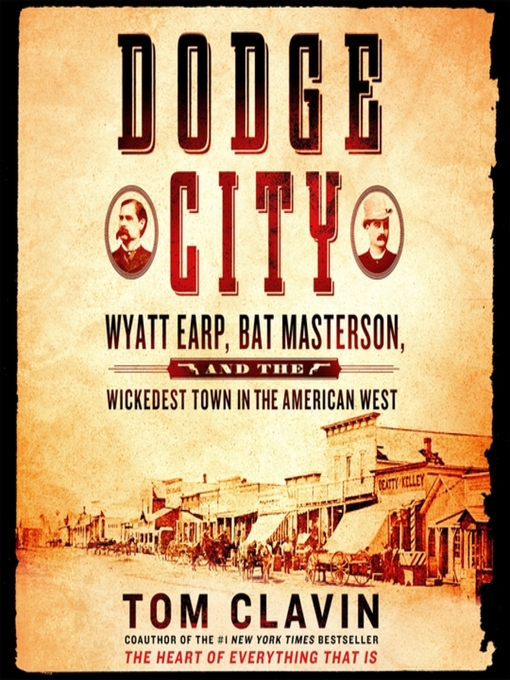
Humor in Tom Clavin's "Dodge City: Wyatt earp, Bat Masterson, and the Wickedest Town in the American West"

Copyright 2018 by Gary L. Pullman


In Dodge City: Wyatt Earp, Bat Masterson, and the Wickedest Town in the American West, Tom Clavin provides an informative, intriguing, and amusing account of law as it was practiced by two of its most famous representatives during their jurisdiction's most lawless times.

The humor, although unexpected, fits the occasions of its use and is effective in fetching a smile, a chuckle, and an occasional belly laugh.

Clavin's humor is typically drawn from the characters and situations he describes. Occasionally, a witticism is subject to a couple of interpretations. For example, in writing of the outlaw Sam Bass's family, Clavin observes, “When he was a young child, both his parents died, perhaps from exhaustion after having ten children” (167). Whether it was so much sex or the child rearing that followed the brood's births depends on one's interpretation.


In writing, earlier, of the dime novelist Edward Zane Carroll Judson, who wrote authored 300 or more of these books under his pen name, Ned Buntline, Clavin is at the top of his form, offering such wry remarks as these (bold added):

He always referred to himself as “Colonel” because he was photographed in Mathew Brady's studio wearing such a uniform, which was as close to being an officer as he got (137).

He was paid handsomely for giving lectures on temperance, often delivering them while drunk (138).

He had five children that he knew about (138).

He [Buffalo Bill Cody] met the author in Chicago and starred in a play Buntline had written in only four hours (some critics wondered what took so long) . . . (138).

Clavin's humor often results from his penchant for adding a descriptive phrase that isn't strictly necessary, usually to the ends of his sentences, as if they constitute an afterthought (see the bold phrases in the examples above). In effect, the first parts of the sentences act as the set-up, the second parts as the punchlines, or “snappers,” as Mark Twain would have called them.

A few other examples show that the device works well, despite repetition, since the variety comes by way of the changing tipocs of Clavin's wit (bold added):

Both [Colonel W. H. McCall and “a fellow named Wilson”] were drunk, and they were taking turns trying to shoot a dog, seemingly not concerned that they might also hit the yelping woman who owned the dog (149).

Clavin's account of the life and times of Wyatt and Bat exhibit other techniques of humor as well.


In one instance, the humor depends upon the reader's remembering some intelligence about a certain Dirty Dave Rudabaugh that Clavin delivers, as the set-up to his joke, several pages before the author follows up with his punchline (bold added):

He earned the nickname naturally, by bathing infrequently and wearing clothes that even by frontier standards were quite filthy (171).

. . . Billy the Kid, Rudabaugh, and three others who had joined the gang got away [from the gunfight that ensued a posse's arrival]. They holed up in a cabin near Stinking Springs, which had earned its name naturally, not thanks to Dirty Dave (179).

The gap between Clavin's set-up and punchline suggests that humor can be delayed, if the reader or listener has a good memory for detail and is attentive.


Occasionally, Clavin allows the implications of his subjects' statements to effect his humor. For example, in 1876, as deputy marshal of Dodge City, Wyatt instituted three rules for his officers to follow, one of which, despite its soundness, is made absurd by the self-serving basis (bold added):

. . . Don't shoot to kill, because wounding a man usually disabled him enough and he would be worth more money that way (134).


At least one of Clavin's humorous quips owes its effect to a play on words (bold added):

[When president Hayes visited Dodge Cityin its heyday, the stench of cowdung drove him back into his rfailroad car], leaving Gnereal [William Tecumseh] Sherman and the [Kansas] governor to soldier on as the speech continued (206).


Repeating selected quotations which are amusing in themselves adds to Clavin's humorous presentation of facts (bold added):

The only loaded gun was brandished by the [Dodge City Cowboy Band] director, a man known as Professor Eastman, who used it as a baton. When asked why a gun, eastman replied, “To kill the first man who strikes a false note” (207).

Monday, December 21, 2009

Glossary of Terms

Over the years--and, by “years,” we mean centuries and, in fact, millennia-- humorists and comedians have employed a variety of techniques to get their readers or audiences to giggle, snicker, sniggle, chuckle, chortle, titter, and laugh. Some of the more common, defined, once more, courtesy of Webster’s dictionary, are the following.

A

Absurd: Inconsistent with reason or logic or common sense.*

Analogy: Drawing a comparison in order to show a similarity in some respect.

B

Burlesque: A form of COMEDY characterized by ridiculous exaggerations and distortion: the sublime may be made absurd; honest emotions may be turned to SENTIMENTALITY; a serious subject may be treated frivolously or a frivolous subject seriously. The essential quality that makes for burlesque is the discrepancy between subject matter and style. That is, a style ordinarily dignified may be used for nonsensical matter, or a style very nonsensical may be used to ridicule a weighty subject. . . . A distinction between burlesque and PARODY is often made, in which burlesque is a TRAVESTY of a literary form and parody a travesty of a particular work. It has been suggested that parody works by keeping a targeted style constant while lowering the subject, burlesque or travesty by keeping a targeted subject constant while lowering the style (William Harmon and Hugh Holman, A Handbook to Literature, 10th edition, 74-75).

C

Comedy: A dramatic work in which the protagonist’s fortunes change for the better by the end of the story.

Comedy of Humours: The special type of REALISTIC COMEDY that was developed in the closing years of the sixteenth century by Ben Jonson and George Chapman and that derives its comic interest from the exhibition of CHARACTERS whose conduct is controlled by one characteristic or HUMOUR. Some single psychophysiological humour or exaggerated trait of character gave the important figures in the ACTION a bias or disposition and supplied the chief motive for their actions. Thus, in Jonson’s Every Man in His Humour (acted 1598), which made
this type of PLAY popular, all the words and acts of Kitely are controlled by an overpowering suspicion that his wife is unfaithful; George Downright, a country squire, must be “frank” above all things; the country gull in town determines his every decision by his desire to “catch on” to the manners of the city gallant. In his “Introduction” to Every Man in His Humour (1599), Jonson explains his character formula thus:

Some one peculiar quality
Doth so possess a man, that it doth draw
All his effects, his spirits, and his powers,
In their confluctions, all to run one way.

(William Harmon and Hugh Holman, A Handbook to Literature, 10th edition, 110).

Comedy of Manners: A term designating the realistic, often satirical, comedy of the Restoration, as practiced by Congreve and others. . . . The type concerns the manners and conventions of an artificial, highly sophisticated society. The stylized fashions and manners of this group dominate the surface and determine the pace and tone of this sort of comedy. Characters are more likely to be types than individuals. Plot, though often involving a clever handling of situation and intrigue, is less important than atmosphere, dialogue, and satire. The dialogue is witty and finished, sometimes brilliant. The appeal is more intellectual than imaginative. Satire is directed in the main against the follies and deficiencies of typical characters such as fops, would-be wits, jealous husbands, coxcombs, and others who fail somehow to conform to the conventional attitudes and manners of elegant society. A distinguishing characteristic of the comedy of manners is its emphasis on an illicit love duel, involving at least one pair of witty and often amoral lovers (William Harmon and Hugh Holman, A Handbook to Literature, 10th edition, 111).

Comedy of Morals: A term applied to comedy that uses ridicule to correct abuses, hence a form of dramatic satire, aimed at the moral state of a people or a special class of people (William Harmon and Hugh Holman, A Handbook to Literature, 10th edition, 111).

Comedy of Situation: A comedy concentrating chiefly on ingenuity of plot rather than on character interest; COMEDY OF INTRIGUE. Background is less important than ridiculous and incongruous situations, a heaping up of mistakes, plots within plots, disguises, mistaken identities, unexpected meetings, close calls (William Harmon and Hugh Holman, A Handbook to Literature, 10th edition, 111-112).

Court Comedy: Comedy written to be performed at a royal court. . . . Characteristics include: artificial plot; little action; much use of mythology; pageantry; elaborate costuming and scenery; prominence of music, especially songs; lightness of tome; numerous and often balanced characters (arranged in contrasting pairs); style marked by wit, grace, verbal cleverness, quaint imagery; puns; prose dialogue; witty and saucy pages; eccentric characters such as braggarts, witches, and alchemists; much farcical action; and allegorical meanings sometimes in characters and actions (William Harmon and Hugh Holman, A Handbook to Literature, 10th edition, 125).

D

Double-entendre: A word or expression admitting of a double interpretation, one of which is often obscure or indelicate. Mae West was a master of this device. “I used to be Snow White,” she once quipped, “but then I drifted.”

E

Euphemism: An inoffensive expression that is substituted for one that is considered offensive.

Exaggeration: The act of making something more noticeable than usual; making [something] to seem more important than it really is.

Extravaganza: A fantastic, extravagant, or irregular composition (William Harmon and Hugh Holman, A Handbook to Literature, 10th edition, 209).

Eye Dialect: The misspelling of a word to suggest dialect. . . . In the sentence, “Ah cain’t kum raht naow,” “kum” is an eye dialect spelling (William Harmon and Hugh Holman, A Handbook to Literature, 10th edition, 210).

F

Farce: A dramatic piece intended to excite laughter and depending less on plot and character than on improbable situations, the humor arising from gross incongruities, coarse wit, or horseplay. Farce merges into comedy, and the same play (e. g., Shakespeare’s The Taming of the Shrew) may be called by some a farce, by others a comedy (William Harmon and Hugh Holman, A Handbook to Literature, 10th edition, 213).

Fool: A court jester; in King Lear, Shakespeare labels this clown “the all licensed fool,” referring to the tradition that allowed jesters to speak frankly to the king or queen without fear of reprisal; thus the fool was not a “yes man,” and could serve as a trusted advisor (Pullman).

Framework Story: A type of narrative in which the main story is sandwiched between a prologue and an epilogue (Pullman).

H

High Comedy: Pure or serious comedy as contrasted with LOW COMEDY. High comedy appeals to the intellect and arouses thoughtful laughter by exhibiting the inconsistencies and incongruities of human nature and by displaying the follies of social manners. The purpose is not consciously didactic [educational] or ethical, though serious purpose is often implicit in the satire that is frequent in high comedy. Emotion, especially sentimentality, is avoided. If people make themselves ridiculous by their vanity or ineffective by their conduct or blind adherence to tradition, high comedy laughs at them. . . . Its higher enjoyment demands detachment (William Harmon and Hugh Holman, A Handbook to Literature, 10th edition, 256).

I

Intrigue Comedy: A comedy in which the major interest is in complications resulting from scheming by one or more characters (William Harmon and Hugh Holman, A Handbook to Literature, 10th edition, 279).

Irony: Incongruity between what might be expected and what actually occurs (Pullman).

Dramatic Irony: (Theater) irony that occurs when the meaning of the situation is understood by the audience but not by the characters in the play.

Situational Irony: The incongruity that results when a later situation upsets the expectations set up by an earlier situation.

Verbal Irony: The incongruity that results when what is said is the opposite of what is meant.

J

Juxtaposition: The act of positioning close together (or side by side) (Pullman).

L

Low Comedy: Low comedy has been called “elemental comedy,” in that it lacks seriousness of purpose or subtlety of manner and has little intellectual appeal. Some features are: quarreling, fighting, noisy singing, boisterous conduct in general, boasting, burlesque, trickery, buffoonery, clownishness, drunkenness, coarse jesting, wordplay, and scolding (William Harmon and Hugh Holman, A Handbook to Literature, 10th edition, 303).

M

Malapropism: The unintentional misuse of a word by confusion with one that sounds similar.

Metaphor: A figure of speech in which an expression is used to refer to something that it does not literally denote in order to suggest a similarity.

O

Oxymoron: Conjoining contradictory terms (as in `deafening silence').

Onomatopoeia: Using words that imitate the sound they denote.

P

Parody: A composition that imitates somebody's style in a humorous way. See “Travesty.”

Pun: A humorous play on words; "I do it for the pun of it"

Punch Line: The point of a joke or humorous story. (Mark Twain called the punch line the story’s “snapper.”) (Pullman)

R

Realistic Comedy: Any comedy employing the methods of REALISM but particularly that developed by Jonson, Chapman, Middelton, and other Elizabethan and Jacobean dramatists. It is opposed to the ROMANTIC COMEDY of the Elizabethans. It reflects the general reaction in the late 1590s against extravagance as well as an effort to produce an English comedy like the CLASSICAL. This realistic comedy deals with London life, is strongly satirical and sometimes
cynical, is interested in both individuals and types, and rests on observation of life. The appeal is intellectual and the texture coarse (William Harmon and Hugh Holman, A Handbook to Literature, 10th edition, 431).

Romantic Comedy: A comedy in which serious love is the chief concern and source of interest. . . . Characteristics commonly found include: love as chief motive; much out-of-door action; an idealized heroine (who usually masks as a man); love subjected to great difficulties; poetic justice often violated; balancing of characters; easy reconciliations; and happy ending (William Harmon and Hugh Holman, A Handbook to Literature, 10th edition, 455).

Running Gag: A humorous theme or situation that frequently snowballs as it is repeated and varied over time (Pullman).

S

Satire: Witty language used to convey insults or scorn.

Satire: A work or manner that blends a censorious attitude with humor and wit for improving human institutions or humanity. Satirists attempt through laughter not so much to tear down as to inspire a remodeling. If attackers simply abuse, they are writing invective; if they are personal and splenetic, they are writing SARCASM; if they are sad and morose over the state of society, they are writing IRONY or a JEREMIAD. As a rule, modern satire spares the individual and follows [Joseph] Addison’s self-imposed rule: to “pass over a single foe to charge whole armies.” Most often, satire deals less with sinners and criminals than with the general run of fools, knaves, ninnies, oafs, codgers, and frauds. . . .

. . Before the Revolution, American satire dealt chiefly with the political struggle. . . . Shortly after the Revolution, . . . [satire] attacked domestic political difficulties and the crudities of our frontier. . . . In the twentieth century. . . In America. . . [writers] commented satirically on human beings and their institutions. Satire is of two major types: formal (or direct) satire, in which the satiric voice speaks, usually in the first person, either directly to the reader or to a character in the satire, called the ADVERSARIES [a sort of straight man]; and indirect satire, in which the satire is expressed through a narrative and the characters who are the butt are ridiculed by what they themselves say and do. Much of great literary satire is indirect; one of the principal forms of indirect satire is the MENIPPEAN (William Harmon and Hugh Holman, A Handbook to Literature, 10th edition, 464-465).

Formal satire is fundamentally of two types, named for its distinguished classical practitioners: Horatian is gentle, urbane, smiling; it aims to correct by broadly sympathetic laughter; Juvenalian is biting, bitter, angry; it points with contempt and indignation to the corruption of human beings and institutions.

Addison is a Horatian satirist, [Jonathan] Swift a Juvenilian (William Harmon and Hugh Holman, A Handbook to Literature, 10th edition, 464-465).

Sentimental Comedy: . . . sentimental comedy became very weak dramatically, lacking humor, reality, spice, and lightness of touch. The characters were either so good or so bad that they became caricatures, and plots were violently handled so that virtue would triumph. . . . The sentimental comedy sacrificed dramatic reality in its effort to instruct through an appeal to the heart. The domestic trials of middle-class couples are usually portrayed: Their private woes are exhibited with much emotional stress intended to arouse the spectator’s pity and suspense in advance of the approaching melodramatic happy ending (William Harmon and Hugh Holman, A Handbook to Literature, 10th edition, 477-478).

Simile: A figure of speech that expresses a resemblance between things of different kinds (usually formed with `like' or `as').

Situation Comedy: A humorous drama based on situations that might arise in day-to-day life.
Slapstick: Boisterous comedy with chases and collisions and practical jokes.

Straight Man: The partner in a stand-up comedy act or a situation comedy whose innocent or rational statements set up the comedian’s humorous responses or comments; George Burns was a straight man to his wife, comedienne Gracie Allen, just as Dick Smothers was a straight man to his brother, fellow comedian Tommy (Pullman).

Synecdoche: A trope [figure of speech] in which a part signifies the whole or the whole signifies the part. To be clear, a good synecdoche should be based on an important part of the whole and, usually, the part standing fro the whole ought to be directly associated with the subject under discussion (William Harmon and Hugh Holman, A Handbook to Literature, 10th edition, 513).

T

Through Line: The series of aims that, united, propel a character forward in his or her effort to attain a more complex goal.

Tone: The quality of something (an act or a piece of writing) that reveals the attitudes and presuppositions of the author

Travesty: Writing that by its incongruity of treatment ridicules a subject inherently noble or dignified. . . . Travesty may be thought of as the opposite of the MOCK EPIC, because the latter treats a frivolous subject seriously and the travesty usually presents a serious subject frivolously. . . . In general, PARODY ridicules a style by lowering the subject; travesty, BURLESQUE, and CARICATURE ridicule a subject by lowering the style (William Harmon and Hugh Holman, A Handbook to Literature, 10th edition, 529).

U

Understatement: A statement that is restrained in ironic contrast to what might have been said.

* Unless otherwise indicated, definitions are from Webster’s dictionary, a work in the public domain.

Saturday, December 12, 2009

Humorous Techniques: Mark Twain

Copyright 2009 by Gary Pullman

Mark Twain’s humor involves every technique known to humorists: absurdity, analogy, burlesque, exaggeration, eye dialect, farce, high comedy, low comedy, irony, parody, puns and wordplay, satire, slapstick, travesty, understatement, and others. His work cannot be understood without a good knowledge of the vocabulary of humor.

He remains unmatched by other humorists. A study of his work is a must for anyone who aspires to writing humor. Many of Twain’s books are travelogues or contain generous passages that involve long journeys by one or more characters. A Tramp Abroad, Following the Equator, The Innocents Abroad, Roughing It, Life on the Mississippi, The Adventures of Tom Sawyer, and The Adventures of Huckleberry Finn are some of his major literary works that are either based upon or include domestic or foreign travel.

In his actual life as Samuel Langhorne Clemens, Twain traveled frequently, both in the United States and abroad; his characters frequently did the same. The humorists’ journeys allowed him to compare and contrast the habits and customs of the denizens of one region of the country with those of the residents of another region of the country or the habits and customs of foreigners with those of Americans.

His travels were occasions for him to expose the glaring differences between the claims of travel guidebook authors and his own actual experiences as in visiting them as an unbiased and objective observer.

His voyages also permitted Twain to lampoon local traditions, beliefs, institutions, people, languages, art, and religions as he traveled through Europe, the Middle East, and elsewhere. The expeditions themselves unified his sketches and essays, providing a needed backbone for his pieces and allowing his tone to range from whimsical to irate, from appreciative to annoyed, from delighted to outraged.

Sometimes, the travels that Twain’s characters undertook were fanciful, as in “Captain Stormfield’s Visit to Heaven,” “Three Thousand Years Among the Microbes,” and Satan’s visit to paradise in A Pen Warmed Up in Hell. These excursions were journeys of the mind through theological, philosophical, and social landscapes, constituting examples of high comedy with a more intellectual than sentimental or moral perspective and concern.

Another of Twain’s techniques was to evaluate the past through the eyes of the present. By having a character from nineteenth-century America travel into the past, visiting King Arthur’s Court, he could judge the persons, places, and things of the past, including the hypocrisies and abuses that resulted from and were maintained by the class distinctions between the nobility and the peasantry and the sanctimony and fraudulence of a greedy and politically entrenched clergy. At the same time, he could contrast modern Yankee ingenuity with medieval technology and hardheaded rationalism and realism against superstitious beliefs and the Middle Ages’ aristocracy’s and clergy’s fondness for fantasy.

Much of Twain’s humor also resulted in mistaken identities or masquerades. When a prince and a pauper trade places, each learns how the other lives and, at the same time, Twain provides himself with the opportunity of criticizing both the abuses of power and the conditions that sustain poverty and misery among the peasantry (a stand-in, perhaps, for the lower classes of his own day and ours). 

Likewise, when Huckleberry Finn poses as a girl whose true gender is surmised by the old lady whom he tries to deceive, Twain suggests that much of one’s identity, including his or her gender, is affected, consisting of mere convention, tradition, and habit which are learned rather than innate. The true self is the will, Twain suggests, as it is exercised in moral deliberation, for it is at the climax of The Adventures of Huckleberry Finn that the protagonist is faced with the decision to do the right thing, as both church and state dictate, and report Jim’s whereabouts to a mercenary posse or to remain loyal to his friend. This revelation of the true self would not be possible in the novel had Twain’s humor not first established both the goodness of Huck (and Jim) and the wickedness of the society in which he lives and the corruption of the callous institutions that are supported by this society. Next: A Glossary of Terms

Friday, December 4, 2009

Humorous Techniques: Erma Bombeck

Copyright 2009 by Gary L. Pullman

Before we consider specific examples of humorists’ writings, let’s summarize the principles and techniques that we’ve gleaned from our review of the history of comedy and humor and those who have perfected these forms of entertainment.

The Old Comedy of ancient Greece involved bawdy humor, humorous references to body parts and bodily processes, social criticism, puns and wordplay, and the satirical parody of famous men, such as the philosopher Socrates. Middle Comedy and New Comedy replaced the coarse humor of Old Comedy with a comedy of manners and with romantic intrigue that ended in marriage, and established many stock characters. In the fabliaux of the Middle Ages, earthy, even obscene and pornographic, humor returned, in poetic, rather than dramatic, form, as did the biting satire against authority and aristocratic figures, especially hypocritical and sanctimonious clergymen. Modern history’s contribution to comedy and humor takes the form, primarily, of the situation comedy, in which recurring stock characters are involved in amusing situations. Whether two, three, or four acts in length, such comedies tend to follow a circular pattern, offering a twist, at their ends, on the situations and themes with which they began.

In general, as Harman and Holman observe in A Handbook to Literature, 10th edition, humor results from a display of “incongruity of speech, action, or character. The incongruity may be verbal, as with a play on words; or bodily, as when stilts are used; or satirical, as when the effect depends upon the beholder’s ability to perceive the discrepancy between fact and pretense exhibited by a braggart. . . . Viewed in another sense, comedy may be considered to deal with people in their human state, restrained and often made ridiculous by their limitations, faults, bodily functions, and animal nature.”

Twain’s humor often offers social criticism as well as burlesque, satire, irony, and parody, which unifies his work and elevates it above mere humor for humor’s sake. His works are also unified through travel, cases of mistaken identity, the commission and solving of a crime, specific historical periods as settings, the use of recurring characters, and the fictionalization of personal experience. Erma Bombeck’s humorous essays are often made coherent by offering comments upon various aspects of an analogy, explicit or implicit, that she draws between one realm of human experience and another or between a realm of human experience and a natural order or phenomenon, as when she compares psychology to ethnology, motherhood to prostitution, or family activities to sadomasochistic bondage and discipline pursuits. Humorous essays must also adhere to a central point of view and to a dominant tone; indeed, the point of view may comprise a refutation of a theological or a philosophical proposition, as Voltaire’s Candide and the Marquis de Sade’s Justine do.

In addition to the topics and themes of comedy and humor that ancient Greek playwrights identified, modern humorists have added process analysis, or “how-to” humor; verbal duels between friendly or romantically involved, but diametrically opposed, characters who are confined to close quarters with one another; ironic fables; teen angst; and grotesque or absurd situations. The more avant-garde humorists reveal the surreal undercurrents that are often active just below the conscious level of the modern mind and its mindset.

Now that we have considered the principles and techniques that apply in general to comedy and humor, let’s look at those which such famous humorists as Erma Bombeck and Mark Twain employ in their work.

How does a writer go about starting a humorous essay? How does he or she introduce the essay’s topic, capture the reader’s interest, and establish his or her tone? Once begun, how does a humorist unify his or her thoughts and humor, and how does he or she structure the essay?

Many humorous essays begin with a confession or a claim, a statement that piques the reader’s interest and lays the foundation for the rest of the piece. These opening sentences are short. Sometimes, they are pithy as well. Ideally, they are themselves funny, although not all of them are. Here is an example, the opening sentences of Erma Bombeck’s “Dieting Is a Losing Battle,” published March 21, 1978:


It’s no use for me to diet. I know that now.

With these sentences, Bombeck:

  • Announces her topic (dieting)
  • Suggests her attitude toward her topic (dieting is useless)
  • Implies that she has learned a lesson from personal experience (“I know that now.”)
  • Suggests a plaintive, perhaps humble, and defeated tone.

As we track through Bombeck’s essay, we note that she uses short sentences to form short paragraphs. In addition, she writes in a colloquial, or informal, style that tends to employ short words. Many of her sentences are actually fragments that begin with “And” or “But,” a technique that prevents compound sentences from becoming longer than they would be were they written as correct grammar dictates. She uses contractions, such as “I’m” instead of “I am.” Except for a few necessary functional sentences, such as those which introduce topics, provide transitions, or set up a situation as a way of introducing a punch line, each and every sentence--or, at the very least, each and every paragraph--of her essay contains a humorous phrase, creates a funny situation, or makes a joke.

Having piqued her readers’ interest and established her topic, tone, and point of view, Bombeck next introduces a pair of personifications, as she lets her body do the talking; her knees whisper, and her mouth speaks:

All those years when my knees rubbing together whispered “no, no”but there is a
“yes, yes” in my mouth, I fought the battle.

These personifications indicate body parts (knees and mouth) that are in conflict with one another, and the end of the sentence introduces the analogy upon which Bombeck will develop her essay: dieting = battle, which ties in with the essay’s title, “Dieting Is a Losing Battle.”

She next offers an example of her persistence in fighting her “losing battle”; in doing so, she introduces an element of the absurd, exaggerating her weekly weight problem by locating her loss of weight in her “neck” and her “bust”:

All those years when I lost 10 pounds every Monday (five in my neck and five in my bust), I hung in there.

By repeating the phrase “All those years” and a variant of “I hung in there” (“I gave it my all”), Bombeck continues to suggest her persistence, the humor in the sentence that follows stemming from an absurd metaphor that equates her embracing of “cottage cheese” to a “religion”:
All those years when I embraced cottage cheese as a formal religion, I gave it my all.

Having provided her reader with two examples of her persistent battle, she reiterates her essay’s theme: she is losing the battle.

But after yesterday, I have to admit, I’m beaten. I’m fighting the battle alone.

She says “It started in the morning.” By “it,” she means her loss of her battle to lose weight. Her placing of her hand over her heart and her substitution of the phrase “allegiance to hunger” for “to the flag of the United States” is humorous because the cause to which she allies herself, hunger, is a natural and instinctive drive that needs no allegiance and because such an “allegiance” pales in significance to confessing loyalty to one’s country. Humor often works in this manner, by substituting the trivial for the important. Her “allegiance to hunger,” rather than to dieting, represents a turning point; now that she has decided to give in to “hunger,” she can feel “virtuous” in defying her diet:

It started in the morning when I faced the refrigerator with my hand over my heart and once again pledged allegiance to hunger. I poured myself half a glass of tomato juice mixed with half a glass of buttermilk and tossed it down. I felt virtuous.

Although this is a short paragraph, it is longer than most of the others in Bombeck’s essay. Therefore, it highlights itself. It is important to her theme, because it sets up Bombeck’s rebellion against dieting, something that she equates, implicitly (by placing her hand on her heart and swearing “allegiance to hunger”) with patriotism; it is an act not unlike the founding fathers’ revolt against the tyranny of England. This analogy makes her essay’s title more significant, for the “battle” of which it speaks seems now to be associated with the Revolutionary War.

It seems that Bombeck will suggest that her “allegiance to hunger” rather than to dieting is a courageous and honorable one, akin to the colonists’ revolt against the British crown, but, instead of extending this analogy, she abandons it, the remainder of her essay exemplifying how she continues to add to and enhance the simple meal that she’s prepared for dinner and blames her husband for her having done so (to punish him for being late, she adds “whipped potatoes to the meal,” and to distract him from “the small main course,” she prepares “a robust appetizer,” and then accuses him of not caring “about other people at all” or “how they look”).

Although Bombeck, in abandoning the implicit metaphor she creates by likening her “allegiance to hunger” to the colonists’ revolt against British tyranny as a stand-in for the tyranny, as it were, of dieting, her essay, having pulled readers in, continues to amuse, which shows that, once a humorous essay gets started, it can proceed, even if it unexpectedly and irrationally changes direction in midstream. After all, readers are looking for humor, not logic. However, an essay that does both--amuses and stays true to its implicit rationale--would give readers the best of both possibilities and, arguably, would, therefore, be of superior quality. Bombeck is a master at setting up the humorous essay. We can learn a lot from her techniques for doing so. As we saw, many humorous essays begin with a confession or a claim, a statement that piques the reader’s interest and lays the foundation for the rest of the piece, and Bombeck is adroit at such beginnings.

However, she also uses plenty of other ways to open her essays.

One is the surprising statement. She opens “Hello, Young Mothers” with the declaration that “Once. . . just once. . . I’d like to be dressed for an emergency.” Since one does not dress for “an emergency” and because, even, if one were wont to do so, an emergency, by its very nature, would not allow one the time (or clarity of mind) to pick out an outfit to wear for the occasion. Therefore, her expressed desire to dress for crises is as unexpected to readers as it is ludicrous. By surprising her readers with such an odd and irrational statement, Bombeck makes them want to read further. Therefore, the sentence is an effective opener.

“Birds, Bees, and Guppies” opens with a declaration to which all parents would be likely to assent, although it addresses a topic that they’d probably be just as happy to avoid altogether, were it possible to do so: “The sex education of a child is pretty important. None of us wants to blow it.” Since her comment addresses a sensitive, potentially embarrassing topic, readers may read on to see whether the famous humorist can transform her subject matter into something more lighthearted than somber. Perhaps humor will put the matter of “the sex education of a child” into perspective. By suggesting that she can use her humor to cut such a serious subject down to size, so to speak, Bombeck reassures parents who may soon have to instruct their own children in this difficult subject.

In “Outgrowing Naps,” Bombeck resorts to an effective strategy for broaching her essay’s topic while hooking her readers: without humor or fanfare, she simply states the situation that her essay will proceed to develop: “A group of young mothers huddled around the kiddie pool the other day discussing children’s naps.” She tries the same gambit for “How to Communicate with Toddlers,” writing, “A father in Champagne, Illinois, is enquiring how to communicate with toddlers.” Her reputation as a humorist alone promises that something funny will come of this situation. For those who have not yet garnered such a reputation, a different, more obviously humorous approach might be a better way to start an essay; Bombeck uses this approach to initiate “I’m-Not-Going Syndrome”: “I’m at the age of my life where every time I buy something of any value, I have visions of my kids marking it down to $2 at a garage sale.”

Bombeck also uses a rhetorical question, on occasion, to start an essay. Often, in doing so, she puts the question into an invented character’s mouth, as though someone other than she were posing the query. “Disposable Diapers” opens this way: “The question being asked by baby boomers isn’t, ‘Is there life after throwaway diapers are abolished?’ but, ‘Is that life worth living?’” “Alaska Cruise and Smoked Salmon” opens in a similar manner: “Last spring, my husband looked up from the travel section of the newspaper and said, ‘Have you ever thought of what it would be like to catch and smoke your own salmon’?” More rarely, Bombeck herself, or her stand-in persona, will ask the question directly, as she does in “The Instead-of Cookbook”: “Why doesn’t someone write a cookbook for the suburban woman with one car that is used by her husband?”

She also starts essays with dialogue which is often intriguing in itself or becomes so within a few lines. “I don’t want to go to grandma’s” (“I Don’t Want to Go to Grandma’s”), “You don’t love me!” (“I Loved You Enough to. . . “), and “‘Hey, if you write a column for a newspaper,’ said the voice on the telephone, ‘how come you don’t tell women how to get stains out of their stainless steel sinks?’” (“Household Hint”).

Some of her essays begin with a complaint: “I don’t know what my husband thinks I’m made of!” (“Soap Operas”); “There is no delicate way to say it. My social life is somewhere to the right of a sedated parrot” (“My Social Life”), Occasionally, a sentence will serve as a sort of straight man so that the one that follows it can deliver a humorous punch line. Bombeck opens chapter three of All I Know About Animal Behavior I Learned in Loehman’s Dressing Room with this technique, with her use of exaggeration effecting the humor: “I have come up with a wonderful solution to end all wars. Let men give directions on how to get there.” She uses the same approach to open chapter fifteen of the same book, again using exaggeration to deliver the humor: “I was never caught up in the jogging/running movement that swept the country in the seventies and eighties. Face it, I call a cab to go to the mailbox.” More rarely, a sentence that itself contains the setup for the joke it contains is used to open a chapter or an essay.

The first half of such a sentence sets up the joke, which follows in the second half of the sentence. Chapter eight of All I Know About Animal Behavior I Learned in Loehman’s Dressing Room begins with such a sentence: “Compared to the IRS when they cash your check, the cheetah is standing still.”

Like her books, Bombeck’s essays are often built upon an analogy, and she uses familiar figures of speech--metaphors, personifications--in unexpected, and, therefore, humorous ways to make her points as she presents the central “argument” that her essay’s title suggests. All I Know About Animal Behavior I Learned in Loehmann’s Dressing Room equates “animal behavior” with human conduct, suggesting that by using the principles and techniques of ethnology, she can better understand the behavior of her fellow human beings. In other words, her book is based upon the analogy that “people are animals.” To maintain this analogy, she starts each chapter with a tongue-in-cheek epigraph from a spurious ethnological treatise. Frequently, this epigraph creates a point of departure for Bombeck’s comments concerning a specific human habit, practice, or behavior.

For example, chapter seven of her book deals with human packrats. She opens the
chapter with this epigraph:

Many animals tend to store things. The bowerbirds of Australia and New Guinea
decorate their courting grounds with everything from beetle wings to pilfered
car keys. They will hoard anything. After mating, the male splits and the female
raises the brood by herself.

This counterfeit quotation provides the jumping-off point for her wry observations on concerning her need to collect everything and to part with nothing:

Lest you confuse me with some amateur collector, I must tell you there are levels of savers. There’s the common garden variety who hoard rubber bands like they’re never going to see another one. And the bread tie disciples who don’t have a clue what they can use them for, and of course the proverbial plastic margarine container freaks who use them to store leftovers that they are going to throw away in three day. They’re novices.

No, I’m talking about a woman who still has her report cards from the third grade. . . food coupons that have expired. . . Single earrings. . . boots with a hole in one of them. . . and a wildlife calendar from 1987 because February shows a bear in a party hat.

This same pattern is repeated throughout the book, as Bombeck offers her take on courtship, reproduction, potty training, eating, and other activities, showing how human conduct parallels animal behavior and suggesting that it is not necessary to go, as Jane Goodall went, into the African veldt, to study the human species; it’s enough to be a wife and mother.

Like many other humorists, Bombeck’s books, if not her essays, have extremely long titles. Such titles are themselves ludicrous, since they fly in the face of the conventional requirement of publishers and the natural tendency of writers to keep their titles as short as possible. A list of some of her works makes this technique clear:

  • Just Wait Till you Have Children of Your Own!”
  • Lost Everything in the Post-Natal Depression
  • The Grass Is Always Greener Over the Septic Tank
  • If Life Is a Bowl of Cherries, What Am I Doing in the Pits
  • Motherhood: The Second Oldest Profession
  • Family: The Ties That Bind. . . and Gag!
  • I Want to Grow Hair, I Want to Grow Up, I Want to Go to Boise
  • When You Look Like Your Passport Photo, It’s Time to Go Home
  • A Marriage Made in Heaven. . . Or Too Tired for an Affair
  • All I Know About Animal Behavior I Learned in Loehmann’s Dressing Room

Next: Mark Twain

Saturday, November 21, 2009

Stand-up Comedians

Copyright 2009 by Gary L. Pullman

Stand-up comedians also provide many examples of how to get laughs that can assist the humorist who is more interested in writing than in enacting or delivering funny lines. In humor, as in comedy and all other forms of entertainment, all is grist for the mill, and the humorist should learn continuously from as many sources as possible, adapting others’ methods and techniques to his or her own purposes and needs. For this reason, it is helpful to consider such the method in the apparent madness of such brilliant stand-up comedians as Lenny Bruce, Jack Benny, Red Skelton, Jay Leno, David Letterman, Woody Allen, Rodney Dangerfield, Flip Wilson, Jonathan Winters, and such unintentional comics as Yogi Berra, George W. Bush, and Mrs. Malaprop.

Lenny Bruce was regarded as an iconoclast by his peers. Columnist Herb Caen characterized the stand-up comedian in this fashion:


They call Lenny Bruce a sick comic, and sick he is. Sick of all the pretentious phoniness of a generation that makes his vicious humor meaningful. He is a rebel, but not without a cause, for there are shirts that need un-stuffing, egos that need deflating. Sometimes you feel guilty laughing at some of Lenny’s mordant jabs, but that disappears a second later when your inner voice tells you with pleased surprise, ‘but that’s true.’
Critic Albert Goldman describes Bruce’s Carnegie Hall Concert as “the greatest performance” of a “rapidly rising young comedian” given to improvisation and the fine art of adlibbing:


Lenny worshipped the gods of Spontaneity, Candor and Free Association. He fancied himself an oral jazzman. His ideal was to walk out there like Charlie Parker, take that mike in his hand like a horn and blow, blow, blow everything that came into his head just as it came into his head with nothing censored, nothing translated, nothing mediated, until he was pure mind, pure head sending out brainwaves like radio waves into the heads of every man and woman seated in that vast hall. Sending, sending, sending, he would finally reach a point of clairvoyance where he was no longer a performer but rather a medium transmitting messages that just came to him from out there--from recall, fantasy, prophecy. A point at which, like the practitioners of automatic writing, his tongue would outrun his mind and he would be saying things he didn't plan to say, things that surprised, delighted him, cracked him up--as if he were a spectator at his own performance!
Bruce’s freewheeling style and his penchant to include a good deal of profanity and obscenity in his adlibbed monologues got the performer in trouble on more than one occasion. He was arrested and for indecency several times and was finally sentenced to four months’ incarceration in a workhouse, dying while his sentence was being appealed.

He is often held up as an example of the free speech that humorists claim that they deserve. In fact, many humorists contend that they should be exempted from the politically correct restrictions on free speech that ordinary men and women experience because they are, as it were, the “all-licensed fools” of whom King Lear speaks, referring to the tradition that allowed court jesters to speak frankly to the king or queen without fear of appraisal; thus the fool was not a “yes man,” and could serve as a trusted advisor.

Modern authorities, promoters, audiences, readers, publishers, and societies have been at times reluctant to extend comedic carte blanche to today’s equivalents of the court jester, or fool, as Bruce’s case and that of others, including David Letterman’s, indicate, and humorists should not simply assume that they have such license. Instead, they should determine which topics, language, and treatments are acceptable to their audiences or readers and which are taboo.

Red Skelton’s stand-up comedy routines reflected his gentle spirit. Having honed his comedic talents in vaudeville and on various radio programs after earlier performing as a circus clown, Skelton starred in many movies (comedies, of course) before starting his own television comedy-variety show, The Red Skelton Hour. His acts centered around characters he created, which became familiar to an audience of millions: Freddie the Freeloader, a tramp; singing cabbie Clem Kaddiddehopper; the Mean Liddle Boy; besotted Willy Lump-Lump; Sheriff Deadeye; and even a pair of seagulls, Gertrude and Heathcliffe. His characters endeared him to the public, as did his laughing at his own jokes and his sign off, “Goodnight, and may God bless.” Like Bill Cosby, Skelton eschewed profanity and obscenity, believing it not only inappropriate, but unnecessary, for a comedian to resort to vulgarity to get laughs. Some of his skits involved pantomime, and Groucho Marx regarded Skelton as comedy’s heir to Charlie Chaplin.

The successor to Johnny Carson as the host of National Broadcasting Company’s (NBC’s) The Tonight Show, Jay Leno delivered a nightly monologue, Monday through Friday, on topical events, often political in nature, lampooning presidents and senators as often as he did fads and follies. He also bantered with his band leader and engaged in repartee with the political and celebrity guests of his talk show. Unlike some stand-up comedians, Leno himself is an able writer, and, during a writer’s strike, he wrote the material for his own monologue. He also writes a monthly column for Octane, an online magazine that concerns itself with “the world’s greatest classic and performance cars.” In one article, afraid that he will be stopped by a police officer for speeding on his Morgan three-wheeler, while “screaming down Mulholland Drive,” he is surprised when the officer informs him that, rather than traveling at a speed of seventy miles per hour, as he’d thought, he was going only thirty-five miles per hour--ten miles per hour under the speed limit. Leno’s columns’ style reflect the boy-next-door charm, the slightly goody humor, and the easy identification with middle America that make him popular as a comedian and a humorist, both on the screen and the printed page.

Leno’s competitor, David Letterman, hosts Columbia Broadcasting System’s (CBS’) Late Show with David Letterman. Letterman is often caustic in interviewing his guests. Once, he said to Joaquin Phoenix, who was relatively unresponsive during his interview, “I’m sorry you couldn’t be here.” Letterman also sparred with Fox News’ Bill O’Reilly, host of The O’Reilly Factor, and with such other celebrities as Cher, Shirley MacLaine, Charles Grodin, and Madonna. Once, wearing a Velcro suit, he leaped onto a wall covered in the same material, becoming stuck several feet off the ground. Like Leno, he delivers a monologue. Letterman also performs brief skits, and his show features several regular spoofs and send-ups, including “Stupid Pet Tricks” and its spin-off, “Stupid Human Tricks.” His “Top Ten List” is also a regular feature, during which he recites a list of the top ten things pertaining to a specific topic, such as “Top Ten rejected James Bond Gadgets,” in reverse order.

In June 2009, Letterman caused a controversy when he made a joke about Alaska Governor Sarah Palin’s fourteen-year-old daughter, Willow, being impregnated, or “knocked up,” by New York Yankees’ player Alex (“A-Rod”) Rodriguez while she was attending a baseball game with her mother. Letterman’s attempt to clarify the issue by apologizing for any offense the governor and her family might have felt and insisting that it was Palin’s eighteen-year-old daughter, Bristol, whom he’d intended to lampoon, not Willow, Letterman only made the situation worse, and his show was picketed by angry former fans. Many of his sponsors heard from irate viewers as well, some of them canceling their sponsorship of the show. In addition, Rodriguez also called for an apology from Letterman, saying, “Not funny, funnyman. Time for you to man-up and say you're sorry to me, the Yankees, the fans, and to ball players all over the world. We may love women, but we're not all womanizers.” Michelle Malkin and others characterized Letterman’s joke as “pedophile” humor, and Palin herself described Letterman as “pathetic.” This incident, like the arrest and incarceration of comedian Lenny Bruce, demonstrates that the “all-licensed fool” of whom Shakespeare’s King Lear speaks is not “all-licensed” in politically correct times such as ours, if ever, in fact, he was so “licensed.” (A fool was a court jester, or joker, a clown to whom a king traditionally granted the privilege of speaking frankly, without fear of reprisal; thus the fool was not a “yes man,” and could serve as a trusted advisor.) Like comedians, humorists would do well to remember that the Constitution may guarantee free speech, but it does not guarantee that such speech can be exercised with impunity in the court of public opinion.


Next: Stand-up Comedians, Part 2