Fascinating Lists!

Showing posts with label sitcom. Show all posts

Tuesday, April 2, 2019

Writing Prompts for Generating Humor

Copyright 2019 by Gary L. Pullman

Often, performing an exercise can be a way of generating humorous material. Envisioning humorous situations or occasions for humorous writing tends to get the creative juices flowing. To this end, I offer these writing prompts for humor.


Imagine an audience or an occasion. Perhaps you are giving a speech to a particular organization or to commemorate a certain historical event. Now, imagine that you are a well-known humorist—not a comedian (who performs, often in skits or in a stand-up routine delivering one-liners), but a humorist (who writes stories). With your audience or occasion in mind, write your humorous speech.


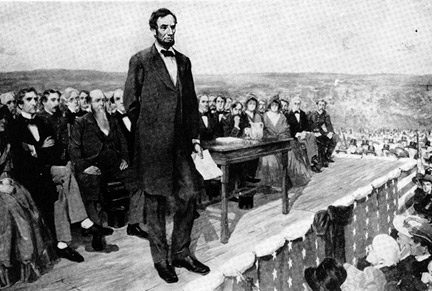
Rewrite a serious speech about a serious topic; make your rewrite humorous. Imagine “The Gettysburg Address” written not by Abraham Lincoln (who had a keen sense of humor himself), but by Mark Twain or Erma Bombeck.


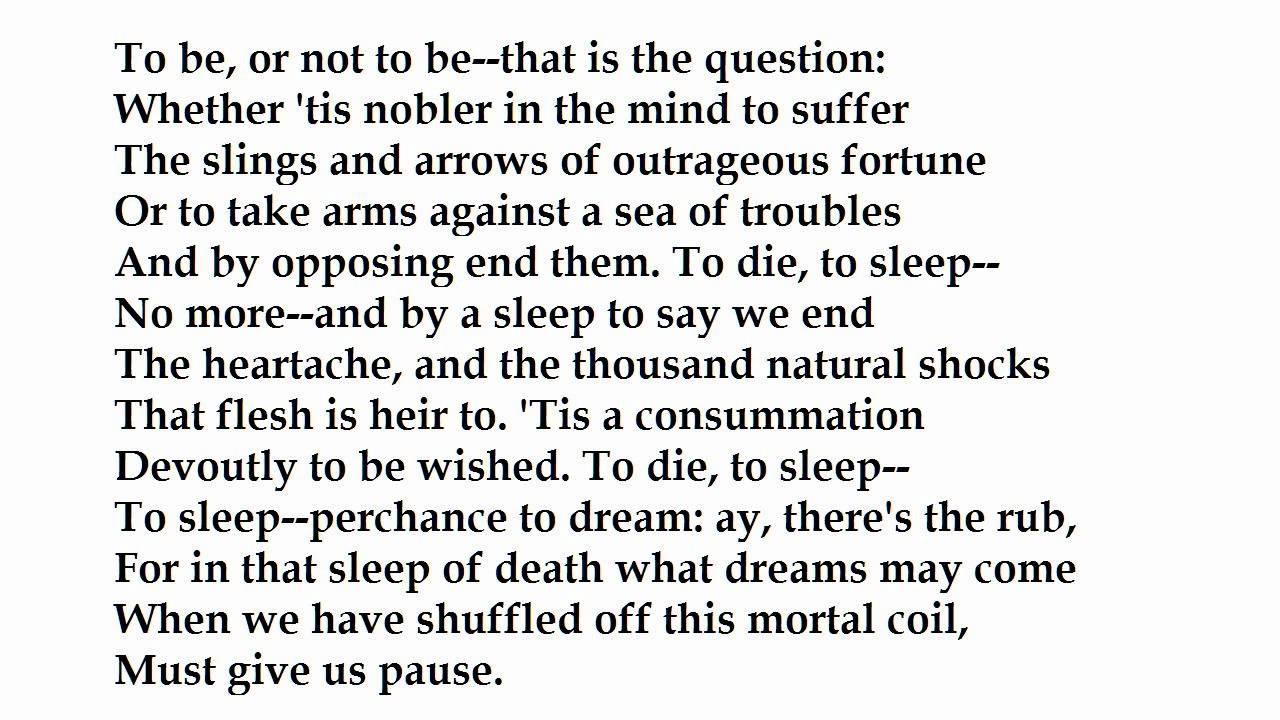
Parody a great poem or one of William Shakespeare's soliloquies. Twain does just this, in The Adventures of Huckleberry Finn, in which The Duke and The Dauphin butcher Hamlet's soliloquy to humorous effect.


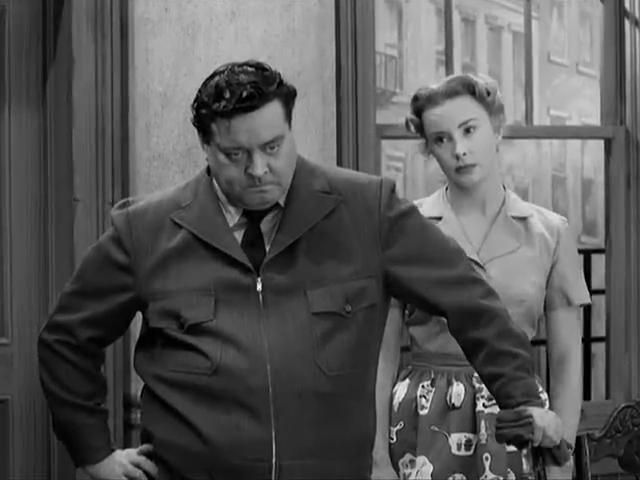
Explain why a supporting character should be the star of a short story, novel, or screenplay. Imagine I Love Lucy with Ethel Mertz, rather than Lucy Ricardo, as the main character or The Beverly Hillbillies with Milburn Drysdale and his wife as the major characters.

Create an imaginary argument between two characters with opposing views on the same topic.


Offer absurd applications of cutting-edge technology. For example, list reasons as to why men or women (or both) should be replaced by robots.


We claim to argue facts, using reason, but, often, desire comes first , arguments in support of our desires second, if at all. Write an argument based on a desire for something insignificant or “forbidden,” using irrelevant and ludicrous “reasons” to support your claims.


 Explain why an honored person, real or imaginary, should be reviled or why a reviled person, real or imagined, should be praised. If the person is real, use two real persons; if imaginary, use two imaginary persons. If the persons are real, write about men and women from the fairly distant past to avoid lawsuits!) Twain was forever trying to secure donations to build a statue to Adam, humanity's common ancestor.


Add a humorous character to a “serious” novel or short story in the public domain. Twain was once interested in creating a fictitious cabin boy to accompany Christopher Columbus on Columbus' explorations.

Tell a story from a different, humorous perspective.


Update a classic, such as The Rape of the Lock, for example.

Imagine a comedian substituting for an actor in an established role: W. C. Fields as Sheriff Andy Taylor, for instance.

Role reversal is often a good source of humor. What if Lucy Ricardo were a band leader and husband Ricky was a stay-at-home husband who aspired to fame and fortune?

Create seemingly absurd, but pointed (and pithy) maxims. Twain does this in Pudd'n'head Wilson. Here's one: “Man is the Only Animal that Blushes. Or needs to.”


Be a team of one! Examine a topic from a variety of perspectives, writing as if you have multiple personalities, each one of which was humorous in his or her own way.


Friday, November 11, 2011

The Television Situation Comedy, or TV Sitcom


Copyright 2011 by Gary L. Pullman

A situation comedy (or “sitcom”) involves a continuous cast of regular, recurring, and unique stereotypical characters in comedy that arises from a shared environment, from a specific set of circumstances, or from a particular situation that results in predictable behavior and rapidly resolved conflict. For example, The Andy Griffith Show portrays the life of small-town sheriff Andy Taylor as he interacts with his family, Aunt Bee and Opie, his deputy Barney Fife, and his friends, neighbors, and fellow townspeople.

Regular characters are those which occur in almost every episode of a sitcom series. Such characters include the protagonist, or main character, and the supporting characters with whom he or she routinely interacts, such as a spouse, a child or children, servants, friends, neighbors, coworkers, or roommates.
Often, a regular character is a foil to the protagonist, highlighting the main character’s personality traits by exhibiting traits that are opposite to the protagonist’s qualities. Often, when a foil is part of the regular cast, the sitcom will be filmed in a single location, in a relatively small space, such as an apartment, that the foil shares with the protagonist. Andy Taylor, the sheriff of Mayberry, North Carolina, is the protagonist of The Andy Griffith Show. As such, he is one of the show’s regular characters. Other regular characters include his Aunt Bee, his son Opie, and his deputy Barney Fife.

Recurring characters are supporting characters who interact less frequently with the protagonist or one of the other regular characters than do regular characters; recurring characters may include visitors, government officials or representatives, customers, out-of-town or distant relatives, or supervisors. Some of the recurring characters on The Andy Griffith Show are schoolteacher Helen Crump, Andy’s girlfriend; Thelma Lou, Barney’s girlfriend; barber Floyd Lawson; mechanic Gomer (and, later, his cousin Goober) Pyle; fix-it man Emmett Clark; city clerk Howard Sprague; Aunt Bee’s friend, Clara Edwards; and Mayor Pike.

Unique characters appear only once in a single episode of a sitcom series. The character who is portrayed by a guest star (a actor of some renown) is a special type of unique character. Such a character appears in an episode because the celebrity who plays this character has charisma or glamour that adds interest to the sitcom. A guest star’s appearance may coincide with “sweeps weak” or may occur during a decline in the show’s ratings, to increase the show’s audience. Other unique characters usually appear for a specific purpose, such as to fulfill the need of a particular plot.

Regardless of whether a character is a regular, a recurring, or a unique character, he or she is usually a flat character and a stereotype whose behavior is predictable. A flat character is one that is made up of only a few personality traits are present in most sitcom characters, and these traits can be identified by a short list of adjectives. Barney is a flat character, whose fictitious personality is summed up by such adjectives as “vain,” “sensitive,” “self-important,” “inept,” and “braggadocios.” A stereotypical character is one that fits preconceived ideas about the class of individuals of which he or she is a representative. The sitcom character also usually behaves as viewers imagine such a type of character would behave--that is, according to type. A rustic character is apt to be simple, unaffected, and gullible; an urban character, urbane, pretentiousness, and cynical. Therefore, such characters’ behaviors would be predictable. The simple rustic is likely to misjudge situations or people, underestimating them; provide overt indications of his or her true thoughts and feelings through his or her facial expressions, body language, and speech; and be deceived by unprincipled characters. Gomer is a good example of such a character. A trusting soul who gives everyone the benefit of the doubt, he sometimes chastises those he’s underestimated by shouting, “Shame! Shame! Shame!” at them after they have hoodwinked him with one unlikely story or another. On the other hand, the urban character is apt to see several more implications concerning a situation’s significance or several meanings concerning a deed that would escape the rustic character’s notice; to disguise or hide his or her true thoughts and feelings; and to dismiss good intentions or noble feelings as the motivations or causes of another character’s behavior. On The Andy Griffith Show, Mayor Pike comes the closest to such a character.

In some situation comedies, two or more characters share the same environment. In some instances, one of the regular supporting characters is a foil to the protagonist. Because of their diametrically opposed qualities, these characters are doomed to disagree and, often, to annoy one another. They see things altogether differently, often in opposite terms to one another’s perceptions, thoughts, feelings, attitudes, or beliefs. For example, in The Odd Couple, Oscar Madison is a slob who shares his apartment with Felix Unger, an obsessive-compulsive neat-nik. Much of the show’s conflict--and comedy--stem from their attitudes toward cleanliness.

The shared space can be, and usually is, larger than an apartment. On The Dick Van Dyke Show, Rob Petrie shares an office with his fellow comedy writers Sally Rogers and Buddy Sorrel and his home with his wife Laura and their son Richie. Likewise, the entire community of Mayberry, including the courthouse, Andy Taylor’s house, Wally’s Filling Station, Floyd’s Barber Shop, Emmett’s Fix-It Shop, Weaver’s Department Store, and several other locations, make up the shared space of The Andy Griffith Show.

The sitcom situation is of an everyday sort, such as viewers themselves might encounter in their daily family or work lives or during their leisure time. Each situation gives rise to a commonplace conflict that is resolved within the span of the show’s duration--typically, thirty minutes (no counting commercial messages). Some of the conflicts that occur in plots for The Andy Griffith Show include Opie’s discovery of the harm to relationships that lying causes; Goober’s learning that pedantry is apt to cause others to feel contempt instead of admiration for know-it-alls; and Andy’s willingness to let others retain their personal dignity by taking credit for the good deeds that he has done.

The themes (or subject matter) of sitcoms suggest the type of topics that television audiences find amusing. Over the years, various types of sitcoms have aired on television, several of which types overlap:
  • Offbeat comedies (The Addams Family, The Munsters, My Mother the Car)
  • Comedies of the workplace (Alice, The Andy Griffith Show, The Bob Newhart Show, The Dick Van Dyke Show, Oh! Susannah, Laverne and Shirley, The Mary Tyler Moore Show, Rhoda, Night Court, Our Miss Brooks, That Girl, Cheers, Home Improvement, Frazier)
  • Comedies involving single-parent families (The Andy Griffith Show, Bachelor Father, The Courtship of Eddies’ Father, Make Room For Daddy, One Day at a Time, WKRP in Cincinnati, My Three Sons, Full House)
  • Comedies involving merged families (The Brady Bunch, Eight Is Enough, Yours Mine and Ours, Please Don‘t Eat the Daisies)
  • Colleges about roommates (Bosom Buddies, Three’s Company, Friends, Laverne and Shirley, The Odd Couple)
  • Comedies featuring black families (The Cosby Show, Good Times, Fresh Prince of Bel-Air)
  • Comedies focusing upon nuclear families (The Cosby Show, Good Times, Leave It to Beaver, Father Knows Best, The Dick Van Dyke Show, The Donna Reed Show, Married. . . with Children, Roseanne, Home Improvement)
  • Comedies centering upon multi-cultural families (Diff’rent Strokes)
  • Comedies featuring extended families (The Mothers-in-Law, Everybody Loves Raymond)
  • Comedies about married couples (The Jeffersons, Ozzie and Harriet, The George Burns and Gracie Allen Show, I Married Joan, I Love Lucy, The Honeymooners)
  • College comedies (Dobie Gillis)
  • Comedies concerning high schools or private postsecondary schools (The Facts of Life, Welcome Back, Kotter, Happy Days)
  • Rustic comedies (The Dukes of Hazzard, The Beverly Hillbillies, Green Acres, Petticoat Junction, The Real McCoys)
  • Espionage comedies (Get Smart)
  • Supernatural comedies (The Flying Nun, Bewitched, I Dream of Jeanie, The Ghost and Mrs. Muir, The Girl with Something Extra, Topper)
  • Military comedies (The Phil Silvers Show, F Troop, Gomer Pyle, USMC, Hogan‘s Heroes, M*A*S*H)
  • Beach comedies (Gidget)
  • Political comedies (The Governor and J. J.)
  • Extraterrestrial comedies (My Favorite Martian, ALF, Mork and Mindy)
  • Animal comedies (Mr. Ed)
  • Comedies about a Servant (Hazel, Who‘s the Boss?, The Nanny)
  • Comedies focusing upon musical families or groups (The Monkees, The Partridge Family)
  • Comedies about superheroes (Batman)

Friday, March 12, 2010

John Whedon: Remembrance and Accolades

John Whedon
(November 5, 1905 – November 21, 1991)

“Writer of eight episodes of The Andy Griffith Show (86 and 87 [season three] and 100, 102, 103, 108, 111, and 120 [season four]),” Joss Whedon’s grandfather, “John. . . has also written for such programs as The Alcoa Hour, The Dick Van Dyke Show, The Donna Reed Show, Kraft Television Theater, Leave It to Beaver, Room 222, and Walt Disney’s Wonderful World of Color (Kilroy, a four-part special).

“Along with co-author George Roy Hill, Whedon was nominated for an Emmy in 1956 for best teleplay writing (one hour or more) for A Night to Remember, which aired on Kraft Television Theater. (It lost to Rod Serling’s Requiem for a Heavyweight, which aired on Playhouse 90.) His writing has earned such awards as the Christopher, the Sylvania, and a Writers Guild of America award.

“Whedon has written for other media. His films include two 1974 movies: The Bear and I and The Island at the Top of the World. He has written such plays as Life’s Too Short, Li’l Darlin’, and Texas. He has also been published in magazines such as Colliers, Cosmopolitan, Harper’s, and The New Yorker. In fact, he was once on the editorial staff of The New Yorker.”

--Dale Robinson and David Fernandes, The Definitive Andy Griffith Show Reference: Episode-by-Episode, with Cast and Production Biographies and a Guide to Collectibles (McFarland and Company, Inc., Publishers, Jefferson, NC, and London, 1996).

* * *

Notes: Andy Griffith Show episode titles: 86 = “Andy Discovers America”; 87 = “Aunt Bee’s Medicine Man”; 100 = “The Sermon For Today”; 102 = “A Black Day For Mayberry”; 103 = “Opie’s Ill-Gotten gain”; 108 = “Opie and His Merry men”; 111 = “Aunt Bee and the Crusader”; 120 = “Bargain Day”

Magacine: episode dated 14 October 2005 (appeared posthumously as himself)

Room 222, “Fathers and Sons” episode

That Girl, “Many Happy Returns” episode

The Dick Van Dyke Show episodes: “The Bottom of Mel Colley’s Heart,” “Viva Petrie,” “Scratch My Car and Die,” “The Third One From the Left,” “Turtles, Ties, and Toreadors,” “Where You Been, Fassbinder?,” and “The Night the Roof Feel In”

Sunday Showcase movie: Our American Heritage: Shadow of a Soldier and Our American Heritage: Gentleman’s Decision

The Donna Reed Show episodes: “The Foundling,” “Guest in the House,” “Nothing But the Truth,” “Have Fun,” “Boys Will Be Boys,” “The Parting of the Ways,” “The Hero,” “Advice to Young Lovers,” “The Neighborly Gesture,” “Nothing Like a Good Book,” “The Homecoming Dance,” “The New Mother,” “A Place to Go,” “A Night to Howl,” “The Gentle Dew,” “The Fatal Leap,” “Mary’s Growing Pain,” “How the Other Side Lives,” “Never Marry a Doctor,” “Donna Goes to a Reunion,” “Someone Is Watching,” “Variations on a Theme,” “Trip to Nowhere,” “The Poodle Parlor,” “Mary’s Heart Throb,” “Donna’s Helping Hand,” “The Merry Month of April,” “Music Hath Charms,” “The Good Guys and the Bad Guys,” “Mouse at Play,” “The Monster,” “One of Those Days,” “All Is Forgiven,” “Hilldale 500,” “Winner Takes All”

Leave It to Beaver episodes: “Beaver’s Bad Day” and “The Grass Is Always Greener”

The Alcoa Hour
episode: “The Trouble with Women”

Kraft Television Theater episode: A Night to Remember

Lux Video Theater episodes: “Sweet Sorrow,” “Forever Walking Free,” “Dames Are Poison,” “Life, Liberty, and Orrin Dudley,” “Something to Celebrate,” “Song For a Banjo,” “It Grows on Trees,” “The Inside Story”

Tonight on Broadway episode: Texas, Li’l Darlin’

-- “John Whedon: filmography by TV series,” The Internet Movie Database (IMDb)

* * *

The Christopher Award = “(established 1949)” is “presented to the producers, directors, and writers of books, motion pictures and television specials which affirm the highest values of the human spirit. Publishers, TV networks, and film directors are asked to submit titles and work that they believe to be award-worthy. Industry professionals and Christopher staff members make the final selections based on:

  • Artistic and technical proficiency
  • Significant degree of public acceptance
  • Affirmation of the highest values of the human spirit

An example of a Christopher Award is She Said Yes by Misty Bernall.

-- Wikipedia

* * *

The Sylvania Award

“The Sylvania Award was issued from about 1952 through 1958 in a number of categories for outstanding work in television broadcasting or production. . . . Other Sylvania Award recipients [also] included such luminaries as Rod Sterling, Steve Allen, and Fred Rogers.”

Sylvania Award - 1952

* * *

The Writers Guild of America Award = “The Writers Guild of America Award for outstanding achievements in film, television, and radio has been presented annually by the Writers Guild of America, East and Writers Guild of America, West since 1949. In 2004, the show was broadcast on television for the first time.

The screen awards are for films that were exhibited theatrically in the Los Angeles area during the preceding calendar year. The television awards are for series that were produced and aired between December 1 and November 30, regardless of how many episodes aired during this time period.

-- Wikipedia

* * *

“George Roy Hill (December 20, 1921 – December 27, 2002) was an American film director. He is most noted for directing such films as Butch Cassidy and the Sundance Kid and The Sting, which both starred the acting duo Paul Newman and Robert Redford. Other notable films are Slaughterhouse-Five, The World According to Garp, The World of Henry Orient, Hawaii, Thoroughly Modern Millie, The Great Waldo Pepper, Slap Shot, A Little Romance with Laurence Olivier, and The Little Drummer Girl. . . .

. . . He won an Emmy for writing and directing a TV version of A Night to Remember, the story of the sinking of the Titanic.”

-- Wikipedia

Saturday, February 20, 2010

Anatomy of the Sitcom: “The Haunted House”

Copyright 2010 by Gary L. Pullman


“The Haunted House,“ episode 98 (Season Four)

Several of the scripts for The Andy Griffith Show featured supernatural or paranormal themes. (For an explanation of the difference between these two terms, visit my other blog, Chillers and Thrillers: A Blog on the Theory and Practice of Horror.) One of these is episode 98 (season four), “The Haunted House,” by Harvey Bullock. Like many of the other episodes of the show, this one is structured according to a series of problematic situations, the results of these problems, an attempted solution to each problem (which only gives rise to another problem), a turning point, and a recognition by the main character that leads to a resolution, which is then followed by the results of the resolution:

Initial Problem: Opie hits a baseball thrown by a friend and breaks a window at the abandoned Rimshaw house.

Results: Both boys are nervous about retrieving the ball because the house is rumored to be haunted. As they approach the door, they hear a spooky noise that scares them away. They go to the courthouse and tell their story to Andy and Barney. The men tell them it was probably just the whistling wind. Andy wants them to stay out of the house because it is likely that the floorboards are loose.

Solution-Problem: Then, sensing that Barney was putting up a false front when he said there was nothing to be afraid of, Andy asks his deputy to go get the ball for the boys.

Results: While it is clear that Barney doesn’t want to do it, he can’t back out now. When Gomer suddenly comes by, Barney quickly enlists him to come along. The nervous deputy enters the house first--”Age before beauty,” says Gomer. Unfortunately, they don’t get much farther than the boys did. Ghostly moans send them scrambling for the door. Back at the courthouse, Andy chides Barney for failing to get the ball and for believing the house is haunted. Barney says that he recalls that when old man Rimshaw died, his last wish was for his home to remain undisturbed. Otis Campbell chimes in with rumors he has heard: the walls move, the eyes on the portrait of Mr. Rimshaw seem to follow a person around the room, and axes float through the air.

Solution-Problem: Andy dismisses all this as nonsense, and he goes to the Rimshaw house with Barney and Gomer in tow. They quickly locate the baseball, and despite objections from his cohorts, Andy insists they look around the place.

Results: While he wanders off into another room, Barney and Gomer slowly move around the room, looking scared to death. Suddenly, Gomer disappears! Barney panics, and Andy returns. Gomer suddenly reappears. He had inadvertently stepped into a closet or something. The eerie thing is, Gomer says that someone or something pushed him out. Next, Andy notices that the wallpaper above the fireplace is peeling and the wall is warm. Barney suggests that maybe an old tramp has been using the fireplace. Andy ventures upstairs and asks Barney and Gomer to check out the cellar. Gomer correctly surmises that the cellar is downstairs. When Barney opens the cellar door, he sees an ax. Too scared to go down the stairs, he softly inquires, “Any old tramps down there?” then quickly shuts the door. Gomer tells Barney that legend has it that Rimshaw put chains on his hired hand and then killed him with an ax. Barney notices the eyes on the Rimshaw portrait following him. When he tells Andy, Andy responds that it’s probably a trick of the light.

Turning Point: Barney knocks on the wall--and his knock is answered. Andy gets the same result when he knocks.

Moment of Recognition (implied, rather than explicit, in this episode): Suddenly, Andy appears frightened. He orders loudly, “Let’s get out of here!” Barney and Gomer quickly bolt out of the house, but Andy remains. He has a plan in mind.Results: Suddenly, we see Otis and the notorious moonshiner Big Jack Anderson in the house. They are laughing, and Big Jack is quite proud of the fact that his scare tactics have worked. He has found the perfect spot for his still, and claims he could probably stay there for twenty years. As they come out of their hiding place, believing the house is empty, they get the shock of their lives. They witness an ax hanging in the air, a baseball rolling down the stairs, and the eyes moving on the portrait. They make tracks leaving the house. Meanwhile, Barney has bravely determined he must go rescue Andy, so he comes in the rear entrance. He sees the suspended ax and hears moaning. He nearly passes out from fright before Andy can explain things.

Resolution: The lawmen later use the infamous ax to smash Big Jack’s still. Andy captures Anderson and surrenders him to Federal Agent Bowden of the Alcohol Control Division.

Results: As usual, Andy generously shares the capture credit, in this case with Barney and Gomer.


Note: The plot synopsis is taken, nearly verbatim, from Dale Robinson and David Fernandes’ The Definitive Andy Griffith Show Reference: Episode-by-Episode, with Cast and Production Biographies and a Guide to Collectibles (McFarland and Company, Inc., Publishers, Jefferson, NC, and London, 1996).

Thursday, February 18, 2010

Anatomy of the Sitcom: “Gomer the House Guest"

Copyright 2010 by Gary L. Pullman


“Gomer the House Guest,” episode 97 (Season Four)


This episode is constructed of a series of problems (conflicts), followed by its results (often examples of a character’s behavior), and solutions which themselves give rise to additional problems (often examples of a character‘s behavior or the results of the attempted solution). The problems are and solutions are situations; the examples of instances of a character’s behavior (action).

Near the middle of the story, a turning point occurs, during which the protagonist plans to take, or actually takes, an action that moves the plot in the opposite direction from that in which it has been progressing. At some point, toward the end of the story, the protagonist makes a discovery (moment of recognition), which allows him or her to solve the problem once and for all time (resolution), and the story ends with the results of this final solution.

Since situation comedies are, by definition, comedies, they end with the main character in a better situation than the one in which he or she found him- or herself at the story’s beginning.

Initial Problem: Wally is upset with Gomer because he spends too much time telling stories to some of his customers, while others get impatient for service.

Result(s): Wally notices one impatient person driving away in disgust.

Solution-Problem: This incident causes Wally to fire Gomer, which puts Gomer out of both a job and a house because his living quarters were in a back room of the station.

Result(s): Gomer asks Andy if he can stay in one of the cells at the courthouse for a few days.

Solution-Problem: Sympathetic, Andy invites him to stay at the Taylors’ until he finds a new job; Gomer turns out to be a real nuisance..

Result(s): Gomer talks throughout an episode of “Shep and Ralph” (a story of a man and his dog), ruining it for Andy and his family. When Gomer decides to do some chores for the family to earn his keep (since Andy won’t accept any rent payment), he chooses to do them overnight. He does some sawing, and while trying to repair the toggle switch on Aunt Bee’s vacuum cleaner, he turns on the machine. These escapades wake up the entire family. Finally, Andy gets him to prepare for bed, but Gomer gargles loudly and sings “No Account Mule” over and over, annoying Andy.

Solution-Problem: The next morning, Andy, exhausted, bluntly tells Gomer that due to the racket last night, he did not get much sleep.

Result(s): Gomer apologizes and vows to be more quiet. Sure enough, in the evening, Gomer retires when the family does and quietly reads his comic book in bed.

Solution-Problem: Unfortunately, two of his former customers come by the house asking for Gomer’s appraisal of the condition of their automobiles. This situation creates such a din that Andy’s neighbors wake up and complain.

Result(s): The next morning, Andy, Opie, and Aunt Bee are unusually cranky with each other. They realize they are not getting enough sleep.

Turning Point: Andy becomes determined to tell Gomer he must find other arrangements.

Solution-Problem: Meanwhile, he goes off to work as usual, where he demonstrates that his grumpiness is even-handed.

Result(s): He begins handing out tickets to any driver whose automobile is in poor shape. He discovers a lot of offenders.

Moment of Recognition: Andy also discovers that Wally’s business has dwindled drastically since he fired Gomer.

Result(s): When he returns home, Andy finds Gomer chatting with his old customers, who have missed their stories as much as his mechanical skills.

Resolution: Andy orders them all to follow his car, and they parade straight to Wally’s, where Andy points out that Gomer is Wally’s business.

Result(s): Wally needs no coercion to rehire Gomer. Andy suggests to Wally that he could improve Gomer’s “kitchenette” by providing an extra burner and an icebox. Wally readily agrees and even adds some fresh paint and some groceries to make his prized employee more comfortable.


Note: The plot synopsis is taken, nearly verbatim, from -- Dale Robinson and David Fernandes’ The Definitive Andy Griffith Show Reference: Episode-by-Episode, with Cast and Production Biographies and a Guide to Collectibles (McFarland and Company, Inc., Publishers, Jefferson, NC, and London, 1996).

Friday, November 20, 2009

Situation Comedy

Copyright 2009 by Gary L. Pullman

Like playwrights and screenwriters, television situation comedy writers often receive short shrift. They work behind the scenes, not on stage or behind the camera. As a result, many of them remain relatively anonymous. However, one can learn a tremendous amount from them as to how to write humor, even though their media are more visually than textually oriented.

There are too many situation comedies to review in anything less than several volumes, but we can learn much from considering the genre itself, its conventions, techniques, and some specific illustrations of each of these elements.

As the name “situation comedy” (or “sitcom,” as it is often abbreviated) implies, these stories emphasize comical situations, or sets of circumstances, over characters. As a result, their dramatic personae tend to be stock characters of the type which Durant identifies with respect to the ancient Greek’s New Comedy (“the cruel father, the benevolent old man, the prodigal son, the heiress mistaken for a poor girl, the bragging soldier, the clever slave, the flatterer, the parasite, the physician, the priest, the philosopher, the cook, the courtesan, the procuress, and the pimp”); which we have identified with regard to contemporary humor ( the country bumpkin, the con artist, the egghead, the fish out of water (displaced person), the hypocrite, and the blowhard); and which people the pages, as it were, of “An Excerpt of Character Writings of the 17th Century” (see Appendix A). These characters recur on a regular basis, often in a specific setting that reflects a location that is familiar with a wide audience. Homes and workplaces, schools and public places are frequently the settings for such comedies.

The sitcom tells a story, and, although the story is slight and often superficial, it is the occasion for the jokes, humorous anecdotes, and amusing situations that ensue. The story acts much like the string upon which beads or jewels are strung to make a necklace, with the beads or the jewels themselves representing the jokes, humorous anecdotes, and amusing situations. Thus, a sitcom is, at least potentially, doubly delightful: it offers both a comical story and plenty of laughs along the way. Sitcoms have been a major influence on modern humor, both in the United States and around the world, with hundreds and hundreds of them having been produced since their debut, which, arguably, was 1928, the year during which Amos and Andy was launched on American radio. Since their inception, situation comedies have taken on nearly every aspect of contemporary life, from domestic bliss to irascible bosses, from macabre neighbors and busybodies to sentimental slobs, from cute, precocious kids and rebellious teens to battling in-laws and quirky roommates. Therefore, anyone who is interested in writing hilarious humor needs to be aware of the conventions and techniques of the sitcom writer, for, even if one has no intention him- or herself ever of writing a sitcom, the genre has shaped and reshaped comedy and humor, changing audiences’ and readers’ expectations as to what should be regarded as funny. That doesn’t mean that a humorist must write only in the same vein as sitcom writers, but it does mean that the humorist should be aware of the major influence that sitcoms have had on humor in general and comedy in particular.

In The Comic Toolbox: How To Be Funny Even If You’re Not, John Vorhaus, a film and television writer with over 20 years of experience, offers tips concerning how to write speculation scripts, or “specs,” for television situation comedies. Some of his advice applies to humorists of every stripe. For example, Vorhaus advises his readers to “play to your strengths”: “Do you have a knack for gags? Then you want to spec a gag-driven show. Do you have ‘heart’? Then you want to write a sample for a show that has lots of ‘heartfelt’ moments. Can you write kids well? Write a kids’ show spec.” He also reminds his readers to remember that every sitcom has a “rule” that governs how the story will be told. A “rule” for Married. . . With Children, he says, is “that Al Bundy always loses.”

Likewise, “on Murphy Brown there’s often a gag, or even a running gag, about a secretary, but. . . the stories are never built around a secretary.” These rules, he says, affect every element of their respective sitcoms:


A show's rules extend to all aspects of that show. Which character gets the main story? Who gets the secondary stories? Is someone a straight man? Do characters tell jokes and make wisecracks, or do all the laughs come from the characters' comic perspectives? What sort of language do these people use? What topics are taboo? Do they make reference to the outside world, or do they live within a hermetically sealed sitcom bubble? Will given characters act the fool?
Vorhaus also offers excellent instruction as to how the typical sitcom is structured and how he himself applies the genre’s strict guidelines as to how such a comedy should be put together:

Situation comedies are structured either as two-act or three act tales. Mad About You, M*A*S*H and Married. . . with Children are two-act structures; Murphy Brown and The Simpsons play in three acts. Each act ends with an act break, a big dramatic moment which (one hopes) creates a sense of expectation and dread strong enough to hold the viewers' interest across the commercial break and bring them back for more. . . .

. . . In three-act structure, as in two-act structure, it's necessary for the moment before each commercial to have some real drama and urgency, to carry the viewer over the break. I like to think of my three-act act breaks in terms of trouble is coming and trouble is here. At the end of the first act, the characters know that a bad, bad thing is looming on the horizon. At the second act break, the consequences of that bad thing have been brought home. This second break corresponds roughly with the moment of maximum dread in traditional two-act structure. . . .

No matter what happens in your story, remember that situation comedies are essentially circular; things always end up more or less back where they started. If a
character gets fed up with his family and moves out of the house, clearly the act break is the moment when he leaves.

Just as clearly, the story will end with the character having moved back home.

Many sitcoms, Vorhaus points out, have a main story and a secondary, related story, the two of which may (or may not) be connected by their sharing of a common theme:
Many, though not all situation comedies slice themselves up into a-story and b-story. The a-story is the main story, the big problem, the heavy emotional issue with which a given half-hour of television reality chooses to concern itself. Typically, the a-story is given to the star of the show, the main character. Also, the a-story explores the theme of the episode. Whether that theme is, "tell the truth," or "be true to your school," or "don't do stupid things," it's played out in the largest, deepest, and most dramatic sense in the a story.

The b-story is much smaller and lighter than the a story. It usually involves secondary characters. It carries far less emotional weight and gets less screen time than the a-story. In a well crafted sitcom, there's a thematic connection between the a-story and the b-story, in which the b-story comments on and amplifies the meaning of the a-story.

Vorhaus also offers a “shortcut” for writing sitcoms that reveals the basic structure of this genre and provides the humorist with yet another tool for his or her humorists’ toolbox:

. . . I'd like to introduce yet another quick-and-dirty way to get a line on your sitcom story. To use this shortcut, think in the following terms: introduction, complication, consequence, and relevance. The introduction to a sitcom story is the thing that gets the trouble started or puts the tale in motion. An out-of-town guest arrives. An old girlfriend turns up. A first date looms. A driver's license expires. A party is planned.

The complication is the thing that makes the bad situation worse. If the introduction is one character taking cough medicine, the complication is another character bringing the boss home for dinner. If the introduction is one character running for school office, the complication is another character entering the race. If the introduction is a character weaving a lie into an English essay, the complication is that essay winning a major prize. If the introduction is Mr. Wacky going to the doctor, the complication is discovering he only has three weeks to live. The consequence is the result of the conflict created by the introduction and the complication. If two people are running for the same office, then the consequence is the outcome of the election. In the cough medicine story, the consequence is when the cough medicine blows up, so to speak, in the boss's face.

The consequenceof Mr. Wacky facing death is his coming to terms with his mortality, only to discover (since we'd like to run the series for another five years or so) that he's not actually dying after all. The relevance is simply a statement of the story's theme. Stand by your friends. Do the right thing. Don't fear the future. Stop and smell the roses. Accept your own mortality. Shower the people you love with love; that sort of thing.


Earlier, we identified some of the common stock characters of humor and comedy. Using the television sitcoms in which these characters appear as examples, we can get a better idea of how actual sitcoms were developed by referring to the summaries of these shows that are provided by the TV Land website.

The Beverly Hillbillies: Jed and Jethro (front seat); Elly May and Granny (back seat)
For our example of the country bumpkin, we used Jethro Bodine, a character on The Beverly Hillbillies. This show is based upon the premise that Jed Clampett, attempting to kill game he’s hunting near his mountain cabin in Bug Tussle, unearths an underground oil reserve, making him instantly wealthy. He and his family load up their truck and move to Beverly Hills, California, where life, for them (and everyone they encounter there) is decidedly different. TV Land describes the series as “always rich in the absurd”:


. . . The Beverly Hillbillies was chock full of lowbrow but hilarious situations. As sitcom humor would have it, Jed and his brood move next door to the greedy banker, Milburn Drysdale, who in an effort to make his financial institution the home of the Clampett millions, takes the fresh-off-the-farm family under his wing. Most of the early shows revolve around the impossible adjustments the poor mountain folk must make to city life, and Jed Clampett's backwoods brand of wisdom always wins out in the end. Despite their brand-new mansion with its cement pond and indoor plumbing, the Hillbillies stay true to their rustic roots. Many episodes center around
Drysdale's attempts to keep the Clampetts in good spirits in their big city setting (thus keeping their money in his bank). Enrolling Jethro in elementary school, buying Jed a movie studio, letting Granny open a medical practice and finding Elly May a beau are just a few of the silly but entertaining storylines.
Our example of the con artist, Mr. Haney, is taken from the sitcom Green Acres, in which attorney Oliver Wendell Douglas, wanting to get back to the basic way of life that he believes made America great, purchases a run-down farm, complete with ramshackle house and barn, from Mr. Haney, who is forever afterward selling the new farmer an assortment of junk that Douglas does not want or need. The show’s gags result from Douglas’ attempt to farm the unproductive land, producing sparse crops of miniature vegetables that are the laughingstock of his neighbors; the house’s lack of basic utilities, facilities, and utilities, such as a telephone, a closet, and dependable appliances; Douglas’ socialite wife Lisa’s ineptitude as a housewife and her longing to return to Manhattan; the Douglas’ incompetent employee Eb; zany neighbors; Douglas’ naiveté about country life; and his occasional trips to Hooterville.

TV Land describes the show:


Successful lawyer Oliver Wendell Douglas. . . longs to leave behind the complications of modern society and life as a Manhattanite, and despite the protestations of his glamorous, socialite, Hungarian wife Lisa. . . , Oliver buys a farm, sight unseen, from swindler Mr. Haney. The couple says “goodbye[,] city life!” and take up residence in Hooterville, U.S.A. While there is some debate amongst the show's fans as to the actual geographic location of Hooterville, one thing is clear; it exists in a state of mind-bending logic and hallucinatory natural laws, and is inhabited by an eccentric population that includes favorite son Arnold Ziffel, a multi-lingual, television watching pig. The farm Oliver has purchased is a shambles, the farmhouse in a state of advanced disrepair. Along with hired hand Eb, Oliver tries to make a go at being
a gentleman farmer.Meanwhile, Lisa settles in to her new surroundings despite herself, and attempts to bring gracious living and the finer things to the oddball residents of this off-the-map town.
The sitcom M*A*S*H supplied our example of the egghead character in the person, so to speak, of Major Charles Emerson Winchester III. This comedy is set in Korea, during the Korean War. It involves the medical and support personnel of the 4077th Mobile Army Surgical Hospital, or MASH. Commanded by Colonel Sherman T, Potter (who is later replaced by Lt. Col. Henry Blake), Dr. Hawkeye Pierce and Dr. John Francis Xavier McIntyre, who goes by the nickname “Trapper John,” are unconventional doctors who, despite their hatred of war (and the Army), do their best to save the lives of wounded soldiers by practicing “meatball surgery” under less-than-idea conditions. To maintain their sanity, they flaunt Army rules and regulations, play practical jokes on one another, and tease Major Frank Burns and his paramour, Major Margaret (“Hot Lips”) Houlihan, who, despite their affair with one another, insist that everyone else should do everything strictly by the book. Pierce and Honeycutt get away with their unorthodox behavior--keeping a still in their tent, wearing Hawaiian shirts instead of uniforms, and displaying a general lack of disrespect for their superiors--because their surgical skills are not only necessary but extraordinary. Besides Blake, Burns, Houlihan, and Winchester, other characters in the series include Corporal Maxwell Q. Klinger, who sports a dress and wears high heels and carries a purse in the hope of receiving a psychiatric discharged; Colonel Water Eugene (“Radar”) O’Reilly, a clairvoyant clerk who announces that casualties are “incoming,” even before he receives official word; and Father Francis Mulcahy, a Catholic priest.

TV Land describes M*A*S*H from the protagonist’s point of view:

For Captain Benjamin Franklin "Hawkeye" Pierce, love and war, politics and
prose, collide at the 4077th Mobile Army Surgical Hospital. He was named Hawkeye
after a character in The Last of the Mohicans.

Hawkeye is originally assigned to work with Captain "Trapper John" McIntyre, the two become fast friends as they figure out a way to mix hi-jinks and humor with the stark reality of war. He forms a bond with seemingly psychic Corporal Walter "Radar" O. Reilly, Corporal Maxwell Klinger, who would do anything to be sent home, including dress in drag, and mild mannered Father Francis Mulcahy. After Trapper
is discharged Life at camp returns to normal for Hawkeye with the arrival of new best friend, Captain B.J. Hunnicutt. Growing more learned by war, through out his tour Hawkeye transforms from a wise cracking practical joker to a man of conscious; but perhaps his biggest strength is the ability to find humor, sanity and humanity in time of war.
We exemplified the fish out of water, or displaced person, character with Will Smith of The Fresh Prince of Bel-Air and with Jethro Bodine and the Clampetts of The Beverly Hillbillies. In Fresh Prince, Will, living in Philadelphia, starts to have trouble with members of a street gang, so his guardian aunt sends him to live with the Banks, well-to-do relatives who live in in Bel Air, California. In his new surroundings, as he is exposed to situations and characters he’d never dreamed of, Will struggles to develop a sense of identity that can include other people’s values, ways of life, beliefs, and concerns and to adjust to his new environment. He is changed for the better by his encounter with his uncle, a judge, his aunt, and their children, Will’s cousins dimwitted Hilary, pedantic Carlton, and young Ashley, just as they are changed for the better by him. Much of the series’ humor comes from Will’s struggle to fit in, from his encountering new ideas and situations, and from his conflict with his uncle and his cousins

Our examples of the hypocrite and the blowhard, Tartuffe and Sir John Falstaff, were taken from dramatic comedies, Tartuffe and King Henry IV, Parts I and II and the Merry Wives of Windsor, respectively, rather than from television sitcoms.

(Because sitcoms’ theme songs often provide a humorous way to introduce the concepts, or premises, of their respective shows, we have included the lyrics of several of them in Appendix C.)

Next: Standup Comedians