Fascinating Lists!

Saturday, April 6, 2019

Structuring Humor


Copyright by Gary L. Pullman 2019

Humor—good humor, that is—is difficult in itself. Structuring humor can be an added challenge. That's why the aspiring humorist should analyze the work of professionals, such as Bill O'Reilly, author of Old School: Life in the sane Lane, and his co-author, Brice Feirstein. It seems safe to say that many would recognize O'Reilly's name as that of the host of The O'Reilly Factor, late of Fox News, but O'Reilly has also written a number of bestselling books. Feirstein, although less known to the public in general, is also a professional writer. As a screenwriter, he wrote the James Bond scripts for GoldenEye, Tomorrow Never Dies, and The World Is Not Enough, as well as many articles for such national periodicals as The New York Times and The Wall Street Journal. Feirstein is also the author of Real Men Don't Eat Quiche and is a long-term contributing editor for Vanity Fair. Both O'Reilly and Feirstein have a keen sense of humor, as is evident in much of their work, including Old School.


So how did the authors structure their humor?


Old School starts with an introduction, “Greetings from 1973,” in which O'Reilly, using the metaphor of taking a ride in an automobile, promises to share the career path that led him into journalism after his interest in the subject was inspired by his teaching English and history at Pace High School in Opa-locka, Florida, “the crack capital of Dade County” during 1973, “a year when the U.S. government was falling apart.” He introduces the theme of the book by recounting the fact that, on the actual drive he took from Florida to Massachusetts, where he's been accepted as a student at Boston University, in the school's “broadcast journalism master's degree program,” which he undertook without benefit of an air conditioner, he advises people who complain about “their personal temperature” to “Stop,” adding the observation, “Life is not climate-controlled, people. Accept it. Don't be a Snowflake, a condition we will soon describe.”


Snowflakes, in fact, will become the target of O'Reilly's and Feirstein's humor, their adversaries who have been educated according to a curriculum far different than that of the Old School of which Old School's authors are alumni. Of course, humor often depends on targets or adversaries of one sort or another. Although humorists may be self-deprecating, the humorous opportunities offered by even the biggest ego is limited; a whole group of people, such as Snowflakes, offers many more targets for a pair of humorists.


In the first chapter of the book, “Preschool: Take Your Seat,” O'Reilly offers an anecdote about his father, Bill O'Reilly, Sr., who never let fashion get in the way of saving money. His father was happy to wear polyester, “mustard-yellow pants held up by red suspenders” that were too short for his 6'3” height. The dialogue between father and son is lively because of its allusions to history (the Great depression), fashion, an eye condition, and a disco band and the conflict between the generations that the respective speakers' points of view represents:


      “Dad, your pants are too short.”

      “Who are you, Oleg Cassini now?”

      “And what color is that?”

      “They're yellow. Do you have astigmatism?”

      “Come on, Dad, this is not a good presentation. You don't leave the house wearing those things, do you?”

      My father paused, giving me a look. He knew I was jazzing him, but his sense of humor overrode any offense.

      “Don't remember you checking out my wardrobe when I was paying for your college.”

      “Yeah, but you didn't look like one of the Village People back then.”

      My father actually laughed and walked into the kitchen. He wore those pants for years (1-2).


To the Old School attitude and behavior O'Reilly suggests by this anecdote, he and Feirstein will juxtapose those of their targets, the Snowflakes:

Now there is an ongoing battle between traditional Americans and those who want a kinder, gentler landscape full of “conversations” and group hugs, folks who believe that life must be fair and that, if it is not, there has to be a “safe space” available where they can cry things out (2).

O'Reilly next introduces his co-author, explaining how he and Feirstein met at Boston University; they're both “Old School,” O'Reilly explains, but they take different approaches to communicating with others who have opinions different than their own: “While I embrace an East Coast swagger, Feirstein does not immediately alienate half the universe as I have a tendency to do, but we're both Old School guys, as you will soon see. However, we take different buses to the school, which makes things interesting” (3).

Next, to further illustrate Old School teaching, O'Reilly lists examples of hypothetical situations in which he, his parents, or others might have been involved and his schoolmates and neighbors' reactions to his and his parents' behavior. A few illustrate the approach:

          If my mom had defended me after a kid-on-kid altercation, I could never have left the house again.

         If my dad had yelled at the Little League coach, air might have left the tires of our family car.

         If I'd borrowed money from another kid to buy a Three Musketeers and didn't pay it back, no one would have played with me.

         If a kid kicked someone in a fight, he was blacklisted. Only fists, and no hitting when someone was down.

    If a girl curse, silence ensued. For a long time. And boys never bothered girls because of the “Brother and His Large Friends” rule (4).


He sets up the next chapter with two short paragraphs at the end of chapter one:

       It is not Old School to live in the past, but remembering how things were as opposed to how things are now is a required course.

         So let's get started.


The title of the book's second chapter explains its mission: “Introducing the old School Curriculum.” A multiple-choice test quizzes readers on their actions and practices: “Do you still have a landline telephone?” “Do you still balance your checking account every month?” “If someone wishes you a 'Merry Christmas,' what's your immediate response?” “Which best reflects your view on dealing with terrorists?” What would you do “if you happen upon a raging warehouse fire late at night”? Then, the authors explain how members of the Old School conduct themselves in various situations, contrasting their behavior with that of Snowflakes. They suggest such individuals as Al Gore and Rosie O'Donnell are apt to be snowflakes, whereas Jack Nicholson, like Teddy Roosevelt, could be Old School.

Essentially, then, the introduction and the first two chapters of Old School introduce its topic, separate people into two groups, members of the Old School and Snowflakes, and suggests that Old School is easier exemplified than defined.

Chapter 3, “Old School Is in Session,” presents biographical sketches of four well-known members of the Old School: John Wayne, Billy Joel, Tina Turner, and Chris Kyle. We'll consider chapter 3 (and others) in future posts, coming soon to a computer near you.


Tuesday, April 2, 2019

Writing Prompts for Generating Humor

Copyright 2019 by Gary L. Pullman

Often, performing an exercise can be a way of generating humorous material. Envisioning humorous situations or occasions for humorous writing tends to get the creative juices flowing. To this end, I offer these writing prompts for humor.


Imagine an audience or an occasion. Perhaps you are giving a speech to a particular organization or to commemorate a certain historical event. Now, imagine that you are a well-known humorist—not a comedian (who performs, often in skits or in a stand-up routine delivering one-liners), but a humorist (who writes stories). With your audience or occasion in mind, write your humorous speech.


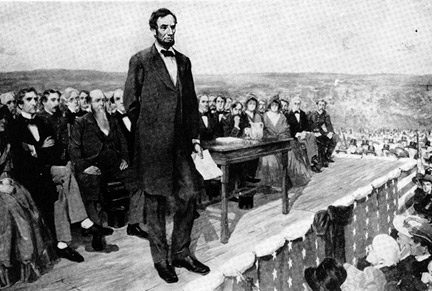
Rewrite a serious speech about a serious topic; make your rewrite humorous. Imagine “The Gettysburg Address” written not by Abraham Lincoln (who had a keen sense of humor himself), but by Mark Twain or Erma Bombeck.


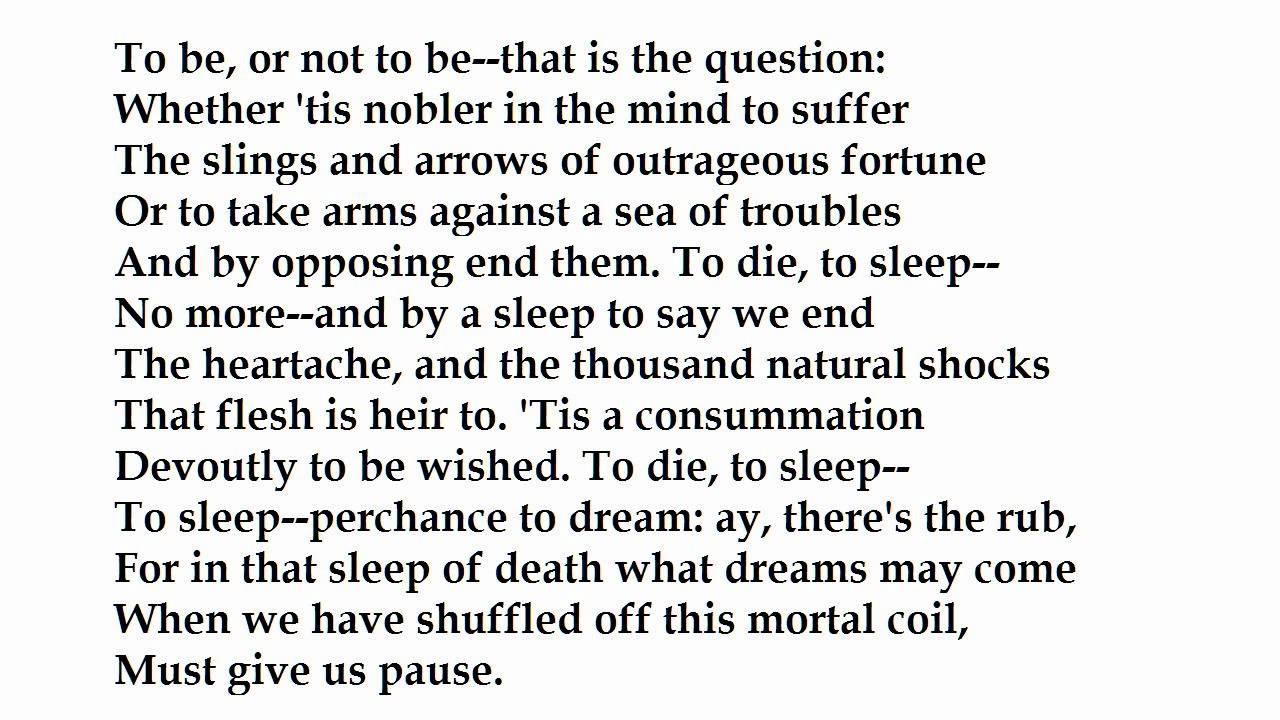
Parody a great poem or one of William Shakespeare's soliloquies. Twain does just this, in The Adventures of Huckleberry Finn, in which The Duke and The Dauphin butcher Hamlet's soliloquy to humorous effect.


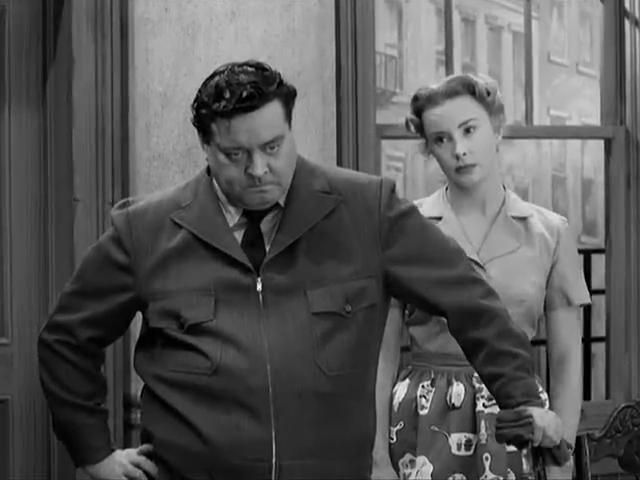
Explain why a supporting character should be the star of a short story, novel, or screenplay. Imagine I Love Lucy with Ethel Mertz, rather than Lucy Ricardo, as the main character or The Beverly Hillbillies with Milburn Drysdale and his wife as the major characters.

Create an imaginary argument between two characters with opposing views on the same topic.


Offer absurd applications of cutting-edge technology. For example, list reasons as to why men or women (or both) should be replaced by robots.


We claim to argue facts, using reason, but, often, desire comes first , arguments in support of our desires second, if at all. Write an argument based on a desire for something insignificant or “forbidden,” using irrelevant and ludicrous “reasons” to support your claims.


 Explain why an honored person, real or imaginary, should be reviled or why a reviled person, real or imagined, should be praised. If the person is real, use two real persons; if imaginary, use two imaginary persons. If the persons are real, write about men and women from the fairly distant past to avoid lawsuits!) Twain was forever trying to secure donations to build a statue to Adam, humanity's common ancestor.


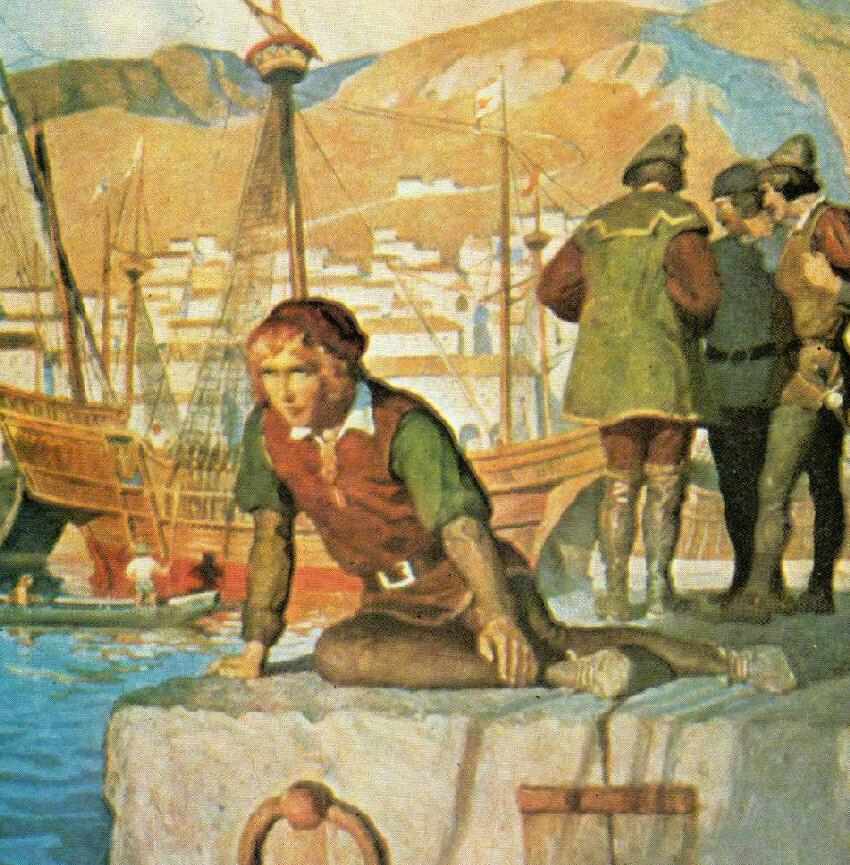
Add a humorous character to a “serious” novel or short story in the public domain. Twain was once interested in creating a fictitious cabin boy to accompany Christopher Columbus on Columbus' explorations.

Tell a story from a different, humorous perspective.


Update a classic, such as The Rape of the Lock, for example.

Imagine a comedian substituting for an actor in an established role: W. C. Fields as Sheriff Andy Taylor, for instance.

Role reversal is often a good source of humor. What if Lucy Ricardo were a band leader and husband Ricky was a stay-at-home husband who aspired to fame and fortune?

Create seemingly absurd, but pointed (and pithy) maxims. Twain does this in Pudd'n'head Wilson. Here's one: “Man is the Only Animal that Blushes. Or needs to.”


Be a team of one! Examine a topic from a variety of perspectives, writing as if you have multiple personalities, each one of which was humorous in his or her own way.


Sunday, December 30, 2018

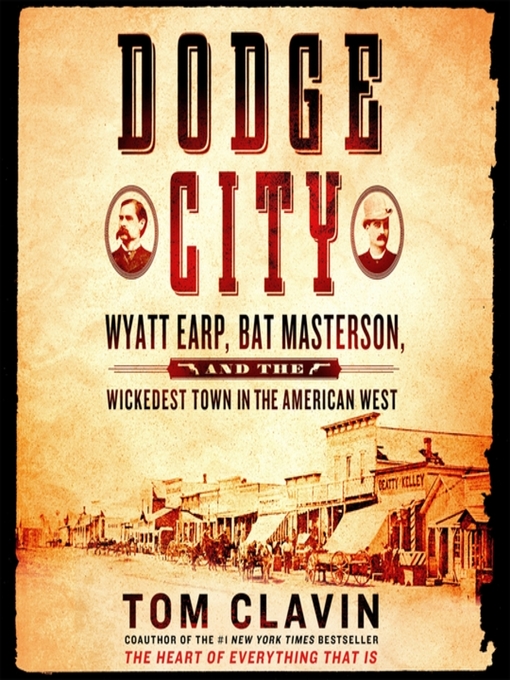
Humor in Tom Clavin's "Dodge City: Wyatt earp, Bat Masterson, and the Wickedest Town in the American West"

Copyright 2018 by Gary L. Pullman


In Dodge City: Wyatt Earp, Bat Masterson, and the Wickedest Town in the American West, Tom Clavin provides an informative, intriguing, and amusing account of law as it was practiced by two of its most famous representatives during their jurisdiction's most lawless times.

The humor, although unexpected, fits the occasions of its use and is effective in fetching a smile, a chuckle, and an occasional belly laugh.

Clavin's humor is typically drawn from the characters and situations he describes. Occasionally, a witticism is subject to a couple of interpretations. For example, in writing of the outlaw Sam Bass's family, Clavin observes, “When he was a young child, both his parents died, perhaps from exhaustion after having ten children” (167). Whether it was so much sex or the child rearing that followed the brood's births depends on one's interpretation.


In writing, earlier, of the dime novelist Edward Zane Carroll Judson, who wrote authored 300 or more of these books under his pen name, Ned Buntline, Clavin is at the top of his form, offering such wry remarks as these (bold added):

He always referred to himself as “Colonel” because he was photographed in Mathew Brady's studio wearing such a uniform, which was as close to being an officer as he got (137).

He was paid handsomely for giving lectures on temperance, often delivering them while drunk (138).

He had five children that he knew about (138).

He [Buffalo Bill Cody] met the author in Chicago and starred in a play Buntline had written in only four hours (some critics wondered what took so long) . . . (138).

Clavin's humor often results from his penchant for adding a descriptive phrase that isn't strictly necessary, usually to the ends of his sentences, as if they constitute an afterthought (see the bold phrases in the examples above). In effect, the first parts of the sentences act as the set-up, the second parts as the punchlines, or “snappers,” as Mark Twain would have called them.

A few other examples show that the device works well, despite repetition, since the variety comes by way of the changing tipocs of Clavin's wit (bold added):

Both [Colonel W. H. McCall and “a fellow named Wilson”] were drunk, and they were taking turns trying to shoot a dog, seemingly not concerned that they might also hit the yelping woman who owned the dog (149).

Clavin's account of the life and times of Wyatt and Bat exhibit other techniques of humor as well.


In one instance, the humor depends upon the reader's remembering some intelligence about a certain Dirty Dave Rudabaugh that Clavin delivers, as the set-up to his joke, several pages before the author follows up with his punchline (bold added):

He earned the nickname naturally, by bathing infrequently and wearing clothes that even by frontier standards were quite filthy (171).

. . . Billy the Kid, Rudabaugh, and three others who had joined the gang got away [from the gunfight that ensued a posse's arrival]. They holed up in a cabin near Stinking Springs, which had earned its name naturally, not thanks to Dirty Dave (179).

The gap between Clavin's set-up and punchline suggests that humor can be delayed, if the reader or listener has a good memory for detail and is attentive.


Occasionally, Clavin allows the implications of his subjects' statements to effect his humor. For example, in 1876, as deputy marshal of Dodge City, Wyatt instituted three rules for his officers to follow, one of which, despite its soundness, is made absurd by the self-serving basis (bold added):

. . . Don't shoot to kill, because wounding a man usually disabled him enough and he would be worth more money that way (134).


At least one of Clavin's humorous quips owes its effect to a play on words (bold added):

[When president Hayes visited Dodge Cityin its heyday, the stench of cowdung drove him back into his rfailroad car], leaving Gnereal [William Tecumseh] Sherman and the [Kansas] governor to soldier on as the speech continued (206).


Repeating selected quotations which are amusing in themselves adds to Clavin's humorous presentation of facts (bold added):

The only loaded gun was brandished by the [Dodge City Cowboy Band] director, a man known as Professor Eastman, who used it as a baton. When asked why a gun, eastman replied, “To kill the first man who strikes a false note” (207).

Monday, February 16, 2015

Congress Moves to Repeal Presidents Day


copyright 2015 by Gary Pullman

Note: News parodies have become popular in recent years, as the Internet has allowed any and all to try their hands at the type of satire that, in the past, only a few, such as Mark Twain, Will Rogers, and Art Buchwald could inflict upon the public. While not claiming for myself a place among such august company, I thought I'd give the genre a try myself, with this parody piece. After all, not all essays about serious matters have to be serious in tone.

If the U. S. Congress has its way, this year's Presidents Day may have been America's last.

“Maybe George Washington and Abraham Lincoln deserve a holiday in their honor, but more recent presidents sure as hell don't,” Senator Nanny Pelosi bitched.
“I couldn't agree more,” her colleague, Senate minority leader Hairy Reed groused.
This is one issue, it appears, that has bilateral support.

“Like the good senators from Californicate and Nirvana, I'm all for doing away with Presidents Day,” Speaker of the House John Boner complained.
“Me, too,” Senate majority leader Bitch McConner pouted. “Let's scrub it.”
The disgruntled Congressmen (and woman) listed a long string of presidential “abuses,” including Dick Nixon's lying about the Watergate break-in, Bill Clinton's soiling of Monica (“The Mouth”) Lewinsky's blue dress (and the Oval Orifice) with his presidential spermatozoa, and Barack Obummer's “countless half-truths and complete falsehoods” over the past seven years, which, to both Boner and McConner “seem like seventeen—or seventy,” Boner whined.


Obummer, Senator John McCane charged, should be denied the holiday on his mispronunciation, as commander in chief, of “corps,” which Obummer pronounced as “corpse-men.” The mispronunciation, in McCane's view, was “not accidental” and “suggested the president's disdain for American military personnel.”


Many of the nation's other chief executives' actions have brought disgrace on the country they serviced, the Congressmen (and woman) claim.


Presidents Day was originally Washington's Birthday, Pelosi pointed out, but the name of the holiday was changed, to steal the first president's thunder, when Presidents Day was made a federal holiday so that “all presidents would be honored, whether they deserved it or not,” Boner explained.


Before and since the hijacking of Washington's Birthday, presidential misconduct has embarrassed and humiliated the American people multiple times:

  • Ulysses S. Grant's tenure as president was rife with the Black Friday scandal, corruption in the Department of the Interior, and the Whiskey Ring.
  • In addition to his involvement in numerous extramarital affairs, Warren G. Harding gave his countrymen the Teapot Some Scandal, among others.
  • The Pentagon Papers proved that LBJ and JFK “systematically lied” to the American people as they secretly escalated the Vietnam War by illegally bombing Laos and Cambodia.
  • Under Clinton, in the Filegate Scandal, the FBI provided secret dossiers on Republicans against whom administrative officials sought political advantages.
  • During W's administration, hundreds of thousands of taxpayers' dollars were forked over to private right-wing media to promote the president's unpopular policies. W also eroded individual liberty by signing the so-called Patriot Act, which, among other tings, has resulted in airport strip searched of American travelers, including infants and elderly, wheelchair-bound men and women.
One of the most-scandal-ridden administrations in the nation's history, however, is that of the current president, Barack Insane Obummer, who is associated with, among many others:

  • The Veterans Administration scandal, the Benghazi fiasco, numerous lies concerning the Affordable Health Care Act (aka Obummercare)
  • The ATF Fast and Furious gunwalking scandal
  • The Terrence Flynn scandal
  • The all-expenses-taxpayer-paid Government Services Administration's four-day gambling spree in Las Vegas
  • The IRS' illegal investigations of conservative political groups
  • The Justice Department's unauthorized collection of Associated Press phone records and persecution of Fox News reporter James Rosen
  • Attorney General Eric Holder's contempt of Congress charges
  • The Pigford Scandal
  • The Veterans Affairs two all-expenses-taxpayer-paid trips to Disney World
  • Health and Human Services chief Kathleen Sibelius' violation of the Hatch Act
  • The government-funding of the private company Solyndra (which later went bankrupt, costing taxpayers millions of dollars)
  • Environmental Protection Agency official Lisa Jackson posing as “Richard Windsor” in writing secret emails
  • Failing to prosecute the New Black Panthers for intimidating white voters during the 2008 presidential election
  • Attacking Libya without Congressional approval
  • Making questionable end-runs around Congress on many occasions.
“I'm half blind,” Reed said, “but it's clear, even to me, that presidents don't deserve to be honored by a special holiday.”
Reed has joined his colleagues in support of a bill to eliminate Presidents Day and to replace it with Congress Day, “ a day,” Pelosi says, “that will live in infamy.”